
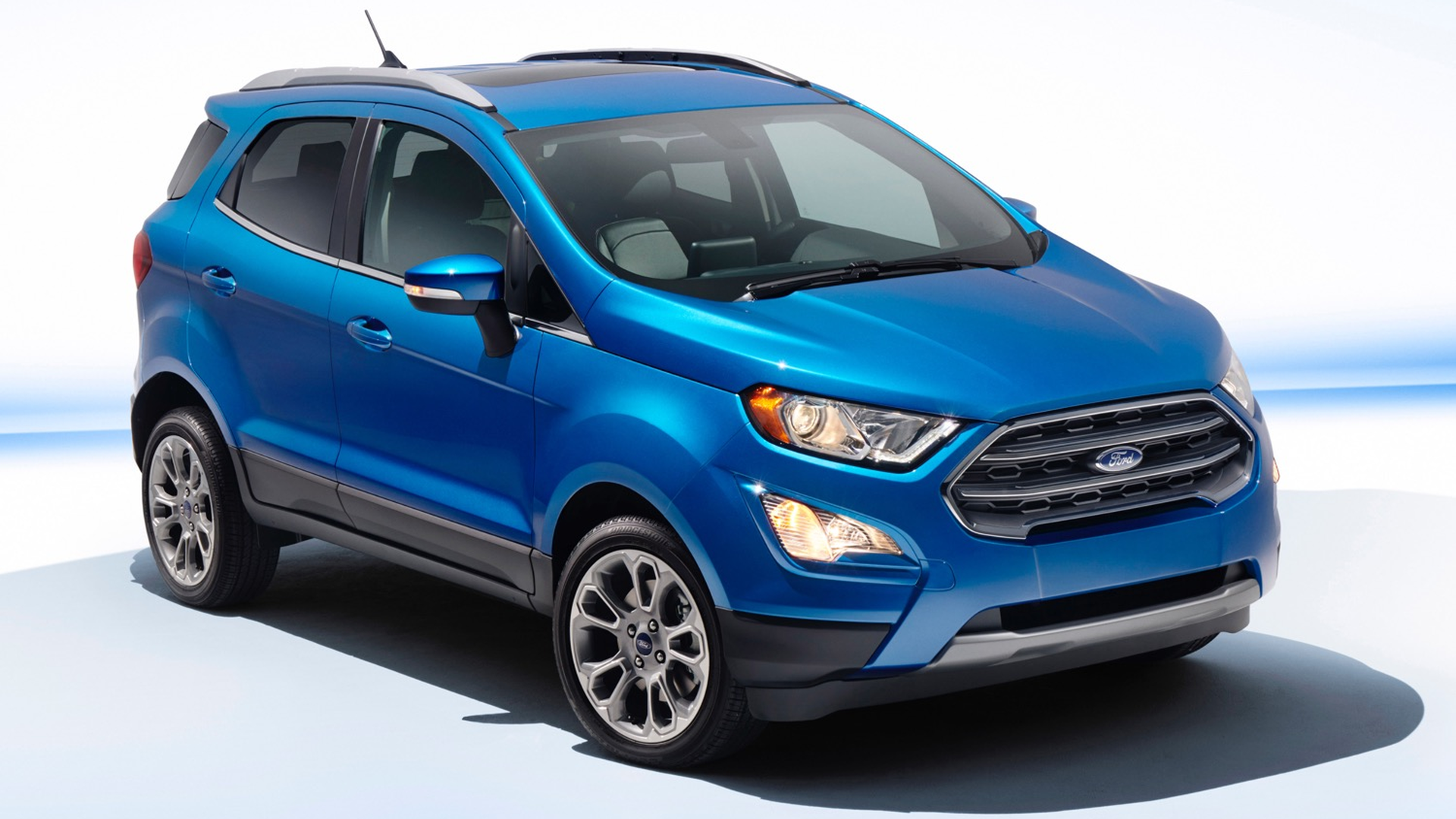
The Little SUV That traveled the World
In the mid-2010s, the American automotive landscape shifted dramatically. Sedans were out; SUVs were in. But not everyone wanted a massive Explorer or even a mid-size Edge. Urban dwellers wanted the high seating position of a truck but the parking footprint of a subcompact car. Enter the Ford EcoSport (pronounced Echo-Sport by Ford, though Ee-co-Sport is commonly used). Originally born in Brazil in 2003 and redesigned globally in 2012, it finally arrived in the US market in 2018 to battle the Chevrolet Trax, Honda HR-V, and Jeep Renegade.
When you browse the EcoSport listings on Hugegarage, you are looking at one of the most polarizing vehicles in the modern Ford lineup. To its fans, it is the ultimate city runaboutâeasy to park, fuel-efficient (in theory), and packed with modern infotainment. To its critics, it is a vehicle caught between worldsâtoo tall to handle like a car, too small to haul like a truck. However, for the used buyer, the EcoSport represents a massive value opportunity, provided you know exactly which engine to choose and which to avoid.
The One Ford Legacy: The EcoSport is a prime example of former CEO Alan Mulally's One Ford strategy. Instead of building different cars for different continents, Ford built one car to sell everywhere. The US version was imported from India, giving it a unique global flavor, including a suspension tuned for rougher roads which surprisingly handles American potholes with ease.
Design: The Controversial Swing Gate
The most distinctive feature of the EcoSport is its rear hatch. Unlike 99% of SUVs that have a liftgate that opens up, the EcoSport has a side-hinged swing gate that opens to the left.
The History: In global markets, the EcoSport carried a spare tire on the back (like a Jeep Wrangler). The door had to swing sideways to handle the weight. For the US market, the tire was removed (replaced by a tire inflator kit), but the door hinge remained.
Pros and Cons of the Gate
- Pro: Easy access for shorter people who can't reach a high liftgate. It also gives the car a rugged, utilitarian vibe.
- Con: Parallel parking nightmare. If someone parks close behind you, you cannot fully open the cargo door to load your groceries. You need about 4 feet of clearance behind the bumper to swing it wide.
- The Handle: The door handle is cleverly hidden inside the passenger-side taillight cluster, keeping the rear design clean.
Powertrains: A Tale of Two Engines
This is the most critical section for any potential buyer. The driving experience and reliability of the EcoSport depend entirely on which engine is under the hood.
1. The 1.0L EcoBoost (FWD Only)
Configuration: Turbocharged Inline-3 Cylinder.
Specs: 123 HP / 125 lb-ft Torque.
The Drive: It is buzzy and struggles at highway speeds. Passing requires planning. It was sold only with Front-Wheel Drive.
The Wet Belt Warning (Critical)
Hugegarage Technical Alert: The 1.0L EcoBoost engine uses a Wet Belt design for the oil pump drive. This belt runs inside the engine oil.
The Failure Mode: Over time, especially if oil changes are neglected or the wrong oil is used, the belt material degrades. Debris from the disintegrating belt clogs the oil pickup screen in the oil pan.
The Result: Oil starvation and catastrophic engine failure. This is a known issue. If you buy a 1.0L, verify the maintenance history is impeccable. Using the correct Ford-spec oil is mandatory.
2. The 2.0L Ti-VCT GDI (AWD Standard)
Configuration: Naturally Aspirated Inline-4 Cylinder.
Specs: 166 HP / 149 lb-ft Torque.
The Drive: This is the engine to buy. It is based on the proven Duratec architecture (similar to the Focus). It lacks a turbo, meaning less complexity. It feels punchy around town and surprisingly capable on the highway. Crucially, all 2.0L models came standard with Intelligent 4WD.
Driving Dynamics: Fiesta on Stilts
Underneath the tall body, the EcoSport sits on the Ford B3 Platform, shared with the Ford Fiesta.
Handling: Because of its Fiesta DNA, the EcoSport actually steers quite well. The steering is quick and direct. However, because it is tall and narrow, it has a high center of gravity. It leans noticeably in corners (body roll), but it never feels unsafe.
Ride Quality: The short wheelbase (99.2 inches) means the ride can be choppy on expansion joints. It tends to porpoise (bob front to back) over highway dips.
Trim Levels: Finding the Value
Ford offered four distinct personalities for the EcoSport.
S (The Rental Special)
Steel wheels with hubcaps, basic SYNC (small non-touch screen on early models), and cloth seats. Avoid unless you are on a strict budget.
SE (The Volume Seller)
The sweet spot. Adds the SYNC 3 8-inch touchscreen with Apple CarPlay/Android Auto, heated front seats, power moonroof, and automatic climate control. Most used inventory will be SEs.
SES (The Sport Model)
Available only with the 2.0L AWD powertrain.
Features: Sport-tuned suspension (stiffer), paddle shifters, copper-colored interior accents, and blacked-out exterior trim. It tries to be a warm hatch SUV.
Titanium (The Luxury Micro)
Leather-trimmed seats, BO Sound System (surprisingly good for this segment), chrome exterior accents, and built-in navigation. It offers a near-luxury experience in a tiny package.
Interior Cargo: Packaging Wizardry
Despite being 161 inches long (shorter than a Mini Clubman), the EcoSport is surprisingly usable.
- Cargo Management: The rear cargo floor is adjustable. In the high position, it creates a flat floor when the rear seats are folded. In the low position, it allows you to stand taller items upright.
- Storage: The cabin is filled with cubbies, including a chilled glovebox (on some trims) that can keep soda cans cool using the A/C airflow.
- Headroom: The tall roof means even 6-foot-tall passengers fit comfortably in the front and rear, though legroom in the back is tight for long trips.
The End of the Road
Ford discontinued the EcoSport in the US after the 2022 model year.
Why? Two reasons.
1. Ford Maverick: The Maverick pickup offered more utility, better hybrid fuel economy, and a similar starting price.
2. Ford Puma: In Europe, Ford replaced the EcoSport with the stylish Ford Puma (based on the new Fiesta). Ford USA decided not to import the Puma, leaving the entry-level slot to the Maverick.
Common Issues Maintenance
1. 6F15 Transmission Shudder
The 6-speed automatic transmission is generally reliable, but some owners report shuddering or harsh shifting, similar to the Focus DCT issues (though the EcoSport uses a traditional torque converter auto, not a DCT). Regular fluid changes every 30,000 to 40,000 miles help mitigate this.
2. A-Pillar Blind Spots
The A-pillars (the beams beside the windshield) are exceptionally thick to support the roof in rollover tests. This creates massive blind spots when turning corners. You have to physically move your head to look around them at crosswalks.
3. MyFord Touch Glitches (Early Models)
2018 models might have software lag. Ensure the SYNC system is updated to the latest version (3.4) via Wi-Fi or USB to fix connectivity bugs.
Conclusion: The Urban Specialist
The Ford EcoSport is a tool for a specific job. If you live in a city with tight streets, nonexistent parking, and potholed roads, it is brilliant. It fits where other SUVs can't. It offers a commanding view of traffic and keeps you connected with top-tier tech. However, for long-distance highway cruising or family hauling, it is compromised by its size and short wheelbase. The smartest buy is a 2019-2022 SE or Titanium with the 2.0L Engine. You get the reliability of the 4-cylinder, the traction of AWD, and the features that make the daily commute bearable. Explore the specs below.