
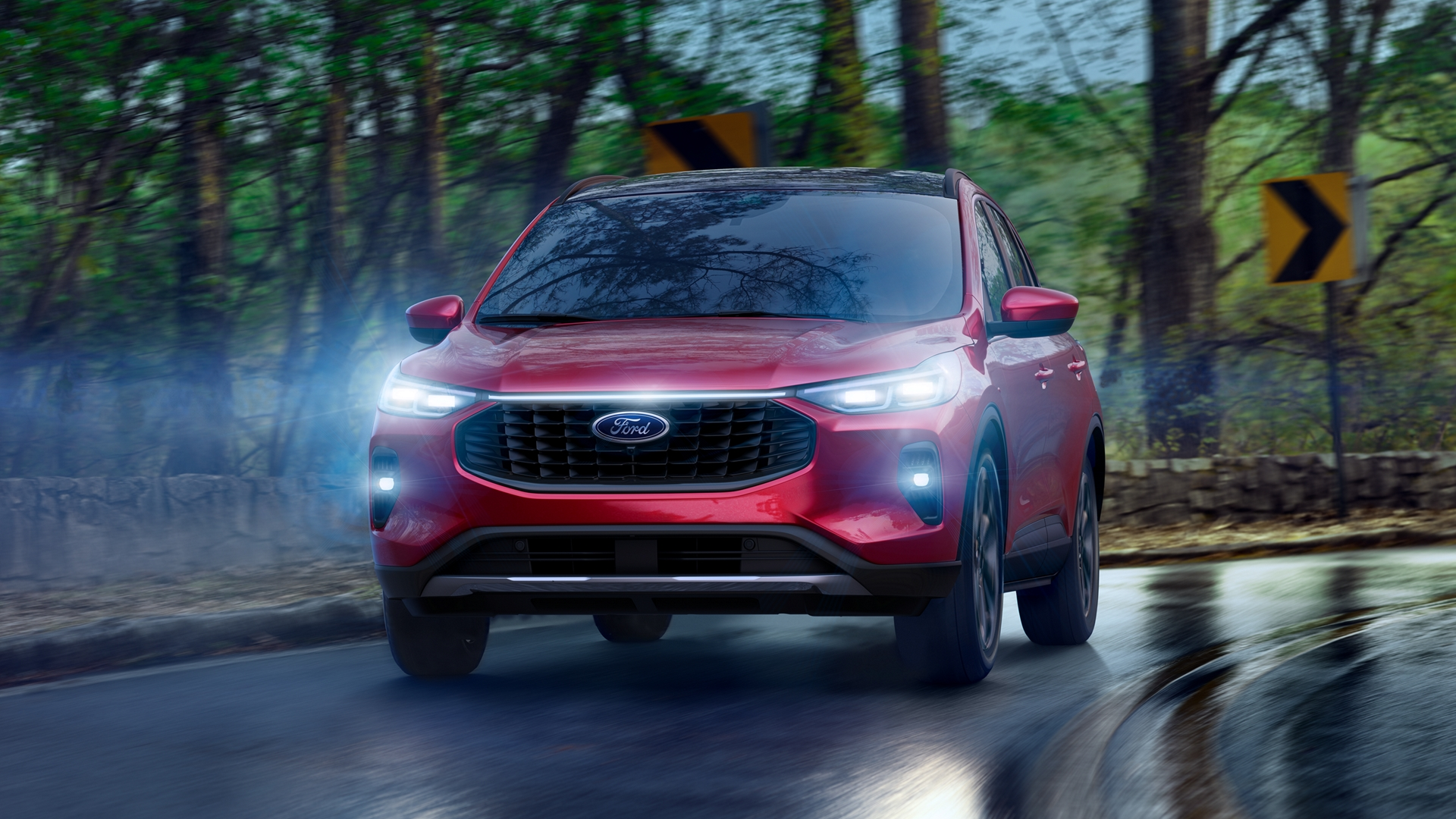
The Architect of the Modern Crossover
If the Ford Explorer invented the SUV craze in the 90s, the Ford Escape democratized it in the 2000s. Launched in 2000 as a 2001 model, the Escape was Ford's answer to the Toyota RAV4 and Honda CR-V. But unlike its Japanese rivals, which felt like lifted economy cars, the original Escape looked and felt like a truck. It had a boxy profile, a column shifter, and an available V6 engine that gave it genuine hustle.
When you browse the Ford Escape listings on Hugegarage, you are looking at one of the most versatile nameplates in history. It has been a rugged off-roader (Gen 1), a chrome-clad American cruiser (Gen 2), a European-handling sports crossover (Gen 3), and now a sleek, electrified commuter (Gen 4). It is the Swiss Army Knife of the Ford lineup.
The Taxi Legend: The First-Generation Ford Escape Hybrid was the first hybrid SUV on the market. It was adopted massively by the New York City Taxi fleet. Many of these hybrids logged over 400,000 miles on their original batteries and transmissions, proving that Ford's hybrid technology (licensed and adapted from Toyota patents) was bulletproof.
Generation 1: The Boxy Beginning (2001â2007)
Developed jointly with Mazda (who sold it as the Tribute), the first Escape was built on the CD2 Platform. It was unibody but tough.
The Powertrains
- 2.0L Zetec / 2.3L Duratec
- The base 4-cylinders. Reliable but woefully underpowered for a vehicle of this weight.
- 3.0L Duratec V6
- The star of the show. Producing 200 HP, this engine made the Escape significantly faster than the CR-V. It is thirsty but durable. Known for oil pan gasket leaks as they age.
- The Hybrid (2005-2007)
- A milestone. It used a 2.3L Atkinson cycle engine paired with an electric motor and a planetary gearset eCVT. It delivered 30+ MPG in the cityâa revelation for an SUV.
Common Issues: The CD4E Transmission
The 4-speed automatic transmission (CD4E) in the V6 models is the weak link. It is prone to overheating and failure if the fluid is not changed every 30,000 miles. If test-driving a Gen 1, check for slipping gears.
Generation 2: The American Restyle (2008â2012)
Mechanically similar to the first generation, the 2008 redesign brought a Cyber aesthetic with more chrome and a quieter interior. The big news was the mechanical update in 2009.
- New Engine: The 2.5L Duratec 4-cylinder replaced the 2.3L. This is arguably one of the most reliable engines Ford ever built.
- New Transmission: The 6-speed 6F35 Automatic replaced the 4-speed. While better for fuel economy, early versions had harsh shifting issues (flare shifts) that required software updates.
Generation 3: The European Invasion (2013â2019)
In 2013, Ford merged the American Escape with the European Ford Kuga. The boxy look was gone, replaced by the Kinetic design language. It was sleeker, aerodynamic, and handled like a Ford Focus on stilts.
The EcoBoost Era: Speed and Sorrow
This generation went all-in on Turbocharging. This brought performance but also reliability headaches.
- 1.6L EcoBoost (2013-2016)
- AVOID. This engine was plagued by overheating issues that could lead to cylinder head cracking and even engine fires. Ford issued multiple recalls.
- 1.5L EcoBoost (2017-2019)
- The replacement for the 1.6L. While it solved the fire risk, it introduced the infamous Coolant Intrusion issue (details below).
- 2.0L EcoBoost (The Hot Rod)
- With 240 HP and 270 lb-ft of torque, a Titanium 2.0L Escape is a sleeper. It is genuinely fast, hitting 0-60 in under 7 seconds. It is also the most reliable gas engine of this generation.
The Critical Flaw: Coolant Intrusion
Hugegarage Warning: The 1.5L and some 2.0L engines (2017-2019) utilize an Open Deck cooling design. Over time, the head gasket can fail between the cylinders, allowing coolant to leak into the combustion chamber.
Symptoms: White smoke at startup, misfire codes, loss of coolant without external leaks.
The Fix: Often requires a full engine replacement with a redesigned short block. Check if this has been done before buying.
Generation 4: The Soft Car-Like Era (2020âPresent)
Responding to complaints that the Gen 3 was too small inside, the 2020 Escape grew. It shares the C2 platform with the Bronco Sport but takes the opposite approach: where the Bronco Sport is rugged, the Escape is sleek and urban. It looks like a tall Porsche Macan from some angles.
The 3-Cylinder Controversy
The base engine is now a 1.5L 3-Cylinder EcoBoost.
Pros: Good torque, great fuel economy.
Cons: It vibrates. Ford uses cylinder deactivation to run on two cylinders to save gas, which creates a distinct rumble at low speeds. Some drivers find it annoying; others don't notice.
The Return of the Hybrid
The crown jewel of the Gen 4 is the Hybrid powertrain.
Available as a standard Hybrid (HEV) or Plug-In Hybrid (PHEV).
The PHEV offers 37 miles of electric-only range. For many commuters, this means they can drive to work and back without using a drop of gas. The transition between electric and gas is seamless, thanks to the mature eCVT transmission.
Practicality: The Sliding Second Row
A standout feature of the modern Escape is the sliding rear seats.
Slide Back: Provides legroom that rivals the larger Ford Edge (40.7 inches).
Slide Forward: Increases cargo space to compete with the CR-V.
This flexibility is massive for families with rear-facing car seats.
Buyer's Guide: Which One to Buy?
With 20 years of models, the choice is difficult. Here is the breakdown.
The Budget Beater: 2009-2012 XLT (2.5L)
If you have $6,000, buy a Gen 2 with the 2.5L non-turbo engine. It is slow, but it will run forever. Avoid the V6 if you care about gas mileage.
The Performance Pick: 2017-2019 Titanium (2.0L)
Get the refreshed styling (new grille), Sync 3 (Apple CarPlay), and the powerful 2.0L engine. Crucial: Verify the transmission fluid has been changed. The 6F35 transmission in these years can develop a torque converter shudder if abused.
The Commuter's Dream: 2020+ Hybrid
If buying new or near-new, skip the 1.5L 3-cylinder gas engine. Spend the extra money for the Hybrid. It is smoother, quieter, faster off the line (instant electric torque), and gets 40 MPG in the city. It is expected to have significantly higher resale value than the gas models.
Technology: SYNC 3 vs. SYNC 4
- SYNC 1 / MyFord Touch (2011-2015): Laggy, resistive touchscreens. Frustrating to use.
- SYNC 3 (2016-2022): The gold standard. fast, intuitive, supports CarPlay/Android Auto. Look for this.
- SYNC 4 (2023 Refresh): Featured on the massive 13.2-inch Landscape screen. It moves the climate controls into the screen (a controversial move for ergonomics).
Maintenance: The PTU Factor
Like the Ford Edge, AWD Escapes have a Power Transfer Unit (PTU) that sends power to the rear wheels. It is located near the hot exhaust.
Maintenance Tip: The fluid cooks over time. Change the PTU fluid every 30,000 miles to prevent failure. If you hear a whining noise from underneath the center console, the PTU bearings are likely failing.
Conclusion: The Universal Soldier
The Ford Escape is not a specialist; it is a generalist. It is not as off-road capable as a Bronco Sport, nor as huge as an Explorer. But it hits the sweet spot of size, efficiency, and utility that fits 90% of American lives. Whether you need a cheap college runabout or a sophisticated Plug-In Hybrid for the daily grind, the Escape delivers. It is the unpretentious hero of the Ford lineup. Explore the specs and find your match below.