
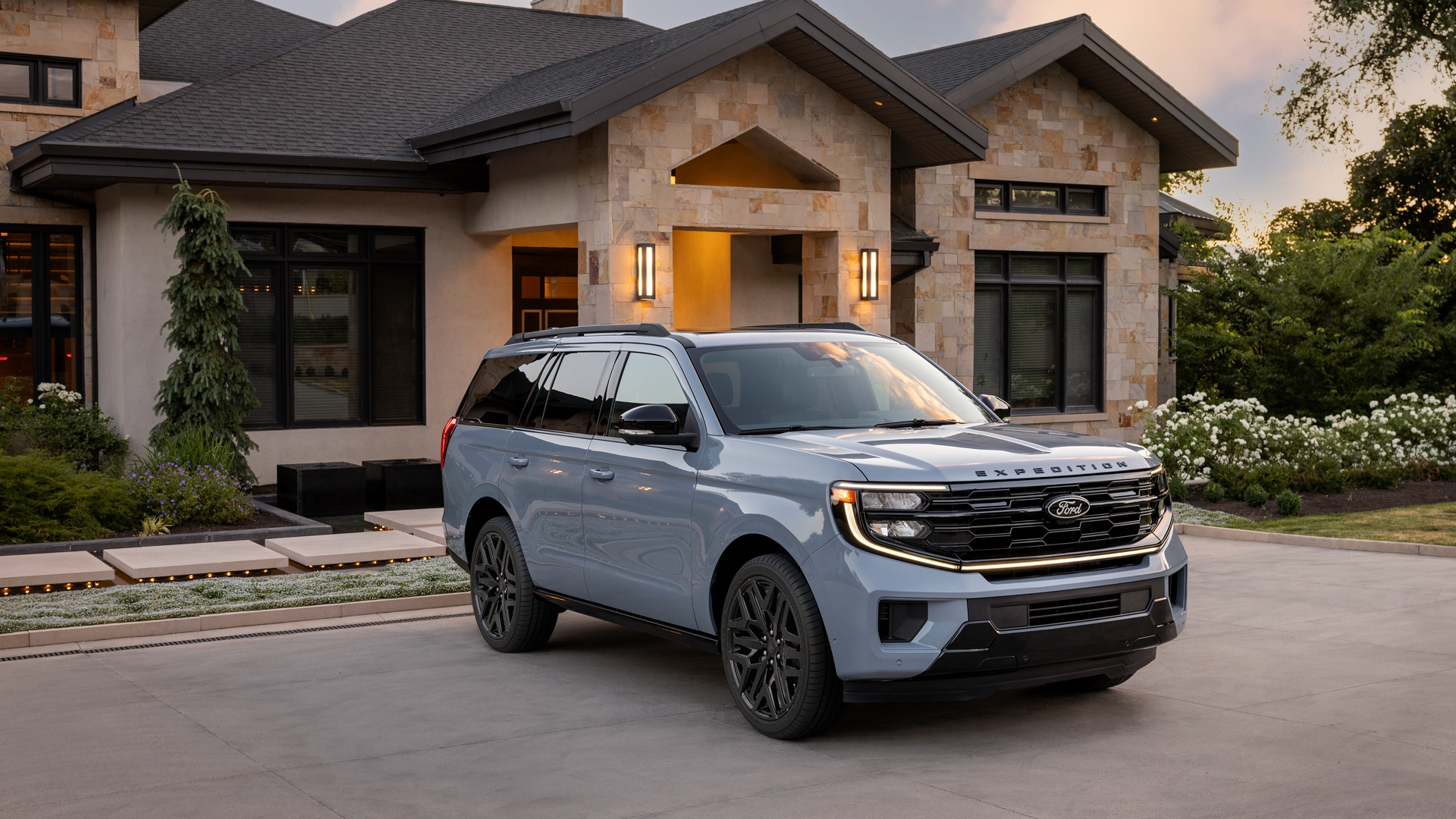
The Anti-Minivan
For families who refuse to drive a sliding-door van but still need to transport an entire Little League team (and their gear), the Ford Expedition is the answer. Since its debut in 1997 as the successor to the two-door Bronco, the Expedition has been in a heavyweight boxing match with the Chevrolet Tahoe and Suburban. While GM stuck to tradition, Ford chose innovation.
When you browse the Ford Expedition listings on Hugegarage, you are looking at the vehicle that forced the entire industry to change. It was the first body-on-frame truck to adopt Independent Rear Suspension (IRS). This engineering gamble paid off, giving the Expedition a flat fold-down third row and superior ride quality a full decade before Chevy caught up. It is not just a truck with seats; it is a luxury liner for the road.
The Max Factor: In 2007, Ford introduced the Expedition EL (extended length), later renamed the MAX. It adds roughly 12 inches of wheelbase and massive cargo space behind the third row. If you regularly carry 7-8 passengers, the MAX is mandatory; otherwise, you have zero room for suitcases.
Generation 1: The Triton Era (1997â2002)
Built on the Ford F-150 platform of the time, the first Expedition was a massive hit. It retained a solid rear axle, making it excellent for towing but bouncy on the highway.
The Engines: Reliability vs. Spark Plugs
Two V8 engines defined this era:
- 4.6L Triton V8
- Reliable but underpowered (215 HP). It struggles to move the 5,500-lb SUV up hills.
- 5.4L Triton V8
- The preferred choice. Better torque (350 lb-ft) for towing. However, these engines are infamous for blowing spark plugs out of the cylinder heads due to insufficient threads. It is a repairable issue, but one buyers must be aware of.
Generation 2: The IRS Revolution (2003â2006)
This is the turning point. In 2003, Ford redesigned the chassis to include Independent Rear Suspension.
Why IRS Matters
- Ride Quality: Each rear wheel moves independently. If the left wheel hits a pothole, the right wheel (and the passengers) doesn't feel it.
- Packaging: The suspension components are compact, allowing the third-row seats to fold flat into the floor electronically. In a contemporary Chevy Tahoe, you had to physically remove 40-lb seats and store them in your garage. This feature alone sold thousands of Expeditions.
Generation 3: The Long Haul (2007â2017)
This generation lasted a decade. It started with V8s and ended with the Turbo Revolution.
The 5.4L 3-Valve (2007-2014)
The early years used an updated 3-valve version of the 5.4L V8.
Hugegarage Warning: Avoid the 2007-2010 models if possible. They are prone to Cam Phaser failure (ticking noise) and broken spark plugs that snap off inside the head during removal. The 6-speed automatic transmission (6R80) introduced in 2007, however, was a massive upgrade in durability.
The EcoBoost Pivot (2015-2017)
In 2015, Ford did the unthinkable: They killed the V8.
Every Expedition became powered by the 3.5L Twin-Turbo EcoBoost V6.
The Result: 365 HP and a massive 420 lb-ft of torque. It out-towed the V8, got better gas mileage, and was faster. Purists complained about the sound, but nobody complained about the performance.
Generation 4: The Aluminum Fortress (2018âPresent)
Following the F-150's lead, the 2018 Expedition switched to an Military-Grade Aluminum Alloy Body. This shed up to 300 lbs of weight, which Ford immediately reinvested into sound deadening and stronger frames.
Powertrain: The 10-Speed Era
The 3.5L EcoBoost was paired with the new 10R80 10-Speed Automatic Transmission (co-developed with GM). This keeps the engine in the powerband at all times.
Towing Capacity: When properly equipped with the Heavy-Duty Trailer Tow Package, the Gen 4 Expedition can tow up to 9,300 lbsâbest in class.
Special Editions
- Stealth Performance Edition: Uses the High Output 3.5L engine from the Raptor (440 HP / 510 lb-ft). It is a sleeper hot-rod SUV.
- Timberline: The off-road trim. Adds 33-inch all-terrain tires, lifted suspension, skid plates from the F-150 Raptor, and Trail Turn Assist (locks the inside rear wheel to drag the vehicle around tight corners).
Technical Deep Dive: The Cam Phaser Issue
If you are buying a 3.5L EcoBoost Expedition (2017-2020), you must listen to the engine on a Cold Start.
The Sound: A loud rattle or clatter for 2-3 seconds immediately after starting.
The Cause: The variable valve timing (Cam Phasers) locking pins wear out.
The Cost: It is a complex repair requiring the removal of the front of the engine. Cost ranges from $2,500 to $4,000. Ford issued updated parts in late 2020, so newer models are generally cured, but always check the service history.
Buyer's Guide: Trim Levels Explained
Ford offers a trim for every tax bracket.
1. XL STX (The Fleet Special)
A 5-seater version (no third row). Typically sold to police or rental fleets. Avoid for family use.
2. XLT (The Volume Seller)
Cloth or ActiveX seats. Offers all the mechanical capability without the fluff. Look for the 202A package to get heated/ventilated seats.
3. Limited (The Sweet Spot)
Leather, power running boards, 20-inch wheels. This is the most common luxury spec.
4. King Ranch (The Texas Tuxedo)
Del Mesa leather interior in saddle brown. Unique branding. You have to love the cowboy aesthetic to buy this.
5. Platinum (The CEO Hauler)
Everything is standard. Massaging front seats (Multicontour), BlueCruise (hands-free driving on newer models), and the finest materials. Competes directly with the Lincoln Navigator.
Expedition vs. Tahoe vs. Sequoia
How does it stack up?
- Chevy Tahoe / Suburban
- Finally switched to IRS in 2021. The V8s (5.3L/6.2L) are smoother and sound better but lack the low-end torque of the EcoBoost. The Tahoe feels slightly bigger inside the cabin due to packaging.
- Toyota Sequoia
- The new Hybrid i-FORCE MAX is powerful but the Sequoia suffers from a solid rear axle design (hybrid batteries compromise the floor), resulting in a terrible third row that doesn't fold flat. The Expedition destroys it in cargo utility.
Maintenance: The Cost of Ownership
The Expedition is a complex machine.
Turbos: The EcoBoost turbos are liquid-cooled and reliable, but regular oil changes (every 5,000 miles, not 10,000) are critical to prevent coking.
Shocks: Models with CCD (Continuous Controlled Damping) adaptive suspension ride beautifully but shocks cost $600+ each to replace.
Aluminum Body: Body repairs are more expensive. Ensure your local body shop is aluminum-certified if you get into a fender bender.
Conclusion: The Ultimate Road Tripper
The Ford Expedition is the undisputed king of the long-distance family vacation. It combines the towing power of a pickup truck with the interior silence of a luxury sedan. While the complexity of the twin-turbo engine requires diligent maintenance compared to the lazy V8s of the past, the payoff is effortless performance that makes mountains feel like molehills. For the family that refuses to compromise on space or capability, the Expedition is the only choice. Explore the specs and tow ratings below.