
The Undisputed King of the Road
For over 40 years, the Ford F-150 has held the title of the best-selling vehicle in America. Not just the best-selling truckâthe best-selling vehicle. It outsells the Toyota Camry, Honda Civic, and Chevrolet Silverado. Why? Because the F-150 has mastered the art of evolution. It constantly pushes the envelope of what a light-duty truck can be, transforming from a simple farm implement into a sophisticated, aluminum-skinned mobile office that can tow 14,000 lbs.
When you browse the F-150 listings on Hugegarage, you are looking at a dynasty. Whether you are searching for a bulletproof 1995 work truck with the inline-6, a 2014 Raptor for desert running, or a brand-new PowerBoost Hybrid that can power your house during a blackout, the F-150 lineup offers a tool for every job. This guide will navigate the complex history, the engine options, and the critical maintenance quirks of America's truck.
The Aluminum Gamble: In 2015, Ford took the biggest risk in automotive history. They switched the F-150's body from steel to Military-Grade Aluminum Alloy. Critics said it would be too expensive to repair and too fragile. They were wrong. The switch saved up to 700 lbs of weight, which Ford immediately reinvested into higher payload capacities and towing ratings, leaving Chevy and Ram scrambling to catch up.
Generation 9 & 10: The Aero Revolution (1992â2003)
The 9th Gen (1992-1996) was the last of the Old Body Style (OBS) square trucks. These are rapidly appreciating classics today, prized for their simplicity and the legendary 300 cubic inch (4.9L) Inline-6 engineâarguably the most reliable engine Ford ever built.
The 10th Gen (1997-2003) changed everything. Ford introduced the Jellybean aero shape and the Modular V8 Engines (4.6L and 5.4L Triton). While the styling was controversial, the ride quality was vastly improved thanks to a new Independent Front Suspension (IFS) setup.
Generation 11 & 12: The Triton Era (2004â2014)
These trucks returned to a boxy, masculine aesthetic and introduced fully boxed frames for immense rigidity.
The 5.4L Triton V8: A Flawed Legend
The 3-valve 5.4L Triton V8 used in this era is powerful but infamous for two major issues:
- Cam Phaser Failure: The variable valve timing sprockets wear out, causing a loud diesel-like ticking noise at idle.
- Spark Plug Ejection/Breakage: Early models spit plugs out; later models (2004-2008) had two-piece plugs that would snap in half inside the cylinder head during removal.
The EcoBoost Debut (2011)
In 2011, Gen 12 changed the world. Ford introduced the 3.5L EcoBoost V6. Hardcore truck buyers laughed at a V6... until they drove it. With twin turbos, it produced 420 lb-ft of torque at low RPMs, out-towing the V8s and changing the truck market forever.
Generation 13: The Aluminum Era (2015â2020)
This is the generation that redefined the modern pickup. By shedding weight via the aluminum body, the F-150 felt faster and more agile.
Engine Lineup:
- 2.7L EcoBoost V6
- The volume seller. Using a graphite-iron block (like a diesel), it is incredibly durable and quick. Perfect for daily driving.
- 5.0L Coyote V8
- The Mustang engine adapted for truck duty. High-revving and reliable, though 2018-2020 models had issues with excessive oil consumption due to plasma-arc cylinder liners.
- 3.5L EcoBoost (Gen 2)
- Updated in 2017 with both Port and Direct Injection to prevent carbon buildup. Paired with the 10-speed auto, it is the towing king.
Generation 14: The Hybrid Workforce (2021âPresent)
The latest F-150 focuses on utility and electrification. The interior materials finally caught up to Ram, and the technology is cutting-edge.
The PowerBoost Hybrid
This is not a Prius hybrid. It sandwiches a 47-HP electric motor between the 3.5L EcoBoost engine and the transmission.
Specs: 430 HP / 570 lb-ft Torque.
The Killer App: Pro Power Onboard. The truck comes with a 2.4kW or 7.2kW generator built-in. You can run chop saws, welders, or your entire kitchen refrigerator from the bed outlets.
The Engine Debate: 5.0L V8 vs. 3.5L EcoBoost
This is the most common question for F-150 buyers. Here is the Hugegarage verdict:
Choose the 5.0L Coyote V8 if:
- You plan to keep the truck for 15+ years (fewer parts to break).
- You love the sound of a V8 (aftermarket exhaust options are endless).
- You haul heavy payloads in the bed (linear power delivery).
- You do your own maintenance (easier to work on).
Choose the 3.5L EcoBoost if:
- You tow a heavy trailer (> 7,000 lbs) regularly. Turbos maintain power at high elevation and provide massive low-end torque.
- You want the fastest truck possible (easy to tune for 500+ HP).
- You live at high altitude (Denver/Salt Lake City), where naturally aspirated engines lose power.
The Lightning: Going Electric
The F-150 Lightning is the first electric pickup for the masses.
Pros: Insanely fast (0-60 in 4 seconds), massive front trunk (Frunk), and excellent ride quality (Independent Rear Suspension).
Cons: Towing range. While it can tow 10,000 lbs, doing so cuts the range by 50% or more. It is an amazing work truck for local contractors, but a poor choice for cross-country towing.
Common Issues & Maintenance
1. The 10R80 Transmission (10-Speed)
Used in 2017+ models. It is known for clunky or harsh shifting, especially when cold. Ford has issued software updates that fix the adaptive learning tables. In rare cases, the CDF drum bushing fails, requiring a rebuild.
2. IWE (Integrated Wheel Ends)
A classic Ford problem. The vacuum-operated hubs that engage 4WD can fail, causing a grinding noise in the front end. If ignored, it destroys the wheel bearings. Install a Vacuum Delete kit or replace the check valves regularly.
3. Sunroof Leaks
The massive Twin-Panel Moonroof is spectacular but prone to leaking. The drain tubes clog, or the track breaks. If you park outside under trees, you might want to skip this option.
Buyer's Guide: Trim Levels
- XL: Vinyl floors, steel wheels. The work truck.
- XLT: The Texas Cadillac. Cloth seats, chrome bumpers. The highest volume trim. Value-packed.
- Lariat: Leather, heated/cooled seats, push-button start. The entry into luxury.
- King Ranch / Platinum: Real wood, massaging seats, distinct leather. Competes with luxury SUVs.
- Tremor: The Baby Raptor. Locker rear diff, 33-inch tires, off-road suspension. Great for hunters.
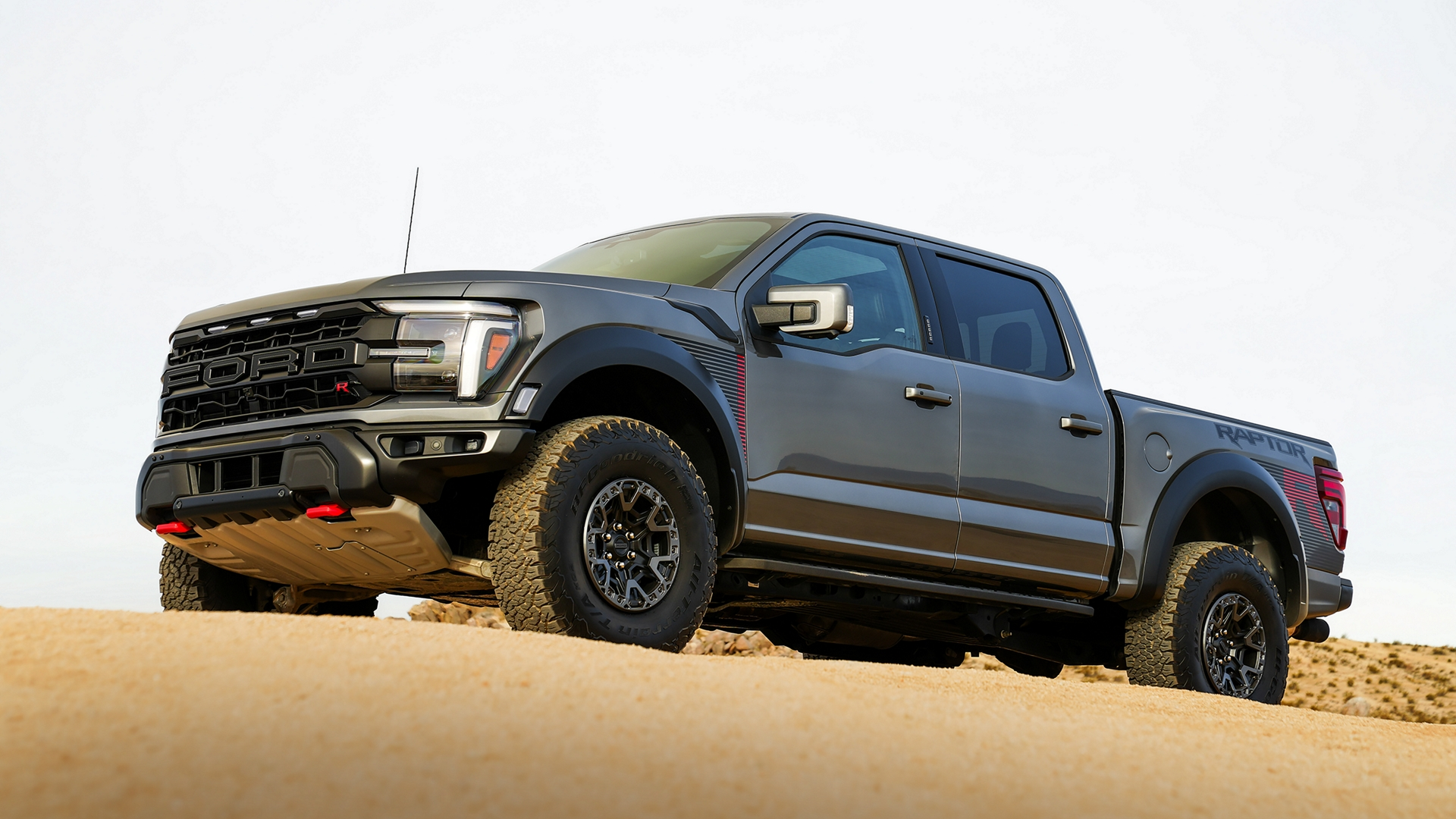
- Raptor: 35 or 37-inch tires, wide body, FOX racing shocks. A street-legal Trophy Truck.
Conclusion: The Universal Tool
The Ford F-150 succeeds because it refuses to be just one thing. It is a drag racer (Single Cab 5.0L), a luxury limousine (Platinum), a rock crawler (Raptor), and a job site generator (PowerBoost). While the complexity of modern turbos and 10-speed transmissions requires more attention than the simple trucks of the 90s, the capability payoff is enormous. It remains the gold standard against which all other trucks are measured. Explore the detailed specs and tow ratings below.