
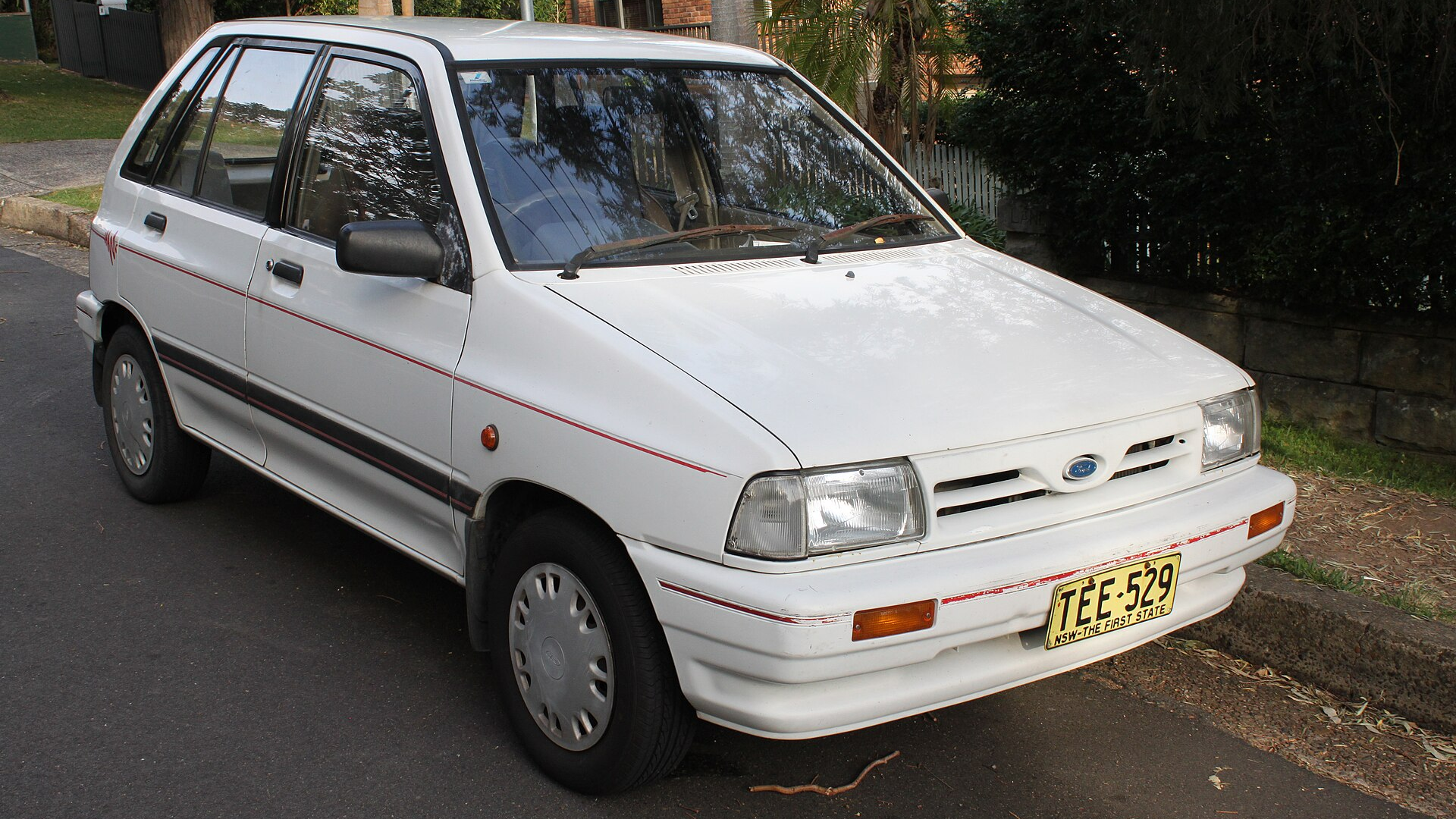
The International Shoebox
In 1987, Ford needed a new entry-level car to slot below the Escort. They didn't build it themselves. They turned to their partners in Asia. The Ford Festiva was designed by Mazda (on the 121 platform) and manufactured by a then-unknown Korean company called Kia. It was tiny, tall, and boxy. It looked like a phone booth on wheels. But it was brilliant. It was cheap, it got 40 MPG, and it was surprisingly fun to drive because it weighed absolutely nothing.
When you browse the Festiva listings on Hugegarage, you are finding the ultimate beater with a heart of gold. While most economy cars from the 80s have dissolved, Festivas are still running. Why? Because there is almost nothing on them to break. It is motoring distilled to its purest, simplest form.
The Jay Leno Connection (The Shogun): The Festiva is famous for one specific aftermarket monster: the Ford Shogun. In 1989, engineers chucked the rear seats and installed the Yamaha V6 from the Taurus SHO in the middle of the car. It had 220 horsepower, rear-wheel drive, and massive fender flares. Jay Leno owns one. Only 7 were ever built, making it the holy grail of econoboxes.
The Engineering: Simple is Better
The Festiva is a masterclass in simplicity.
- 1.3L Mazda B3 Inline-4
- Specs: 63 HP.
The Reality: It sounds pathetic, but the car only weighs 1,700 lbs. It feels peppy around town. The engine is non-interference, meaning if the timing belt snaps, the engine is safe. - Transmission
- Most came with a 4-speed or 5-speed manual. The automatic was a 3-speed that sapped all the power. Always buy the manual.
The "L" and "LX" Trims
- L: The base model. Vinyl seats, no radio, no passenger mirror in some years. Basic transportation.
- LX: The luxury model. Cloth seats, tachometer, cassette player, and sometimes a rear wiper.
The Tuner Cult
Because the Festiva uses a Mazda chassis, it is compatible with high-performance Mazda engines.
The B6-T Swap: Enthusiasts frequently swap in the 1.6L Turbo engine from the Mercury Capri XR2 / Mazda 323 GTX. This gives the 1,700 lb Festiva over 130 horsepower, turning it into a rocket ship that can embarrass Mustangs.
Common Issues Maintenance
1. Rust (The Killer)
The unibody is thin. Check the rear shock towers and the floor pans. Once a Festiva starts rusting, it is usually terminal.
2. Wheel Bearings
The tiny 12-inch wheels spin very fast at highway speeds. Front wheel bearings wear out regularly and make a distinct humming noise.
3. Door Handles
The exterior and interior door handles are made of cheap plastic and snap off in cold weather. Keeping a spare set is a rite of passage for owners.
Why Was It Cancelled?
By 1993, the Festiva couldn't meet new safety regulations (airbags and side-impact protection) without a total redesign. Ford replaced it with the Ford Aspire (also built by Kia), which was rounder, safer, but significantly heavier and less fun. The Festiva remains the peak of the lightweight box era.
Conclusion: The Maximum Smile Per Mile
The Ford Festiva is not a respectable car. Your neighbors will laugh at it. But you will be laughing too as you get 42 MPG and zip through gaps in traffic that an F-150 couldn't dream of fitting through. It is a car that costs less to buy than a set of tires for a modern SUV. For the budget-conscious enthusiast who wants a reliable platform for an engine swap, the Festiva is the ultimate blank canvas. Explore the specs below.