
Hip to Be Square
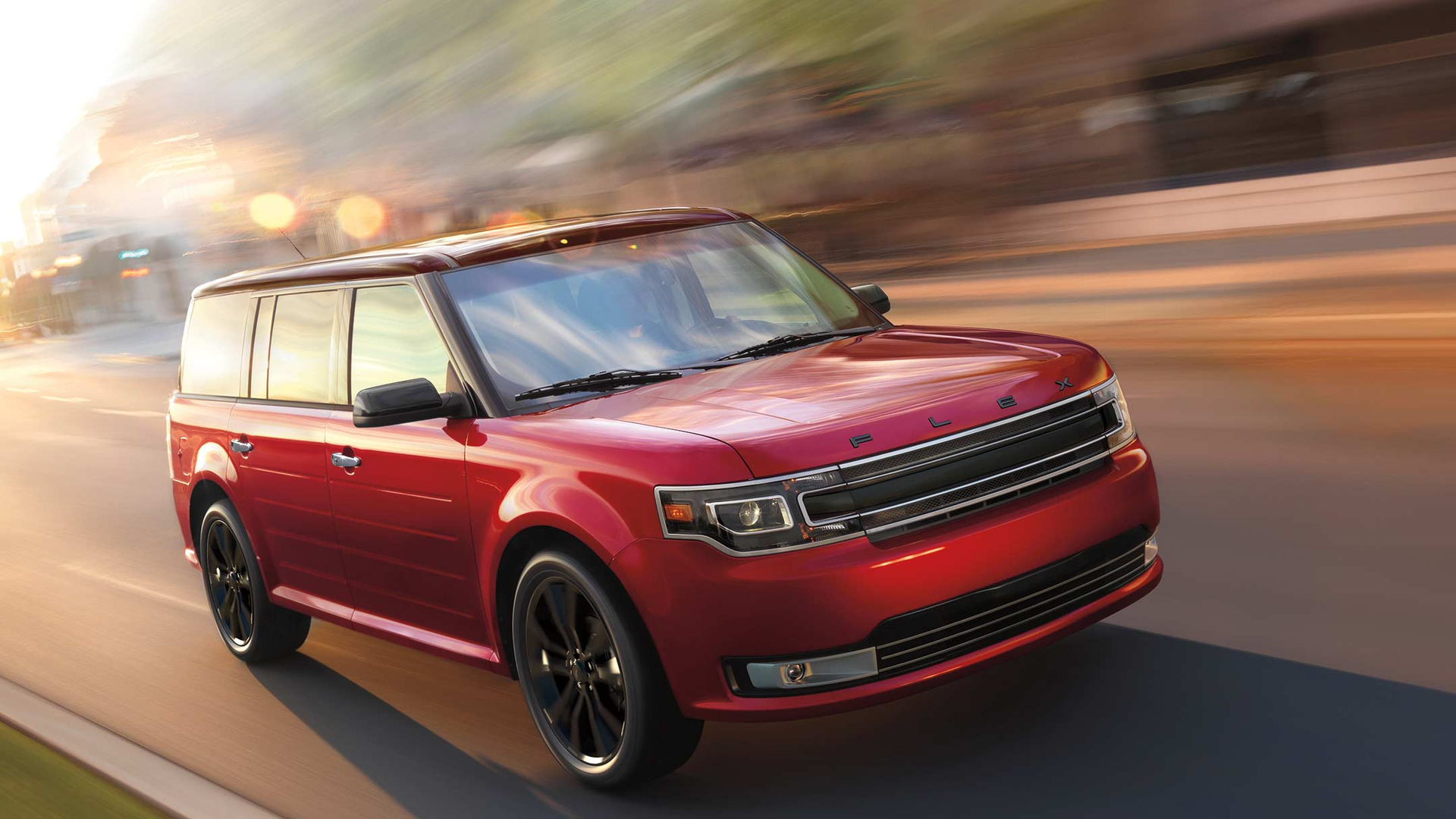
When the Ford Flex debuted in 2009, the automotive world didn't know what to make of it. It looked like a Mini Cooper on steroids or a 1950s surf wagon reimagined by Apple. It was low, incredibly long, and unapologetically boxy. While the masses flocked to the rounded, generic shape of the Ford Explorer, a dedicated group of buyers realized the genius of the Flex: Geometry.
When you browse the Flex listings on Hugegarage, you are looking at the ultimate triumph of function over formâwhich ironically became a form of its own. Because the roof is flat and the sides are vertical, the interior volume is massive. It offers genuine seating for seven adults, with a third row that a 6-foot person can actually sit in comfortably. It is the anti-minivan for parents who refuse to drive a sliding-door appliance.
The Ecobrick Phenomenon: Enthusiasts quickly realized that the top-tier Flex came with the 3.5L Twin-Turbo EcoBoost V6 (shared with the Taurus SHO). With a simple software tune, this 4,600-lb brick could embarrass Mustangs and Camaros at stoplights. It earned the affectionate nickname The Ecobrick, capable of running 13-second quarter miles while carrying a family of six to soccer practice.
Engineering: The D4 Platform
The Flex sits on the Ford D4 Platform, a heavy-duty version of the D3 (Five Hundred/Taurus) chassis. This means it is technically a unibody car, not a truck.
Ride Quality: Because it sits lower to the ground than an Explorer or Tahoe, it has a lower center of gravity. It corners flat and rides with the smoothness of a luxury sedan (Lincoln actually rebadged the Flex as the MKT).
Powertrains: Durability vs. Speed
The Flex offered two engines, both 3.5L V6s, but with vastly different personalities.
- 3.5L Duratec V6 (The Standard)
- Specs: 262-287 HP (depending on year).
Verdict: Reliable, sufficient, but unexciting. It moves the heavy Flex adequately but struggles when fully loaded on hills. It was available with FWD or AWD. - 3.5L EcoBoost V6 (The Limited)
- Specs: 355-365 HP / 350 lb-ft Torque.
Verdict: The engine you want. Standard with All-Wheel Drive (AWD) and a heavy-duty 6-speed automatic (6F55). It transforms the vehicle into a highway cruiser that never needs to downshift to pass.
The Critical Warning: Internal Water Pump
Hugegarage Technical Alert: If you are buying a Ford Flex (or any 3.5L Duratec/EcoBoost Ford of this era), you MUST be aware of the water pump design.
The Flaw: The water pump is chain-driven and located inside the engine timing cover.
The Failure: When the pump seal fails (usually around 100,000-120,000 miles), it can leak coolant directly into the oil pan.
The Result: The oil turns into a chocolate milkshake sludge, destroying the engine bearings instantly.
The Fix: Replacing the water pump is a $1,500-$2,000 labor-intensive job because the entire front of the engine must be disassembled. Check the oil cap for milky residue before buying.
Interior Quirks and Features
The Flex interior is a mix of old-school Ford buttons and brilliant packaging ideas.
1. The Refrigerator Console
The second row could be equipped with a center console that contained a genuine, compressor-driven refrigerator/freezer. It could cool up to seven 12oz cans to 41°F or freeze them to 23°F. This is a feature usually found in $400,000 Rolls-Royces.
2. Multi-Panel Vista Roof
Instead of one big sunroof, the Flex offered a four-panel skylight system.
- Front sunroof (opens).
- Two small rectangular skylights over the second-row passengers.
- One large skylight over the third row.
It makes the cabin feel incredibly airy, reducing motion sickness for rear passengers.
3. SYNC Evolution
Like other Fords of this era, 2009-2012 models have outdated tech. 2013-2015 have the often-frustrating MyFord Touch. 2016-2019 models feature SYNC 3, which is the sweet spot for modern usability (CarPlay/Android Auto).
The Styling Updates
- Gen 1 (2009-2012): Distinguished by the three-bar chrome grille and the word FLEX on the hood.
- Gen 2 (2013-2019): Received a sleek, single-bar grille (often satin silver) and updated headlights. The word FLEX replaced the blue Ford oval logo on the grille, a rare move for Ford branding.
Why Did Ford Kill It?
The Flex was discontinued in 2019 without a direct replacement.
The Reason: Internal competition. The Ford Explorer (which switched to the same unibody platform in 2011) outsold the Flex 10-to-1. Buyers preferred the rugged look of the Explorer over the wagon look of the Flex. However, the Flex actually offers more usable third-row space than the Explorer of the same vintage.
Conclusion: The Future Classic
The Ford Flex is one of those cars that becomes cooler after it goes out of production. Its design has aged remarkably well, looking more like a specialized tool than a dated crossover. For the family that needs space but hates the driving dynamics of a truck-based SUV or the stigma of a minivan, the Flex is the perfect middle ground. Find a clean EcoBoost model, change the water pump preventatively, and enjoy the coolest school bus on the block. Explore the specs below.