
The End of the Sliding Door Era
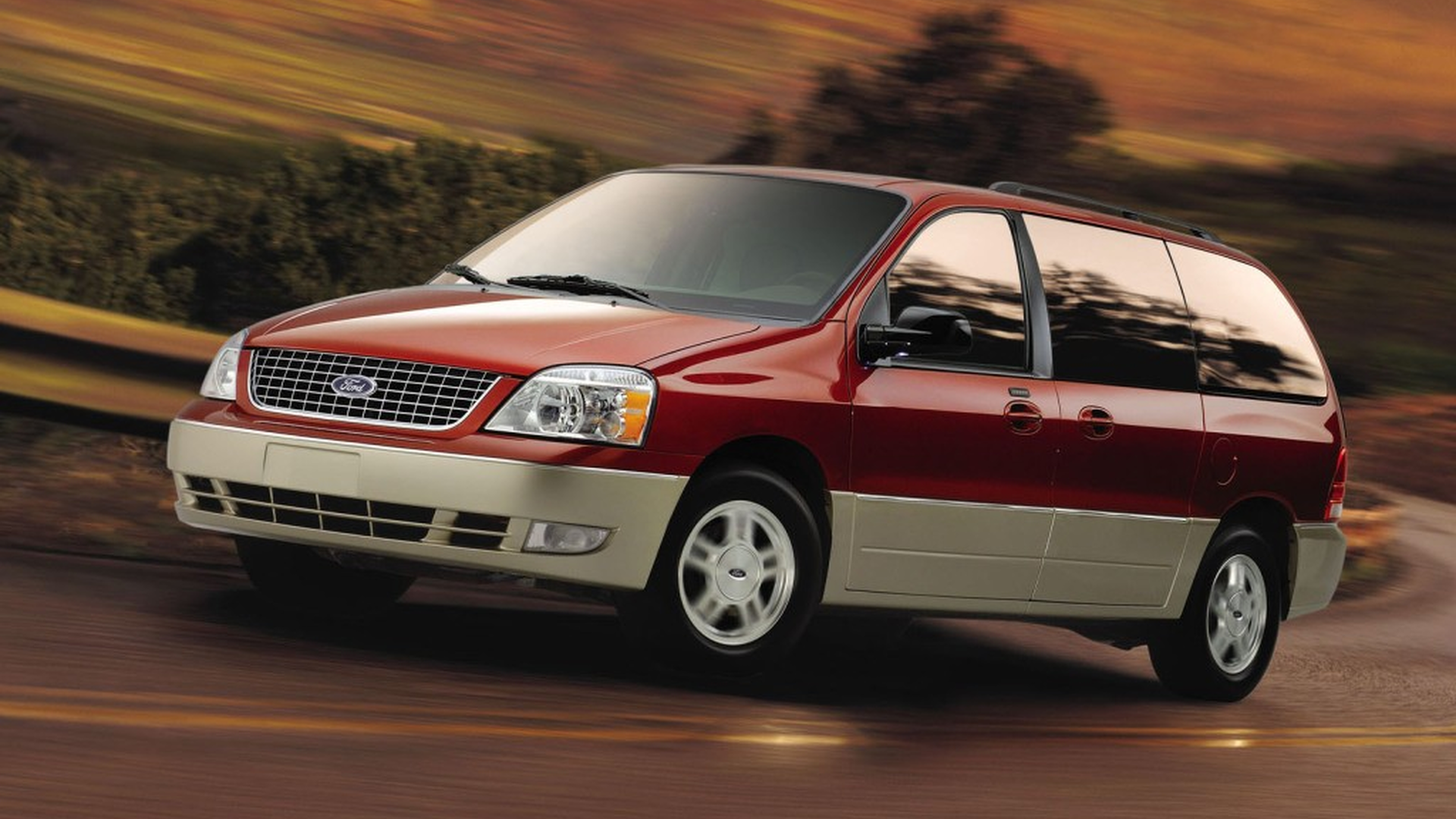
By 2004, the minivan segment was changing. The Soccer Mom stigma was driving buyers toward SUVs, and the Honda Odyssey and Toyota Sienna had raised the bar for refinement. Ford needed to update the aging Windstar. In a move to align with their new F-naming strategy (Focus, Five Hundred, Freestyle, Fusion), the Windstar was heavily re-engineered and reborn as the Ford Freestar.
When you browse the Freestar listings on Hugegarage, you are looking at a vehicle that represents the old school of American automotive engineering. While competitors were using high-revving overhead-cam engines and 5-speed automatics, Ford stuck to what they knew: massive displacement, pushrod V6s, and 4-speed gearboxes. It wasn't sophisticated, but it was torquey, quiet, and incredibly safe (earning top crash test scores). It was the swan song for the Ford minivan before the crossover utility vehicle (CUV) took over completely.
The Mercury Sibling: The Freestar had a luxury twin called the Mercury Monterey. It was mechanically identical but featured more chrome, satin aluminum trim, and higher-grade leather. It is arguably the better used buy today due to the higher spec level.
Engineering: Windstar Evolution
The Freestar sat on the Ford V Platform (specifically V229).
Improvements: Ford spent millions stiffening the chassis. They used thicker steel in the subframe and noise-deadening materials everywhere.
The Result: The Freestar is shockingly quiet inside. The isolation from road noise was superior to the Dodge Grand Caravan of the same era.
Powertrain: There Is No Replacement for Displacement
Ford ignored the industry trend of high-horsepower engines and focused entirely on low-end torque. You won't find 250 HP here, but you will find instantaneous throttle response off the line.
- 3.9L Essex V6
- Specs: 193 HP / 240 lb-ft Torque.
Context: This was the base engine. It was essentially a slightly de-bored version of the 3.8L from the Windstar. Reliable, but breathless at highway speeds. - 4.2L Essex V6
- Specs: 201 HP / 263 lb-ft Torque.
Context: This engine was lifted directly from the Ford F-150. It is a truck engine in a minivan.
The Drive: It pulls hard from a stoplight with a distinct grunt. However, it runs out of steam quickly above 4,000 RPM. It feels strong around town but struggles to pass at 75 MPH compared to a Honda VTEC V6.
The Transmission Weakness
All Freestars used the 4F50N 4-speed automatic.
The Issue: This transmission was pushed to its limit by the heavy Freestar (over 4,300 lbs) and the high torque of the 4.2L engine.
Symptoms: Torque converter shudder and stripped forward clutch splines. Regular fluid changes (Mercon V) are absolutely critical to keep this transmission alive past 120,000 miles.
Interior Innovation: The Tailgate Bench
While Chrysler had Stow 'n Go (where all seats folded into the floor), Ford had a different trick.
The Third Row: The third-row bench seat could fold backward into the deep cargo well.
Tailgate Mode: This created a rear-facing bench seat perfect for tailgating parties, watching fireworks, or changing kids out of muddy soccer cleats. When not in use, it folded completely flat to create a massive cargo floor.
Common Issues Maintenance
1. The PCM Water Leak (Critical)
This is the most famous Freestar killer.
The Design Flaw: The Powertrain Control Module (PCM) is located on the firewall, right under the plastic cowl (where the wipers are).
The Failure: The seal on the cowl degrades. Water drips directly onto the PCM connector.
The Result: The pins corrode, and the computer fries. The van will stall, refuse to start, or the transmission will shift erratically.
Hugegarage Fix: If you buy a Freestar, verify the PCM area is dry and apply silicone sealant to the cowl immediately.
2. Torque Converter Shudder
As mentioned, if you feel a vibration at 45 MPH that feels like driving over rumble strips, the torque converter lock-up clutch is failing. Add a tube of Dr. Tranny Instant Shudder Fixx as a temporary band-aid, but a rebuild is likely in the future.
3. Rust (Rocker Panels)
Like many Fords of this era, the plastic cladding on the rocker panels (under the doors) can trap salt and moisture, rotting the metal from the inside out. Inspect this area closely.
Why Was It Cancelled?
The Freestar failed to capture sales.
Reason 1: It looked too much like the old Windstar.
Reason 2: The competition was fierce. The 2005 Honda Odyssey and Toyota Sienna were lightyears ahead in technology and power.
Reason 3: The Ford Edge and Ford Flex. Ford realized that families wanted crossovers, not minivans. The Freestar was discontinued in 2007 without a direct sliding-door replacement.
Conclusion: The Budget Hauler
The Ford Freestar is not a vehicle you buy for passion; you buy it for utility and value. Because it is unloved by the market, you can pick up a clean, low-mileage Freestar for pennies compared to a Toyota Sienna. If you find one with a dry PCM and a transmission that shifts smoothly, it is an incredibly capable workhorse. The truck-based 4.2L engine is nearly indestructible if basic maintenance is performed. It represents the end of a lineageâthe last time Ford built a vehicle specifically for the soccer mom before inventing the crossover segment to replace her. Explore the specs below.