
The American Comeback Story
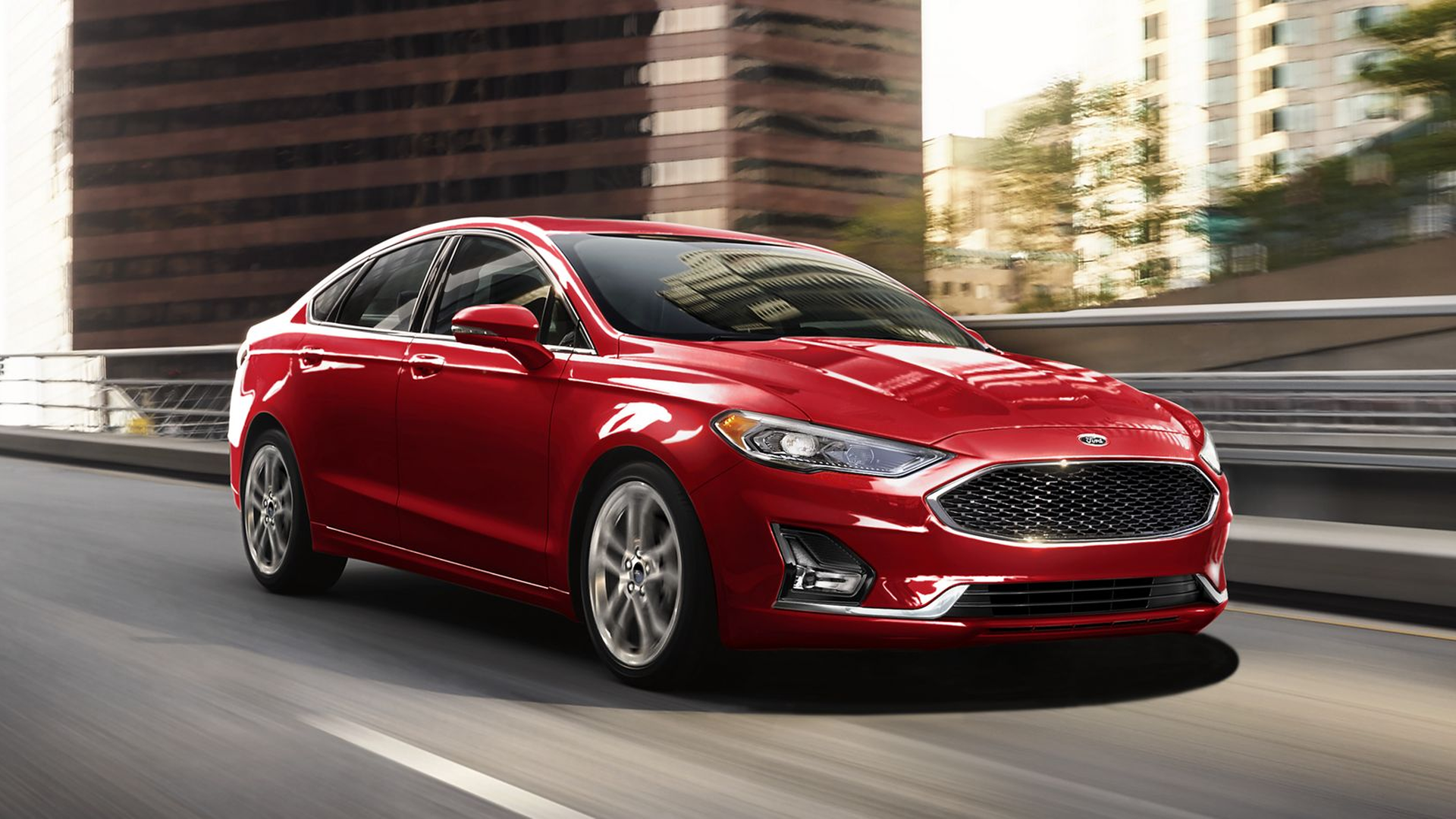
For decades, the Toyota Camry and Honda Accord dominated the American midsize sedan market. Ford's entries (the Contour, the Taurus) were always a step behind. That changed in 2006 with the launch of the Ford Fusion. It wasn't just good for an American car; it was legitimately excellent. It combined the sharp handling of the Mazda6 (with which it shared a platform) with bold American styling. By the time the stunning Aston Martin-esque second generation arrived in 2013, the Fusion wasn't just competing; it was setting the standard for style and technology.
When you browse the Fusion listings on Hugegarage, you are finding a vehicle that offers incredible variety. Whether you want a 42-MPG hybrid commuter, a simple family hauler, or a 325-horsepower AWD sleeper, there is a Fusion for you. Since Ford discontinued all sedans in 2020, the Fusion has become a highly sought-after commodity on the used market, offering modern tech at a fraction of the price of a new crossover.
The NASCAR Connection: The Fusion was the face of Ford in NASCAR for over a decade. This marketing push helped cement its image as a sporty alternative to the beige appliances from Japan. And unlike many marketing campaigns, the road car actually had the chassis dynamics to back it up.
Generation 1: The Reliable Foundation (2006â2012)
The first-gen Fusion (CD3 Platform) is renowned for its durability. It was based on the Mazda GG chassis.
The Engines
- 2.3L / 2.5L Duratec I4
- The Workhorse. Simple, naturally aspirated, and unkillable. We regularly see these engines hit 250,000 miles with just oil changes. If you want cheap transportation, buy a 2.5L Fusion.
- 3.0L Duratec V6
- The Cruiser. Smooth and reliable, but thirsty. It provided effortless highway passing power.
- 3.5L Duratec V6 (Sport Model)
- The Sleeper. Found in the 2010-2012 Fusion Sport. 263 HP. This model is a hidden gem with hydraulic power steering and sport suspension.
Generation 2: The Style Icon (2013â2020)
This generation (CD4 Platform) brought European sophistication. It looked like a luxury car and introduced a confusing array of engines.
Engine Guide: Which One to Buy?
- 2.5L Duratec (Base S Trim): The only non-turbo engine. It is slow (175 HP), but it is by far the most reliable. No turbos to fail, no direct injection carbon buildup.
- 1.5L EcoBoost: Avoid. Known for coolant intrusion issues where the block cracks between cylinders, destroying the engine.
- 2.0L EcoBoost: The sweet spot. 240 HP. Fast and generally reliable, though early models had turbo issues.
- 2.7L EcoBoost V6 (Fusion Sport): A beast. 325 HP / 380 lb-ft Torque. Standard AWD. It hits 0-60 in 5.3 seconds, embarrassing BMW 3-Series owners.
The Hybrid Masterpiece
The Fusion Hybrid and Fusion Energi (Plug-In Hybrid) deserve special mention.
The Tech: They use a 2.0L Atkinson-cycle engine paired with an electric motor and an eCVT.
Reliability: These are arguably the most reliable American cars ever built. They are widely used as NYC taxi cabs, often racking up 400,000 miles on the original powertrain. The eCVT has no belts or clutches to wear out.
Energi Compromise: The Plug-In model has a massive battery in the trunk, cutting cargo space by 50%. You can't fold the rear seats flat. Only buy the Energi if you don't need to carry luggage.
Transmission: The 6F35 Weakness
Gas-powered Gen 2 Fusions use the 6F35 6-speed automatic.
The Issue: It is prone to hard shifting (banging into gear) from 2nd to 3rd.
The Fix: Change the transmission fluid every 30,000 miles. Do not listen to the lifetime fluid claim. Fresh fluid keeps the valve body solenoids clean. If the shifting is already bad, a software update (PCM flash) often smooths it out.
Common Issues Maintenance
1. Swollen Lug Nuts
Like the Fiesta and Focus, the Fusion suffers from the infamous two-piece lug nut swelling. Replace them with solid aftermarket nuts immediately.
2. Steering Gear Bolts (Recall)
On 2013-2016 models, the aluminum bolts holding the electric steering motor could corrode and snap, causing loss of power steering. Verify recall 19S26 has been performed.
3. Door Latches
A frustrating issue where the door warns that it is open even when closed, or refuses to latch at all. Ford issued a massive recall for this.
Interior Tech
SYNC 3 (2017+): As always, try to buy a 2017 or newer model to get the excellent SYNC 3 touchscreen with Apple CarPlay.
The Rotary Shifter: In 2017, Ford replaced the gear lever with a rotary dial. It frees up space for cupholders but takes some getting used to.
Why Was It Cancelled?
The Fusion was profitable and popular (selling over 150,000 units a year even at the end). Ford killed it solely to free up factory capacity for the Bronco Sport and Maverick. It was a strategic pivot to trucks and SUVs, not a failure of the product itself.
Conclusion: The Smartest Used Buy
The Ford Fusion represents the peak of the American sedan. It is better to drive than a Camry, better looking than an Accord, and cheaper than both on the used market. For the ultimate reliability, find a 2017-2020 Fusion Hybrid Titanium. You get luxury features, 42 MPG, and a powertrain that will outlast the chassis. It is the perfect daily driver for the pragmatist who still enjoys the road. Explore the specs below.