
The Jet-Age Cruiser
In 1959, the Soviet Union had Sputnik, and America had the Space Race. Ford needed a name that captured the excitement of the era. They chose Galaxie. It was the top-of-the-line trim for the full-size Ford, sitting above the Fairlane. Unlike the compact Falcon or the sporty Mustang, the Galaxie was a big, heavy, comfortable cruiser designed to eat up thousands of miles of the new Interstate Highway System.
When you browse the Galaxie listings on Hugegarage, you are looking at the definitive 1960s American car. It evolved rapidly every year, from the finned and chrome-laden 1959 models to the sleek, NASCAR-aerodynamic Sports Roof fastbacks of 1963-64. While Mustangs get all the attention, a Galaxie offers more space, a smoother ride, and often the same legendary engines for a lower price.
The Cammer Legend: The most famous Galaxie engine was one that was barely sold to the public: the 427 SOHC Cammer. Developed to beat the Hemi in NASCAR, it made over 600 horsepower. NASCAR banned it for being too exotic, but it cemented the Galaxie's reputation as a performance machine.
Generation 1: The Finned Wonders (1959)
The 1959 Galaxie is instantly recognizable by its massive tailfins and round afterburner taillights. It was available as the Skyliner, a retractable hardtop convertible where the entire steel roof folded mechanically into the trunkâan engineering marvel of the 50s.
Generation 2: The Starliner Era (1960â1964)
This is the golden era of the Galaxie.
1960-1961: The Starliner coupe featured a swooping, pillarless roofline that looked fast standing still.
1963.5 R-Code: Ford introduced the Sports Roof (fastback) mid-year to improve aerodynamics on the Daytona banking. This car, equipped with the 427 cubic inch V8 (425 HP), is one of the most collectible Fords ever made.
The Total Performance Engines
- 390 FE V8
- The Standard Muscle. 300-330 HP. The most common performance engine. Reliable, torquey, and easy to tune.
- 406 FE V8
- The Racer (1962). A bored-out 390 designed for drag racing. Rare.
- 427 FE V8
- The King. The side-oiler 427 is legendary. It won Le Mans (in the GT40) and dominated NASCAR. In a street Galaxie, it was a terror.
Generation 3: The Stacked Headlight Look (1965â1968)
In 1965, the Galaxie became squarer and sharper. The headlights were stacked vertically (like a Pontiac).
The 7-Liter (1966): A special one-year-only model featuring the massive 428 cubic inch V8 (345 HP). It was the ultimate gentleman's muscle car, featuring bucket seats, heavy-duty suspension, and unique badging.
Generation 4: The LTD Takeover (1969â1974)
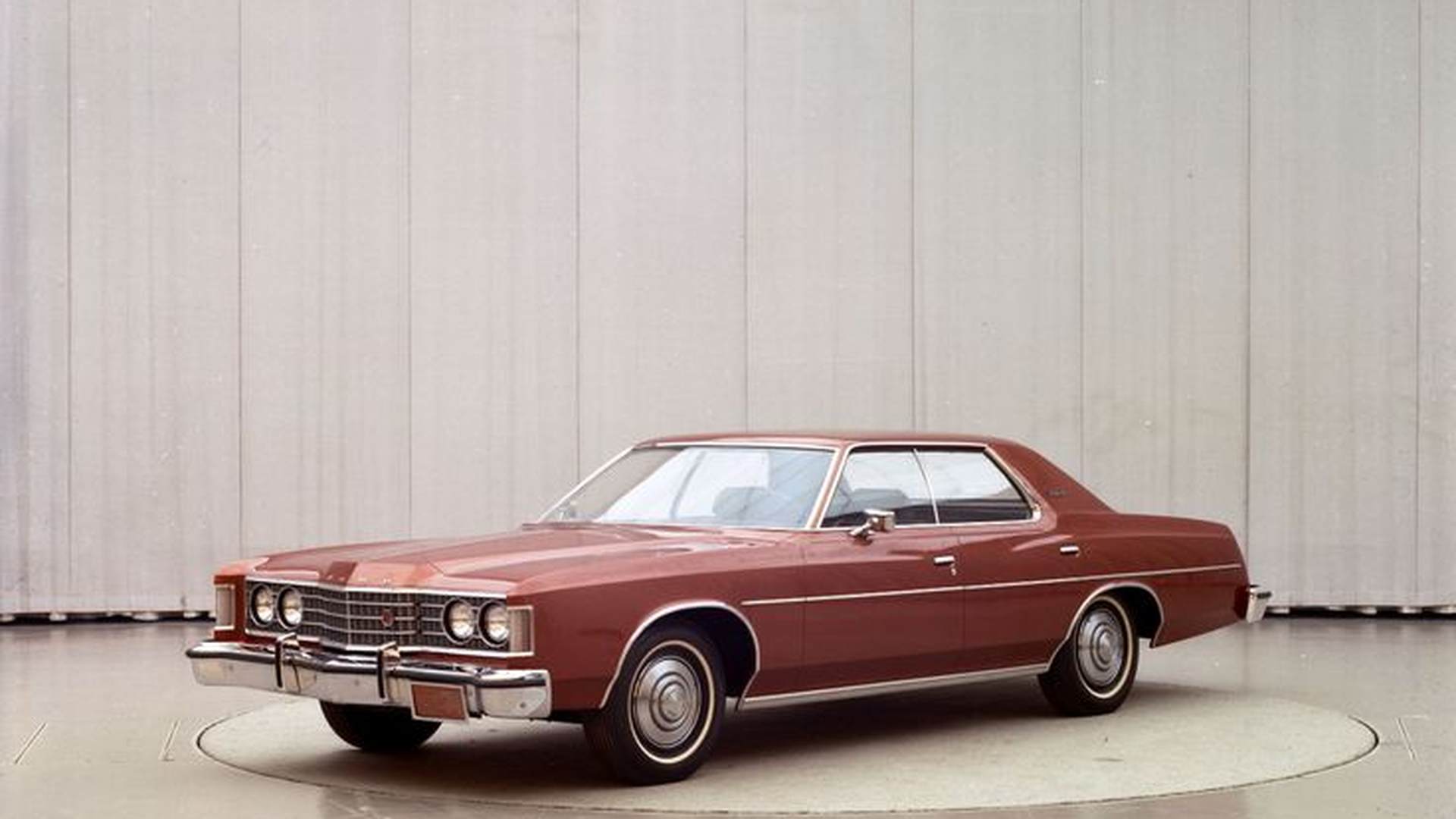
By the late 60s, buyers wanted luxury more than speed. The Galaxie grew larger and softer. The LTD trim became the focus, eventually replacing the Galaxie name entirely in 1975. These cars are less valuable to collectors but make fantastic, comfortable cruisers.
Common Issues for Collectors
1. Frame Rot
The Galaxie uses a perimeter frame. Check the rear frame rails near the bumper and the torque boxes (where the frame bends) for severe rust. A rotted frame is a dealbreaker.
2. Cowl Leaks
Leaves get trapped in the cowl vents (in front of the windshield). They hold moisture, rotting the metal and allowing water to leak onto the driver's floor, rusting the floor pans.
3. Parts Availability
Unlike the Mustang, where you can build a new car from a catalog, Galaxie body panels and trim pieces are not widely reproduced. Buying a complete car is critical.
Conclusion: The Alternative Icon
The Ford Galaxie is the car for the enthusiast who wants 1960s V8 thunder but needs room for the whole family. It commands respect at every car show not just for its size, but for its racing pedigree. A 1963.5 Galaxie 500XL with a 390 V8 is arguably one of the most beautiful moving objects ever created. Explore the massive specs below.