
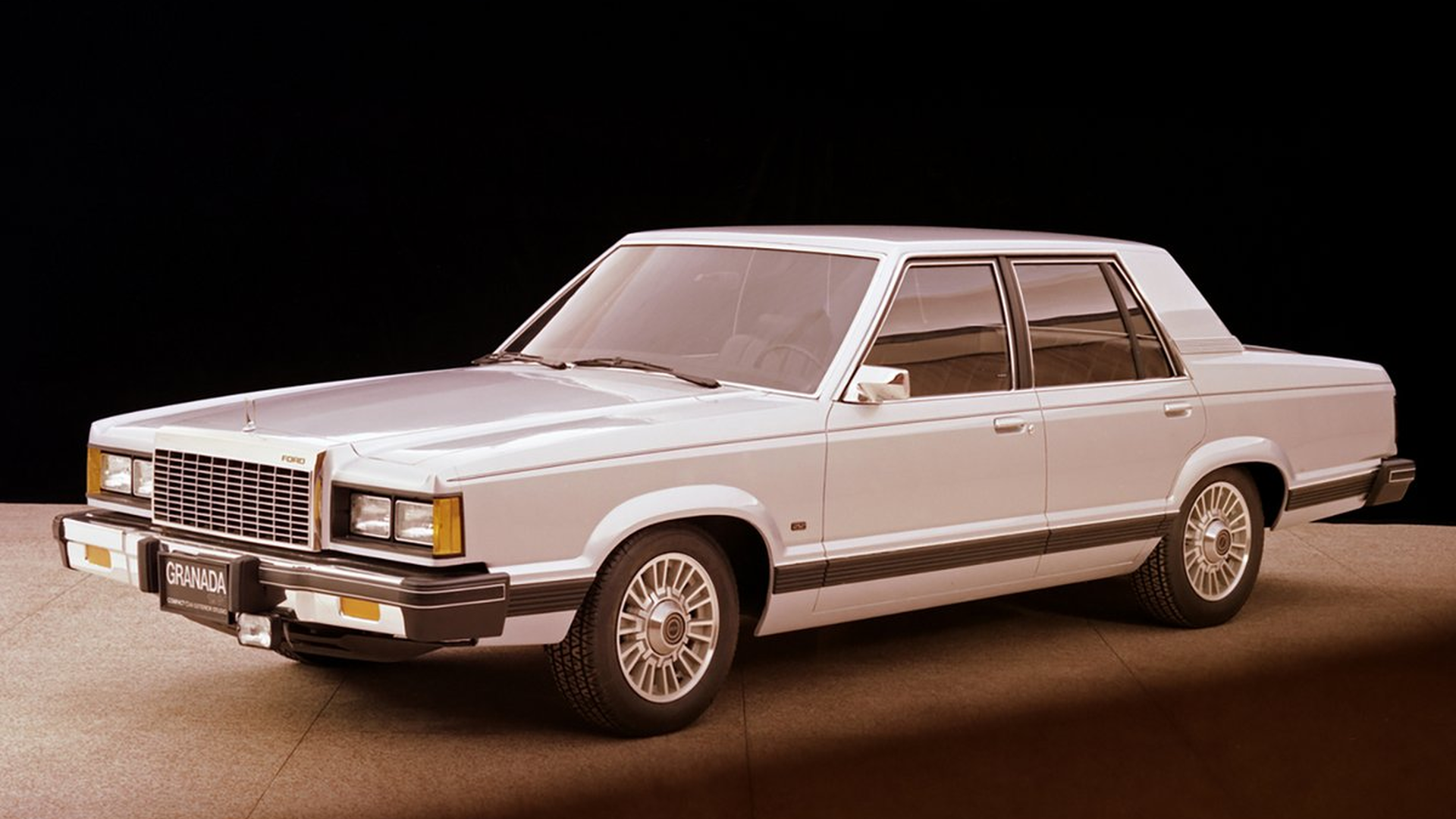
The Great Mercedes Imposter
In 1975, the oil crisis had killed the muscle car, and Americans were looking for something smaller but still luxurious. Ford's answer was the Granada. The marketing campaign was audacious: Ford ran side-by-side comparisons with the Mercedes-Benz 280SE, asking if you could tell the difference. While the engineering wasn't quite German, the styling was spot-on. With its upright grille, rectangular headlights, and boxy proportions, the Granada looked expensive. It was a massive hit, selling over 2 million units and becoming the face of late-70s American motoring.
When you browse the Granada listings on Hugegarage, you are finding a car that prioritizes comfort above all else. It is not fast, and it doesn't handle like a sports car, but it offers a plush, velour-lined ride that modern cars simply can't match. It is the ultimate "personal luxury" bargain.
The Monarch Twin: The Granada had a Mercury twin called the Monarch. It was identical except for the grille and taillights. A "Lincoln Versailles" was also built on this platform, which was essentially a Granada with a Continental tire hump on the trunk and a $12,000 price tag.
Generation 1: The Maverick in a Tuxedo (1975â1980)
Underneath the fancy sheet metal, the first-gen Granada was actually based on the humble Ford Maverick (unibody chassis).
The Engines:
- 200/250 Inline-6: The standard engines. Indestructible but slow (96 HP).
- 302 Windsor V8: The upgrade. With roughly 140 HP, it provided smooth cruising power.
- 351 Windsor V8: Available in early years, but rare.
The Ghia Trim
The top-spec Granada Ghia is the one to collect. It featured incredibly thick shag carpeting, map pockets, faux wood trim, and a vinyl roof. It was pure 70s decadence.
Generation 2: The Fox Platform (1981â1982)
For 1981, the Granada was completely redesigned. It moved to the Fox Platform (shared with the Mustang and Fairmont).
The Change: It became smaller, lighter, and boxier. The styling was aerodynamic but generic.
The Engine: The Inline-6 was replaced by the 3.3L (200 ci) straight-six or the new 3.8L Essex V6.
The Wagon
This generation introduced a station wagon model, which replaced the Fairmont wagon. It is a rare sight today.
Common Issues & Maintenance
1. Front Suspension (Gen 1)
Because it used the old Falcon/Maverick suspension design, the shock towers intrude into the engine bay, making spark plug changes on V8 models a nightmare. The upper control arm bushings also wear out frequently.
2. Carburetor Issues
The Motorcraft 2150 2-barrel carburetor is generally reliable, but emissions equipment from the late 70s (vacuum lines, EGR valves) often clogs up, causing rough idling. Removing or simplifying the vacuum lines (where legal) often improves performance.
3. Rust (Vinyl Roof)
The vinyl roof was a popular option, but it traps moisture. It is common to find severe rust around the rear window and C-pillars bubbling up from under the vinyl.
Why Was It Cancelled?
In 1983, Ford reshuffled its lineup. The mid-size Fox-body Granada was given a facelift and renamed the Ford LTD (the mid-size one, not the Crown Vic). The Granada name was retired in North America, though it continued in Europe as a completely different executive car.
Conclusion: The 70s Time Capsule
The Ford Granada is not a performance car. It is a mood. It represents a time when luxury meant thick seats, fake wood, and a hood ornament. For collectors, a Gen 1 Granada coupe with the 302 V8 is a fantastic cruiser that costs a fraction of a Mustang but shares much of the same mechanical DNA. It is the perfect car for a slow Sunday drive. Explore the specs below.