Ford Ka: The "New Edge" Design Revolution

The Ford Ka was a shock to the system. Launched in 1996, it introduced Ford's "New Edge" design. Built on the agile Fiesta chassis, it offered go-kart handling in a polarizing package. From the basic city car to the wide-arched SportKa and the Fiat-based sequel, the Ka proved that cheap transportation didn't have to be dull.

Production: 1996-2021
25 Min Read
Ford Ka Exterior Photo

Author

HugeGarage Editor

Published

Updated

25 Min Read

The Face of "New Edge"

In 1996, the automotive world was filled with soft, jellybean shapes (think Ford Taurus). Ford shattered that trend with the Ford Ka. Designed by Claude Lobo and Jack Telnack, it was the debut of the New Edge design language—a philosophy of intersecting arcs and sharp lines that would later define the Focus and Cougar. The Ka looked like nothing else on the road. It was tiny, featured massive unpainted bumpers (to reduce repair costs in Paris traffic), and had a wheel at each extreme corner.

When you browse the Ka listings on Hugegarage, you are looking at a piece of design history. While it was an economy car, it was engineered by the same team that made the Fiesta handling legends. Consequently, the original Ka is widely considered one of the best-handling front-wheel-drive cars ever made, offering pure, unassisted steering feedback that puts modern sports cars to shame.

The Pronunciation Debate: Is it Kay-Ay or Kah? Ford officially stated it is pronounced with a hard a, like Cat. The name comes from the ancient Egyptian concept of the soul (Ka), implying the car has a spirit.

Generation 1: The Original Icon (1996–2008)

The Mk1 Ka is the purist's choice. It stayed in production for 12 years largely unchanged, a testament to its timeless (or stubborn) design.
The Engines:
- 1.3L Endura-E: The early models used this ancient pushrod engine (dating back to the 1950s Ford Anglia). It was noisy and coarse but unkillable.
- 1.3L Duratec (2002+): A modern overhead-cam engine. Smoother, more efficient, and the one to buy.

The Evil Twins: SportKa and StreetKa

In 2003, Ford injected testosterone into the cute city car.
SportKa: A hot hatch version featuring a 1.6L engine (94 HP), wider track, stiffer suspension, and aggressive flared wheel arches. It was marketed as The Ka's Evil Twin.
StreetKa: A two-seater roadster designed by Pininfarina and marketed by pop star Kylie Minogue. It was stylish but suffered from a complex manual roof.

Generation 2: The Italian Job (2008–2016)

For the second generation, Ford partnered with Fiat. The Mk2 Ka was built in Tychy, Poland, on the same assembly line as the Fiat 500.
The Difference: While the Fiat 500 was retro and soft, Ford engineers retuned the chassis to make the Ka feel sharper and heavier, consistent with the Ford DNA. It featured the 1.2L Fiat engine. It famously appeared in the James Bond film Quantum of Solace.

Generation 3: The Global Ka+ (2016–2021)

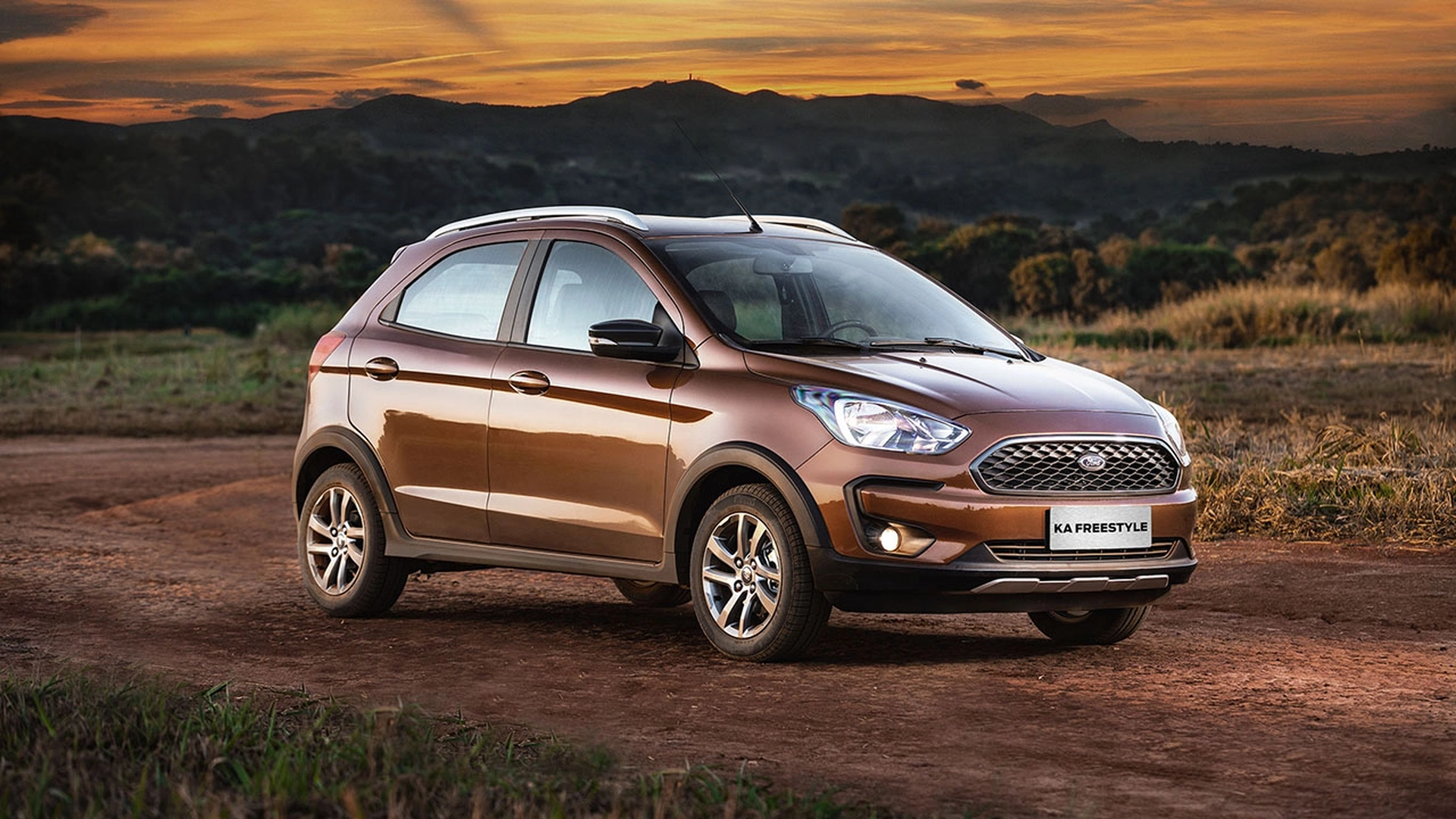
The final chapter was the Ka+. It was a 5-door subcompact built in India and Brazil. It prioritized interior space and value over style. It lost the quirky charm of the original but was a thoroughly competent, if forgettable, budget car.

Common Issues Maintenance

1. Rust (The Mk1 Killer)

The original Ka has a fatal flaw: rust. Specifically, around the fuel filler cap. Moisture gets trapped behind the panel, rotting the metal from the inside out. Sills and floor pans are also vulnerable. A rust-free Mk1 is a rare gem.

2. Suspension Arms

The front lower control arm bushings wear out rapidly, leading to knocking noises and vague steering. Replacing the entire arm is a standard service item.

3. Heater Control Valve

If the heater blows only hot air or only cold air, the electronic heater control valve in the engine bay has failed. It is a common Ford failure of this era.

Conclusion: The Designer Beater

The Ford Ka (Mk1) is a future classic. It was a brave design statement that cost pennies to buy. For American enthusiasts, it represents the European Ford experience we missed—a car that proves you don't need horsepower to have fun, just a lightweight chassis and a brave driver. Whether you view it as a piece of modern art or a rusty winter beater, the Ka has a soul. Explore the specs below.

Frequently Asked Questions

Is the 2nd generation Ford Ka exactly the same car as the Fiat 500?

Underneath the exterior body panels, yes. When Ford redesigned the Ka for its second generation (2008–2016), they partnered directly with Fiat to save massive development costs. The Mk2 Ford Ka is built on the exact same "Mini" platform as the Fiat 500, utilizes the same suspension, and is powered by Fiat-sourced engines (like the 1.2L FIRE petrol). Both cars were even built side-by-side in the exact same factory in Tychy, Poland.

What are the most common rust problems on a classic Mk1 Ford Ka?

If you are buying a first-generation Ford Ka (1996–2008), you must inspect the structural steel meticulously, as they are notorious for catastrophic rust issues.

Hugegarage Technical Tip: The absolute most common failure point is the metal surrounding the fuel filler cap. Water and dirt get trapped behind the plastic arch liner and completely rot out the rear quarter panel. Furthermore, check the door sills and the floor pans near the front suspension mounts; if these are heavily corroded, the car will fail its safety inspection and require expensive welding.

Why does the heater in my Ford Ka only blow scorching hot air?

This is the single most common mechanical failure on the Mk1 Ford Ka. The vehicle utilizes an electronic Heater Control Valve (HCV) located on the bulkhead under the windshield cowl. The internal solenoid frequently jams in the open position, allowing hot engine coolant to constantly flow into the heater matrix regardless of your dashboard dial setting. Experience the relief of a cheap fix: replacing the HCV is a simple 15-minute DIY job that only costs a few dollars in parts.

What is the Ford StreetKa, and who designed it?

Introduced in 2003, the StreetKa was a chic, two-seater convertible version of the standard Ka. However, Ford did not design the body. They contracted the legendary Italian design house Pininfarina (famous for designing Ferraris) to style the sleek exterior and assemble the vehicle in Italy. Featuring a peppy 1.6L engine, stiffer suspension, and a manual soft-top roof, it became incredibly famous after a massive European advertising campaign starring pop icon Kylie Minogue.

Which engine is better in the Mk1 Ford Ka: the Endura-E or the Duratec?

The year of the car dictates which engine you get, and there is a massive difference in refinement.

1.3L Endura-E (1996–2002)
An ancient overhead-valve (pushrod) engine dating back to the 1950s Ford Anglia. It is incredibly tough but horribly unrefined, loud, and notorious for requiring frequent manual valve clearance adjustments (tappets).
1.3L Duratec (2002–2008)
Ford finally replaced the Endura with the modern overhead-cam (OHC) Duratec. It is vastly smoother, revs much cleaner, gets better fuel economy, and is much quieter on the highway.
What makes the Ford SportKa the "Evil Twin"?

To appeal to younger, driving-focused enthusiasts, Ford launched the SportKa in 2003 alongside a highly controversial "Evil Twin" marketing campaign. They took the standard Mk1 Ka and widened the front and rear track, installed aggressive front and rear bumpers, added stiffer suspension, and dropped in the 95 HP 1.6L 8-valve engine. Because the car is so incredibly lightweight and features a wheel at each absolute corner, it handles like a true go-kart on winding B-roads.

Does the Ford Ka have a timing belt or a timing chain?

This depends entirely on the generation and engine.

  • Mk1 Endura-E & Duratec (1996–2008): Both of these 1.3L engines utilize a heavy-duty metal timing chain that is designed to last the life of the engine and does not require periodic replacement.
  • Mk2 1.2L Engine (2008–2016): Because this is a Fiat-sourced engine, it utilizes a rubber timing belt. You must proactively replace this belt and the water pump roughly every 5 years or 60,000 miles to prevent catastrophic engine failure.
What is the difference between the Ford Ka and the Ford Ka+?

The Ford Ka+ (Ka Plus), introduced in Europe in 2016, is a completely different vehicle from the earlier generations. While the Mk1 and Mk2 were tiny, 3-door city cars, the Ka+ is a much larger, 5-door budget hatchback built in India (and originally designed for emerging markets like Brazil). It is slightly shorter than a Ford Fiesta but offers massive interior headroom and rear-seat passenger space, transforming the Ka from a stylish city car into a highly practical budget family runabout.

Is the Ford Ka a good first car for a teenager?

Yes, it is traditionally considered one of the absolute best first cars for new drivers. The Ford Ka sits in the lowest possible insurance groups in Europe, making it incredibly cheap to insure. Its massive, unpainted plastic bumpers (on early models) shrug off parking lot scrapes, and the large windows offer phenomenal 360-degree visibility. However, if buying an early Mk1, be aware that they lack modern safety features like side-curtain airbags and electronic stability control.

What kind of gas mileage (MPG) does a Ford Ka get?

Because it is a highly stripped-down, lightweight city car, fuel efficiency is excellent. A standard Mk1 Ka with the 1.3L engine typically achieves a combined 38 to 42 MPG. The vastly more modern, Fiat-based Mk2 Ka equipped with the 1.2L petrol engine is even better, easily returning an EPA-estimated 50 to 55 MPG in combined city and highway driving, making it one of the cheapest vehicles to run for daily commuting.