
The Impossible Task
In 1927, Henry Ford shut down his massive River Rouge factory for six months. The Model T, the car that changed the world, was obsolete. The world waited with bated breath for what came next. When the Ford Model A was unveiled on December 2, 1927, mob scenes erupted at dealerships. It was handsome, powerful, and crucially, it was conventional. It signaled that the automobile was no longer just a piece of farm machinery; it was a lifestyle accessory.
When you browse the Model A listings on Hugegarage, you are looking at the sweet spot of pre-war motoring. Unlike the Model T, the Model A has standard controls (clutch, brake, gas) and can cruise at 55 MPH. It is arguably the oldest car that can still be driven in modern traffic without terrifying the driver.
The Baby Lincoln: Edsel Ford (Henry's son) was responsible for the styling. He insisted the car look like a scaled-down Lincoln L-Series. With its polished nickel radiator shell and elegant curves, it brought high society style to the budget market.
Engineering: A Quantum Leap
The Model A was advanced for its price point ($385 to $1400).
- Engine: 201ci (3.3L) L-Head Inline-4
- Specs: 40 HP.
The Upgrade: This was twice the horsepower of the Model T. It featured a water pump (no more relying on gravity) and a coil-and-distributor ignition (no more buzzing wooden boxes). - Transmission: 3-Speed Sliding Gear
- This introduced the standard H-pattern gear shift to Ford buyers. It required double-clutching to shift smoothly, but it was far more robust than the old planetary bands.
- Safety Glass
- The Model A was the first low-priced car to feature Triplex safety glass in the windshield. Before this, a stone chip could shatter the windshield into deadly shards.
1928-1929 vs. 1930-1931
Model A enthusiasts divide the production run into two distinct eras:
- 1928-1929 (Early): Identified by the steeper cowl section (where the hood meets the body) and slightly smaller 21-inch wheels.
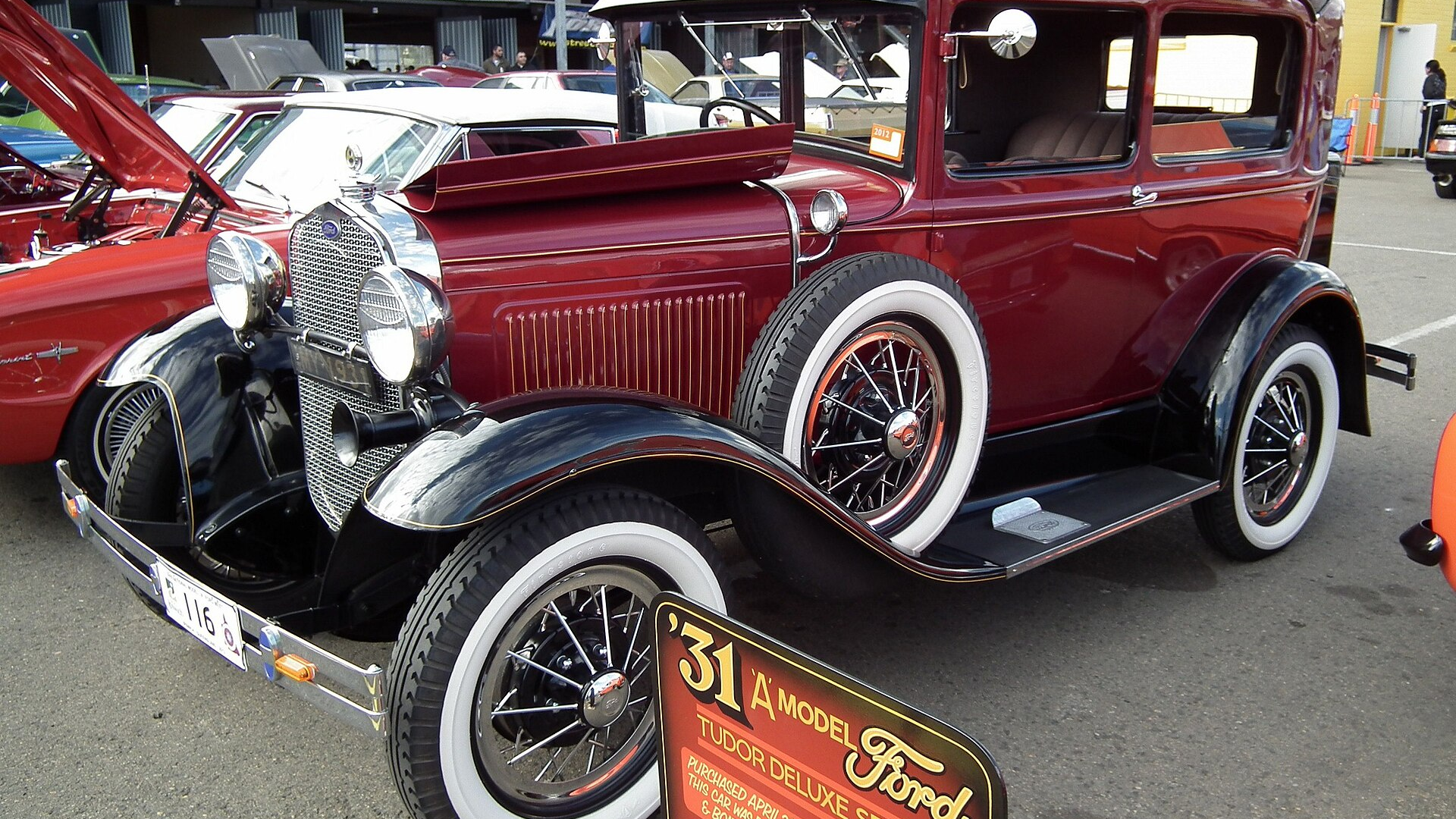
- 1930-1931 (Late): A major facelift. The radiator shell became taller and stainless steel (instead of nickel). The cowl became smoother, the fenders more sweeping, and the wheels dropped to 19 inches. These later cars are generally considered more attractive and drive slightly better.
Driving Dynamics
Driving a Model A is a mechanical joy. The brakes are mechanical (rods, not hydraulic fluid), so stopping requires a firm foot and planning. The steering is unassisted but direct. The suspension uses transverse leaf springs, which give it a bouncy but unbreakable ride over rough terrain.
Common Issues Maintenance
1. Babbitt Bearings
The engine's main bearings are made of poured Babbitt metal rather than modern insert bearings. If the oil runs low or the engine is lugged too hard, these bearings can melt or deform, requiring an expensive engine rebuild.
2. Zenith Carburetor
The original updraft carburetor relies on gravity. If the car sits for a long time, the float can stick, leaking fuel onto the garage floor. Modern shut-off valves are a mandatory safety upgrade.
3. The Death Wobble
Worn kingpins or loose steering components can cause the front wheels to shake violently after hitting a bump. It's a terrifying but fixable mechanical issue.
Conclusion: The Usable Classic
The Ford Model A is the perfect entry point into pre-war car collecting. Parts availability is unmatchedâyou can practically build a brand new one from a catalog today. It offers the romance of the Roaring Twenties with enough reliability to actually drive to the ice cream shop on Sunday. Explore the detailed specs below.