
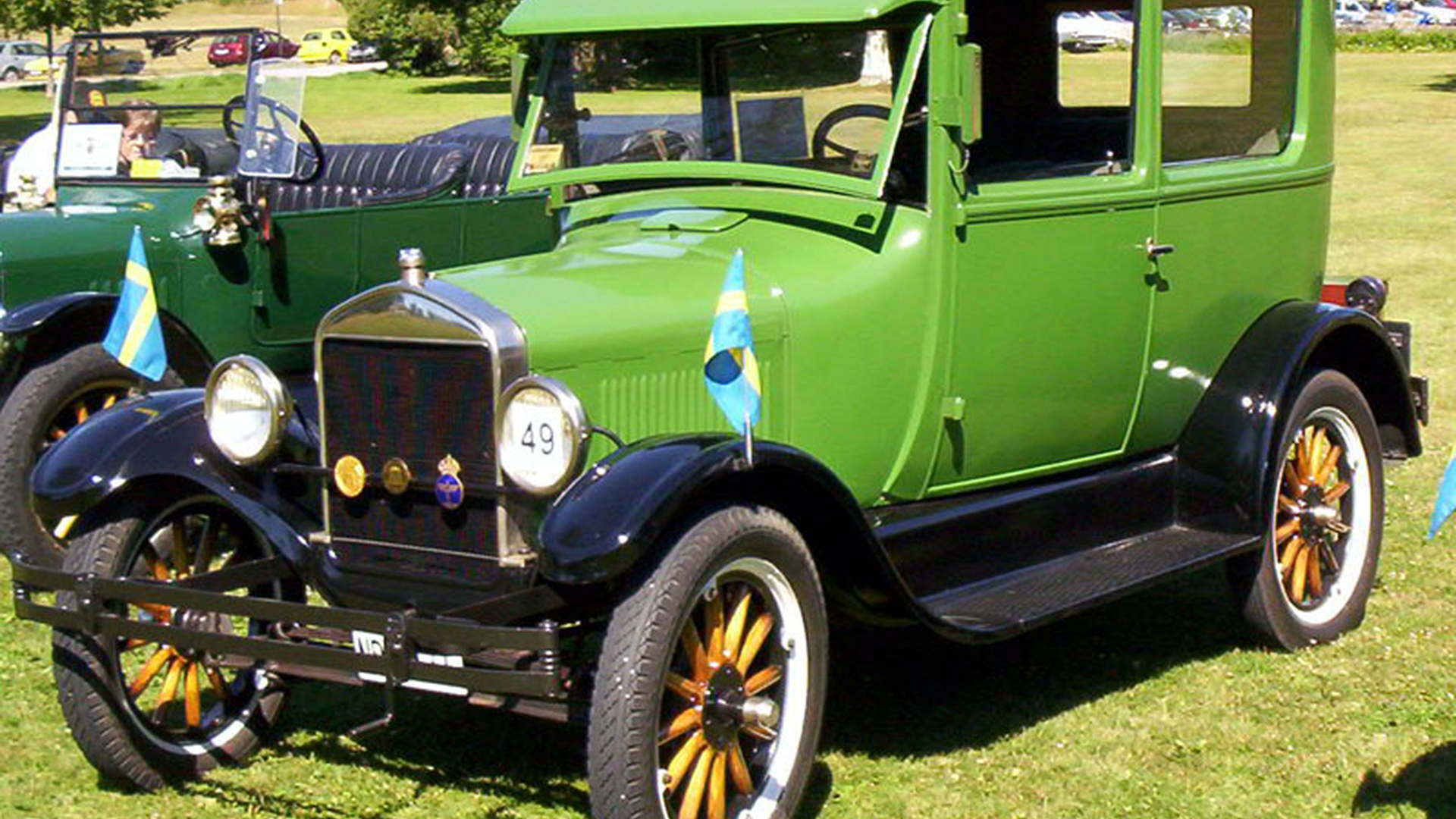
The Universal Car
In 1908, Henry Ford introduced a vehicle with a simple mission: to be a universal car. It had to be durable enough for rough farm roads, simple enough for a blacksmith to fix, and cheap enough for a factory worker to buy. The Ford Model T succeeded on all counts. By the time production ended in 1927, Ford had built 15 million of them. It didn't just launch the Ford Motor Company; it literally reshaped the geography of the United States, demanding paved roads and creating the suburb.
When you browse the Model T listings on Hugegarage, you aren't just looking at a vintage car; you are looking at the mechanical ancestor of every vehicle on the road today. However, do not be fooled by its ubiquityâdriving a Model T is a unique skill that requires unlearning everything you know about modern driving.
The Any Color Myth: Henry Ford famously said, Any customer can have a car painted any color that he wants so long as it is black. This was only true from 1914 to 1925. Early Model Ts (1908-1913) came in Red, Grey, and Green. Ford switched to black exclusively because the Japan Black enamel dried faster than any other paint, allowing the assembly line to move quicker.
How to Drive a Model T (It's Not What You Think)
The Model T does not have a standard gear stick or a gas pedal. It uses a Planetary Transmission controlled by three floor pedals and levers on the steering column.
- The Left Pedal: This is the gear selector. Push it all the way down for Low Gear. Let it come all the way up for High Gear. Hold it in the middle for Neutral.
- The Middle Pedal: This is Reverse. You press it while the car is in neutral to go backward.
- The Right Pedal: This is the Brake. (Note: It brakes the transmission, not the wheels).
- The Throttle: A lever on the right side of the steering wheel.
- The Spark Advance: A lever on the left side of the steering wheel.
Driving a Model T is like playing a church organ. It requires coordination and rhythm, but once mastered, it is incredibly satisfying.
Engineering: The Vanadium Steel Advantage
One of the secrets to the Model T's success was Ford's use of Vanadium Steel.
The Benefit: It was lighter and stronger than the steel used by competitors. This allowed the Model T to weigh just 1,200 lbs while being tough enough to twist and flex over deep ruts without breaking. The chassis was designed to articulate, acting as part of the suspension.
The Engine: Low and Slow
The heart of the beast is a side-valve inline-4.
- Displacement
- 177 cubic inches (2.9L)
- Power
- 20 HP @ 1,600 RPM
- Torque
- 83 lb-ft @ 900 RPM
- Top Speed
- 40-45 MPH (terrifyingly fast on 1920s roads)
The engine relied on a magneto for spark (after starting on a battery) and used a thermosiphon cooling systemâhot water rose to the top of the radiator and cool water sank, with no water pump to fail.
The Body Styles
The Model T wore many hats over its 19-year run.
- Touring: The classic open-top 5-seater.
- Runabout: A sporty 2-seater.
- Center Door Sedan: An early enclosed car with one door in the middle of the body.
- Fordor Tudor: Later enclosed sedans that offered weather protection.
- Trucks Tractors: Owners converted Model Ts into everything from sawmills to snowmobiles using aftermarket kits.
Maintenance: The Tool Kit Car
Fixing a Model T is delightfully simple. Most repairs can be done with a wrench, a screwdriver, and a piece of bailing wire.
Trembler Coils: The ignition system uses four wooden boxes (coils) that buzz like angry bees. Adjusting them is part of the ownership ritual.
Transmission Bands: The planetary gears use cotton (or now Kevlar) bands to engage. These wear out and need to be adjusted or replaced regularly.
Conclusion: The Ultimate Teacher
The Ford Model T is the ultimate collector car for the enthusiast who wants to be involved. You cannot drive it while texting. You cannot drive it without listening to the engine. It connects you to the pioneers of the 20th century in a visceral, noisy, vibrating way. It is slow, drafty, and difficult to stopâand that is exactly why we love it. Explore the specs below.