
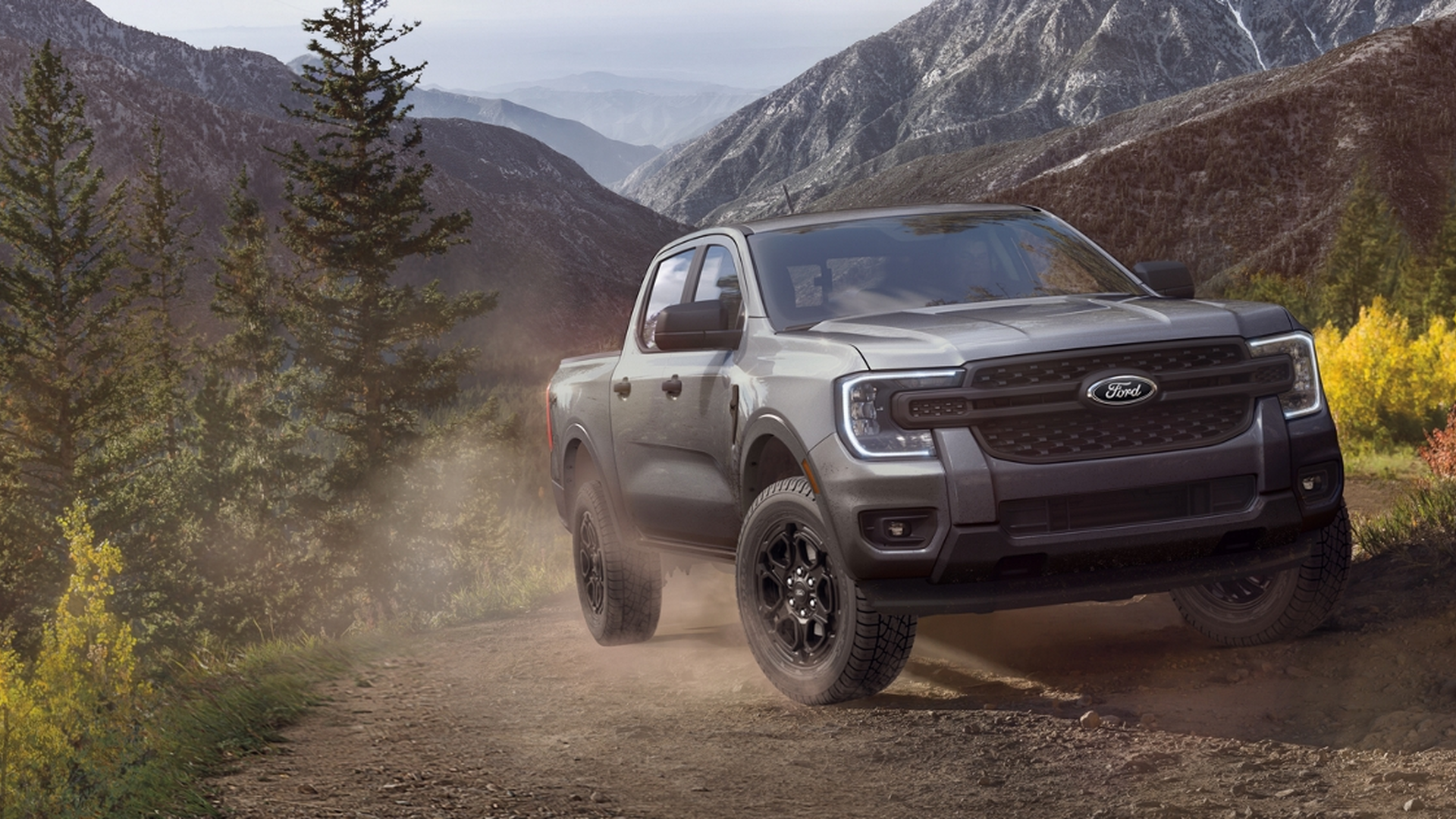
The Return of the Right-Sized Truck
For nearly 30 years, the Ford Ranger was the default choice for pest control fleets, pool cleaners, and teenagers buying their first vehicle. It was small, cheap, and virtually indestructible. Then, in 2011, Ford killed it, believing buyers would just upgrade to an F-150. They were wrong. The mid-size truck market exploded with the Toyota Tacoma and Chevy Colorado, leaving Ford on the sidelines.
In 2019, the Ranger returned to North America. But this wasn't the compact truck of the 90s. It had grown into a sophisticated, turbocharged mid-size machine capable of towing 7,500 lbs. When you browse the Ranger listings on Hugegarage, you are looking at two distinct lineages: the classic compact trucks (1983-2011) and the modern mid-size trucks (2019-Present). Both are legends in their own right.
The Chicken Tax: Why did the Ranger disappear? Part of the reason was the famous Chicken Tax, a 25% tariff on imported light trucks. Ford builds the global Ranger in Thailand and South Africa, but to sell it in the US, they had to retool a factory in Michigan to build it locally, avoiding the tax.
The Classic Era (1983â2011)
These are the trucks enthusiasts affectionately call the Danger Ranger. They are prized today for their simplicity.
The Engines
- 2.3L / 2.5L Lima 4-Cylinder: The Pinto engine. Slow (around 100 HP), but it features a timing belt that is non-interference, meaning if it snaps, the engine survives. Ideal for high schoolers.
- 3.0L Vulcan V6: Designed for the Ford Taurus. Reliable but underpowered for a truck.
- 4.0L Cologne V6: The powerhouse. Used in the FX4 Off-Road models. Powerful but thirsty.
The Twin-Traction Beam (TTB)
Until 1997, 4x4 Rangers used the unique TTB front suspension. It allows for massive wheel travel (great for desert racing pre-runners) but eats tires if the alignment isn't perfect. In 1998, Ford switched to a standard A-arm independent front suspension.
The Hiatus (2012â2018)
During these years, you could not buy a new Ranger in the US. However, the Global Ranger (code T6) continued to be sold in Australia and Europe, evolving into the truck we eventually got.
The Modern Era (2019â2023)
The Ranger returned as a 2019 model, based on the global T6 platform. It features a fully boxed steel frame and a suspension tuned specifically for American roads (softer than the global version).
The 2.3L EcoBoost: Small but Mighty
Ford made a bold choice: Only one engine option.
Specs: 2.3L Turbocharged 4-Cylinder.
Output: 270 HP / 310 lb-ft Torque.
Transmission: 10-Speed Automatic (10R80).
The Verdict: While traditionalists cried for a V6, the 2.3L EcoBoost is objectively superior. It has more torque than the Tacoma's V6 and gets better gas mileage. It feels punchy and quick, 0-60 in under 7 seconds.
Towing Capacity
The modern Ranger punches above its weight class.
Max Towing: 7,500 lbs (when equipped with the Tow Package).
Max Payload: ~1,800 lbs.
This means a Ranger can tow a 24-foot travel trailer or a boat that would previously require an F-150.
The Next Generation (2024âPresent)
Redesigned for 2024, the new Ranger (code P703) looks like a baby F-150. The track is 2 inches wider, fitting a standard pallet between the wheel wells in the bed.
New Engine Options
- 2.3L EcoBoost: Carried over. Still excellent.
- 2.7L EcoBoost V6: The upgrade option. Shared with the F-150 and Bronco. 315 HP / 400 lb-ft Torque. This turns the Ranger into a rocket.
The Ranger Raptor
Finally, the US gets the Raptor.
Engine: 3.0L Twin-Turbo V6 (405 HP).
Suspension: FOX 2.5-inch Live Valve shocks with coil-overs in the rear (Watts Link).
It is designed to jump dunes at 60 MPH. It is the ultimate mid-size performance truck.
Buyer's Guide: Trim Levels
- XL: Steel wheels, vinyl floors available. The fleet truck. Often used by auto parts stores.
- XLT: The sweet spot. Alloy wheels, Co-Pilot360 safety tech (blind spot monitoring), and available FX4 package.
- Lariat: Leather seats, LED headlights, push-button start.
- FX4 Package: Adds skid plates, locking rear differential, and off-road tuned shocks. Mandatory if you plan to hit the trails.
- Tremor Package: A step above FX4. Adds a small lift, FOX shocks, and 32-inch General Grabber tires. It is a factory-warrantied overland build.
Common Issues Maintenance
1. 10R80 Transmission Shudder
The 10-speed automatic in early 2019-2020 models can suffer from harsh shifting or shuddering. Ford has software updates to fix the adaptive learning tables. Ensure these are applied.
2. Fuel in Oil (Oil Dilution)
Direct injection engines can sometimes push raw fuel past the piston rings into the oil crankcase, especially on short trips where the engine doesn't get hot. Check your oil level; if it is higher than the full mark and smells like gas, change the oil immediately.
3. Rust (Classic Models)
On 1993-2011 Rangers, the rear frame shackles (leaf spring mounts) are notorious for rusting through and snapping. Inspect the rear frame rails carefully on any older truck.
Ranger vs. Tacoma
The eternal battle.
Toyota Tacoma: Better resale value, more aftermarket support, simpler engine (V6). Rides rougher, seating position is low (legs straight out).
Ford Ranger: Better engine (more torque), better transmission (10-speed vs 6-speed), higher towing capacity, more comfortable seating position.
Hugegarage Verdict: If you buy a truck to resell it in 5 years, buy the Tacoma. If you buy a truck to drive and tow every day, buy the Ranger.
Conclusion: The Practical Hero
The Ford Ranger is the truck most people actually need. It fits in a standard garage, gets over 20 MPG, and can handle 95% of the towing tasks a homeowner will ever encounter. It lacks the massive footprint of the F-150 but retains the Built Ford Tough DNA. Whether you choose a $5,000 classic for Home Depot runs or a $55,000 Raptor for Baja runs, the Ranger delivers. Explore the detailed specs below.