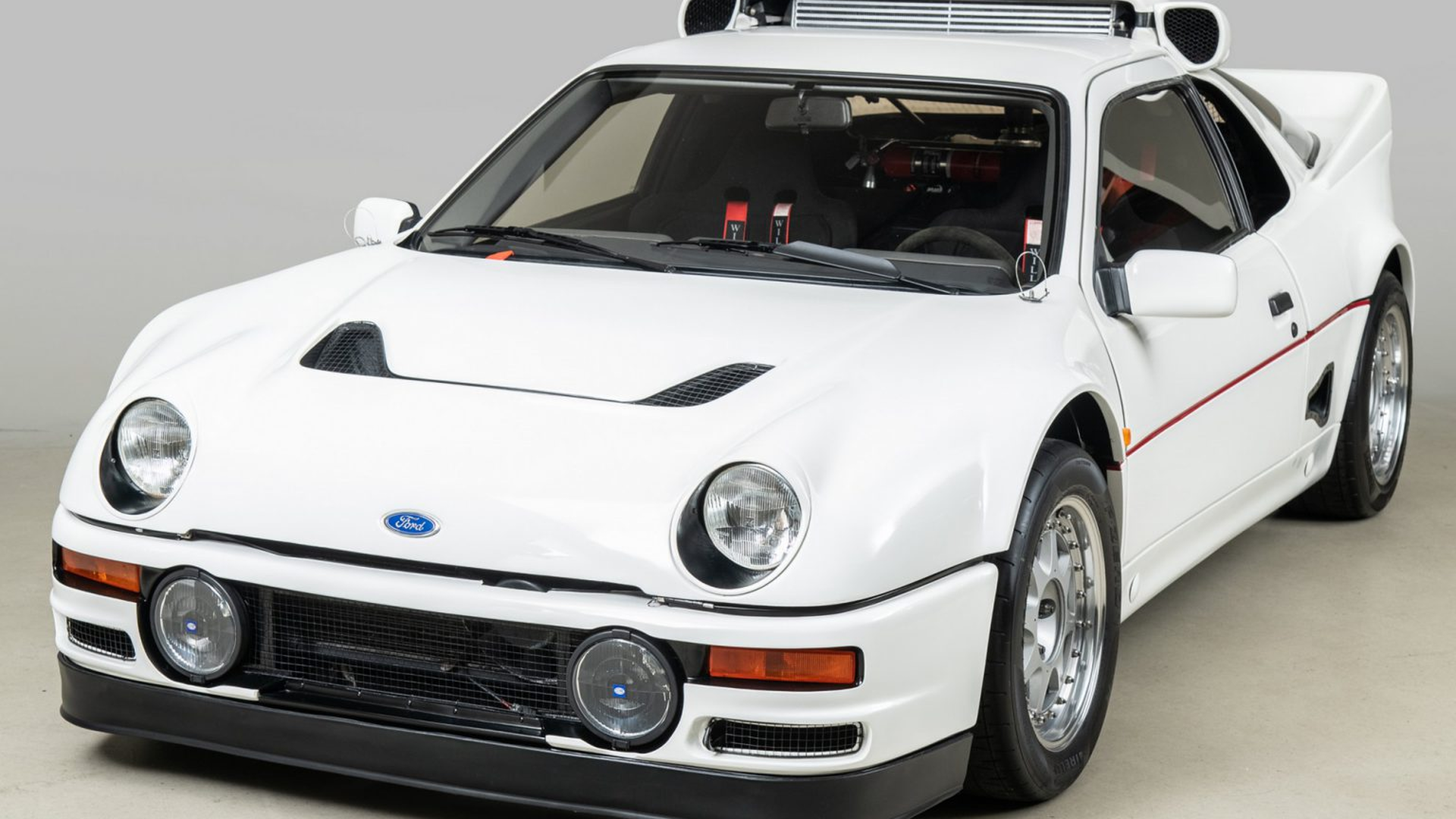
Ford RS200: The Group B Monster That Was Too Fast to Live

The Ford RS200 is a unicorn born from chaos. Built for the insane Group B era, this mid-engined, 4WD rocket was designed to beat Audi. With a Ghia body, F1 chassis, and Cosworth engine, it was Ford's most advanced car. Tragically, it arrived just as the series was banned for being too dangerous.

Production: 1984-1986
25 Min Read
Ford RS200 Exterior Photo

Author

HugeGarage Editor

Published

Updated

25 Min Read

The Killer B

In the mid-1980s, the World Rally Championship (WRC) had a class called Group B. The rules were simple: build 200 road cars (homologation), and you can race whatever you want. There were almost no restrictions on boost or power. Ford, realizing their rear-wheel-drive Escort was obsolete, decided to build a dedicated weapon from scratch. They called it the RS200.

When you browse the RS200 listings on Hugegarage (if you can find one), you are looking at a piece of history that is equal parts engineering brilliance and tragedy. It is widely considered one of the most beautiful rally cars ever made, but it is forever linked to the crash in Portugal that helped end the Group B era.

The Layout: The RS200 is unique. It has a mid-mounted engine, but the transmission is mounted at the front of the car to balance the weight distribution. A second driveshaft sends power back to the rear wheels. It’s a complex, twin-driveshaft system that gave the car incredible balance on gravel.

The Engineering: Cosworth Magic

The heart of the RS200 is the Cosworth BDT (Belt Driven Turbo) engine.

1.8L Turbocharged Inline-4
Road Car Specs: 250 HP. Tuned for drivability (relatively speaking).
Rally Car Specs: 450+ HP.
Evolution Specs: The "Evo" models used a 2.1L version making 600-800+ HP. 0-60 MPH took just 2.1 seconds—on gravel. In 1986, that was faster than a Formula 1 car.

The Design: Ghia Style

Unlike the boxy Audi Quattro, the RS200 was styled by Ghia. It featured a sleek, composite body, a roof-mounted intercooler intake, and the famous fog lights embedded in the front bumper. It looks fast standing still.

The Tragedy

The RS200 arrived late to the party in 1986. In one of its first major rallies (Rally Portugal), an RS200 lost control into a crowd of spectators, killing three and injuring dozens. This accident, combined with the death of Henri Toivonen (in a Lancia) weeks later, caused the FIA to ban Group B forever. The RS200 never got to prove its full potential.

The "Evolution" Models

Ford had planned to update the car for the 1987 season. These 24 cars, known as the RS200 Evolution, were sold to the public. They feature the 2.1L engine and are the most valuable Fords in existence, often auctioning for over $500,000.

Conclusion: The Ultimate What-If

The Ford RS200 is a glimpse into an alternate timeline where safety didn't matter and speed was god. It is a car that is terrifying to drive at the limit but docile enough to drive to the shops (if you don't mind the noise). Owning one is membership to the most exclusive club in the rally world. Explore the specs below.

Frequently Asked Questions

Why was the Ford RS200 built, and what is Group B?

The Ford RS200 was not built as a standard consumer sports car; it was a purpose-built weapon for the legendary Group B World Rally Championship (WRC). In the 1980s, Group B rules allowed for almost unlimited horsepower, lightweight composite bodies, and advanced all-wheel-drive systems, provided the manufacturer built exactly 200 street-legal versions (homologation). Ford created the mid-engined RS200 entirely from scratch to compete against the dominant Audi Quattro and Peugeot 205 T16.

How fast is the Ford RS200 Evolution (Evo) from 0 to 60 mph?

The RS200 Evolution possesses absolutely terrifying, world-record-setting speed. While the standard 250 HP street cars were fast, Ford built 24 "Evolution" models with massive turbochargers producing over 600 HP. Feel the violent, neck-snapping launch of a 1980s rally monster: the RS200 Evolution held the Guinness World Record for the fastest accelerating production car in the world for an astonishing 12 years, rocketing from 0 to 60 MPH in a verified 3.07 seconds.

What engine is in the Ford RS200?

The RS200 is powered by the highly specialized Cosworth BDT engine.

Standard RS200 (1.8L BDT)
A 1.8-liter turbocharged 4-cylinder engine mounted longitudinally in the middle of the car. In street tune, it produces roughly 250 HP, but racing versions easily pushed past 400 HP.
RS200 Evolution (2.1L BDT-E)
To combat massive turbo lag, Brian Hart heavily reworked the engine, boring it out to 2.1 liters. This legendary block could produce between 580 and 800+ HP depending on the turbo boost pressure.
Why is the Ford RS200 blamed for the end of Group B rally racing?

The RS200 is tragically intertwined with the death of the Group B era. The cars had become far too fast for the narrow, spectator-lined rally stages. At the 1986 Rally de Portugal, a Ford RS200 driven by Joaquim Santos lost control over a blind crest and crashed heavily into a massive crowd of spectators, resulting in three fatalities and dozens of injuries. Following this tragedy and another fatal crash by Lancia in Corsica shortly after, the FIA immediately banned Group B supercars entirely.

How many Ford RS200s were actually built?

To satisfy the FIA Group B homologation requirements, Ford was legally obligated to build exactly 200 units. However, the exact surviving number is slightly lower. A few original chassis were destroyed in testing, some were scrapped for spare parts, and later, 24 of the original 200 chassis were pulled back into the factory and heavily upgraded to become the legendary 2.1-liter RS200 Evolution models.

Is the Ford RS200 mid-engined or front-engined?

The Ford RS200 features a highly unique mid-engine, All-Wheel Drive (AWD) layout, but with a brilliant engineering twist. The Cosworth engine is mounted directly behind the driver. However, to achieve a perfect 50/50 weight distribution, Ford Formula 1 engineer Tony Southgate mounted the transmission gearbox at the front of the car. This required a highly complex driveline where power traveled from the mid-engine forward to the transmission, and then another driveshaft sent power back to the rear wheels.

What is it like to drive a street-legal Ford RS200?

Driving an RS200 on public roads is an exhausting, visceral experience, heavily defined by severe turbo lag.

Hugegarage Technical Tip: Below 4,000 RPM, the 1.8L Cosworth engine feels incredibly sluggish and unresponsive. However, once the massive Garrett turbocharger fully spools, the car delivers a violent, explosive surge of power that easily overwhelms inexperienced drivers. The heavy racing clutch, loud straight-cut gears, and unassisted steering make it a grueling car to drive in stop-and-go city traffic.

How much is a Ford RS200 worth today?

Because it is one of the rarest, most extreme, and historically significant vehicles Ford has ever produced, the RS200 commands massive premiums at classic car auctions. A standard 250 HP street homologation RS200 in excellent condition typically sells for $250,000 to $400,000. However, if an authentic, low-mileage RS200 Evolution (one of the 24) crosses the auction block, prices frequently soar past $500,000 to well over $1 million.

Did Ken Block drive a Ford RS200?

Yes, the late rally legend Ken Block owned a highly customized 1986 Ford RS200 Evolution. Affectionately called his "Dream Build," it featured a custom matte black livery and forged Rotiform wheels. More impressively, the Hoonigan team heavily modernized the engine management system and boosted the 2.1L Cosworth engine to produce over 700 HP on high-octane pump gas. Block frequently stated it was his absolute favorite car in his entire historic Ford collection.

What kind of AWD system does the Ford RS200 have?

The RS200 features a highly advanced, manually selectable Ferguson four-wheel-drive system designed to adapt to different rally surfaces. Experience the control of a true rally pilot: a dedicated lever in the cockpit allows the driver to manually switch the torque distribution. You can lock it in Rear-Wheel Drive for tarmac, set a 37/63 front-to-rear split for gravel stages, or lock it into a pure 50/50 split for maximum traction in heavy snow or mud.