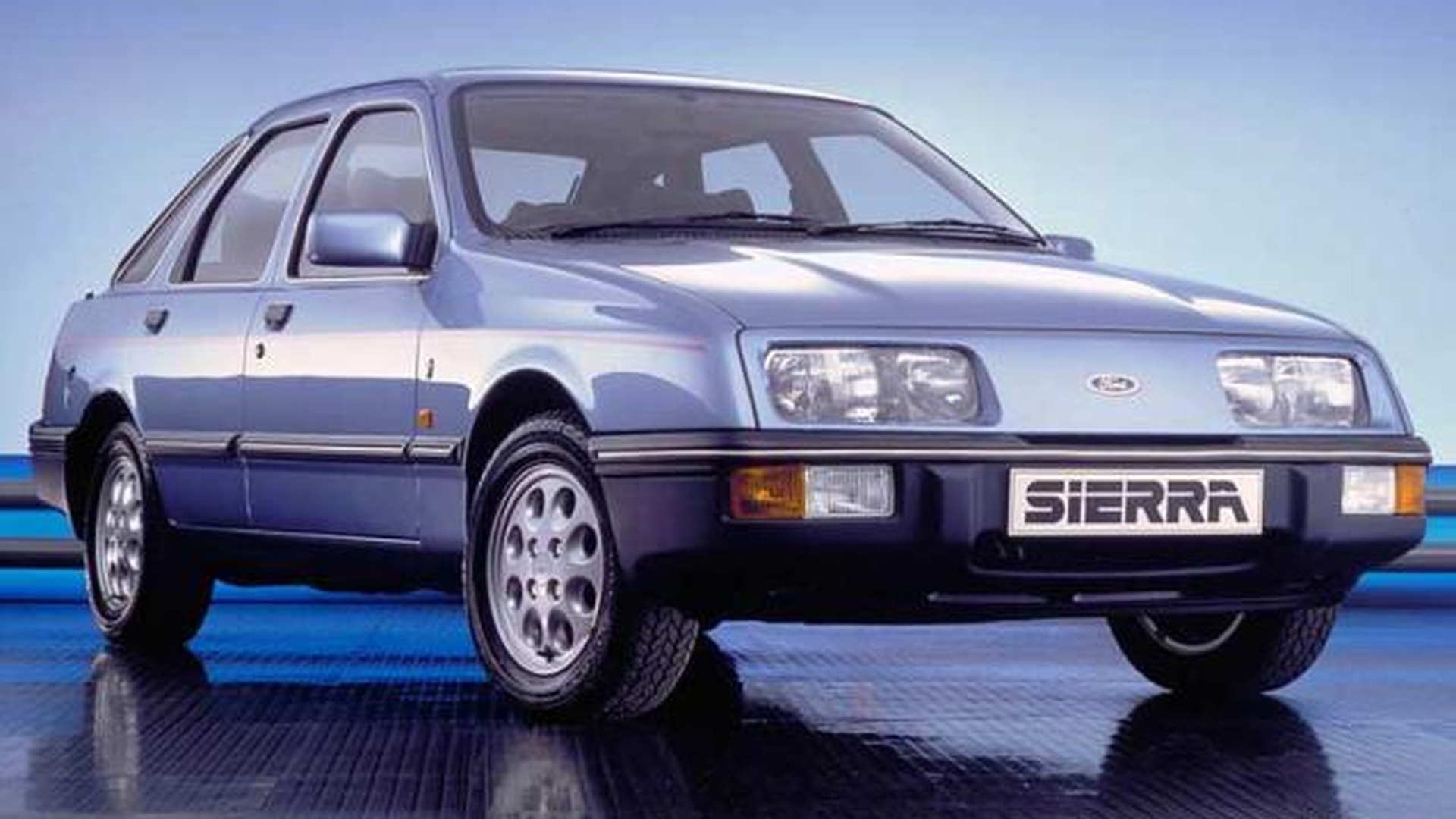
Ford Sierra: The Jellymould That Changed the World

The Ford Sierra was a shock to the system. Launched in 1982 to replace the Cortina, its aerodynamic "jellymould" shape was initially hated but eventually revolutionized car design. From the humble 1.6L family hauler to the touring car champion RS500 Cosworth, the Sierra proved that the future of the automobile was wind-tunnel shaped.

Production: 1982-1993
25 Min Read
Ford Sierra Exterior Photo

Author

HugeGarage Editor

Published

Updated

25 Min Read

The Aerodynamic Gamble

In 1982, Ford took a massive risk. They replaced the boxy, best-selling Cortina with a car that looked like a spaceship. The Ford Sierra had a drag coefficient of just 0.34. It featured flush headlights, integrated bumpers, and a bizarre "double-spoiler" on the sporty XR4i model. The public was horrified. Sales were slow. But as competitors scrambled to copy the aerodynamic efficiency, the Sierra eventually became a sales juggernaut, proving that Ford had seen the future before anyone else.

When you browse the Sierra listings on Hugegarage, you are seeing the birth of modern car design. Before the Sierra, cars were bricks. After the Sierra, cars were slippery. For American readers, this car is familiar as the Merkur XR4Ti, a captive import sold by Lincoln Mercury dealers in an attempt to fight BMW.

The "Whale Tail": The Sierra Cosworth is famous for its massive rear wing. It wasn't just for show; it generated genuine downforce at 150 MPH, essential for the touring car racing versions.

The Legend: Sierra RS Cosworth

The Sierra is best known for its performance variants.

RS Cosworth (1986)
Engine: 2.0L Turbocharged Inline-4 (Cosworth YB).
Specs: 204 HP. Rear-wheel drive.
The Look: The famous "Whale Tail" spoiler and aggressive vents.
RS500 Cosworth (1987)
The Unicorn. Only 500 were made to homologate the car for racing. It featured a larger turbo, an extra fuel rail, and 224 HP (tunable to 500+ HP easily).
Sapphire Cosworth 4x4
A more subtle sedan version with four-wheel drive. It was the "executive express" that could outrun Ferraris in the rain.

The American Cousin: Merkur XR4Ti

In the USA, the Sierra XR4i was re-engineered and sold as the Merkur XR4Ti (1985-1989).
The Difference: Instead of the V6 used in Europe, the Merkur got the 2.3L Turbo engine from the Mustang SVO/Thunderbird Turbo Coupe. It is a fantastic, misunderstood car that failed due to confusing marketing and a difficult-to-pronounce name ("Mare-Coor").

Common Issues & Maintenance

1. Rust (Rear Arches)

The Sierra rots aggressively around the rear suspension mounts and wheel arches. A clean shell is rare.

2. Cracked Dashboards

The plastic dashboard cracks in the sun, especially around the instrument binnacle.

3. Cosworth Maintenance

The YB engine is legendary but requires meticulous care. Cam belts must be changed strictly, and high-quality oil is non-negotiable.

Conclusion: The Touring Car King

The Ford Sierra dominated the British Touring Car Championship (BTCC) and rallying for years. Today, a genuine RS500 is a six-figure collector car. Even a standard Sierra is a rising classic, representing the moment the automotive world stopped being square. Explore the specs below.

Frequently Asked Questions

Why was the 1982 Ford Sierra nicknamed the "Jellymould"?

When the Ford Sierra launched in 1982 to replace the wildly popular, boxy Ford Cortina, it completely shocked the public. Ford designer Uwe Bahnsen gave the Sierra a radical, highly aerodynamic, rounded profile (achieving an impressive drag coefficient of 0.34). Traditional buyers initially hated it, mockingly calling it the "Jellymould" or "The Salesman's Spaceship." However, the revolutionary design eventually set the standard for 1980s automotive aerodynamics, forcing every other manufacturer to catch up.

What makes the Ford Sierra RS Cosworth so legendary?

The 1986 Sierra RS Cosworth is the undisputed king of 1980s fast Fords. Built strictly to homologate the Sierra for Group A touring car racing, Ford partnered with Cosworth to drop the legendary 2.0L Turbocharged YB engine (producing 204 HP) into the 3-door hatchback. Feel the massive surge of 80s turbo-lag as you look in the rearview mirror, dominated entirely by the outrageous, factory-installed "whale tail" rear spoiler designed for high-speed downforce.

Is the Ford Sierra Front-Wheel Drive (FWD) or Rear-Wheel Drive (RWD)?

Unlike the front-wheel-drive Escort and Fiesta of the era, the Ford Sierra is strictly Rear-Wheel Drive (RWD) (with the exception of specific 4x4 models). This traditional RWD layout, combined with its lightweight chassis and abundant spare parts, makes the classic Ford Sierra an incredibly popular and affordable platform for grassroots drifting and rally racing today.

What is the difference between the Sierra XR4i and the Merkur XR4Ti?

They are the same chassis built for completely different continents with different engines.

European Ford Sierra XR4i
Powered by the smooth, naturally aspirated 2.8L Cologne V6 engine. It featured a highly distinct "bi-plane" dual rear spoiler and peculiar split rear side windows.
North American Merkur XR4Ti
Because the V6 didn't meet strict US emissions, Ford imported the car under the new "Merkur" luxury brand and stuffed the 2.3L Turbocharged 4-cylinder (from the Mustang SVO) under the hood, making it a highly tunable European sleeper.
What are the most common rust problems on a classic Ford Sierra?

Like most 1980s Fords, the Sierra is highly susceptible to structural rust, and you must inspect specific areas before purchasing a project car.

Hugegarage Technical Tip: The absolute worst area for corrosion is the battery tray located in the engine bay. Acid leaks rot the metal, allowing rainwater to pour directly down into the passenger footwell, rotting the floor pans from the inside out. Always pull the carpets up. Additionally, meticulously check the rear wheel arches, the outer sills, and the rear suspension mounting points.

What is the Ford Sierra Sapphire?

Introduced in 1987, the Sierra Sapphire was Ford's response to conservative fleet buyers who still disliked the aerodynamic hatchback styling. The Sapphire was a traditional 4-door saloon (sedan) featuring a conventional trunk lid. This body style eventually birthed the legendary Sapphire RS Cosworth (and the later Cosworth 4x4)—the ultimate 1990s "Q-Car" (sleeper), offering supercar-shaming performance wrapped in the disguise of a boring family commuter.

Which standard engine is better in the Sierra: the Pinto or the CVH?

For reliability and ease of tuning, the classic Pinto OHC engine (available in 1.6L and 2.0L) is the undisputed winner. While it is heavy and slightly unrefined, the cast-iron Pinto engine is practically bulletproof and possesses massive aftermarket support for cheap horsepower upgrades. The later 1.8L CVH engines, while slightly more modern, were notoriously harsh, noisy at high RPMs, and highly prone to valve train wear if oil changes were neglected.

Did Ford make an All-Wheel Drive version of the Sierra?

Yes! To combat the rising dominance of the Audi Quattro, Ford introduced the Sierra XR4x4 in 1985. It utilized a highly advanced Ferguson mechanical four-wheel-drive system with a rear-biased torque split (typically 34% front / 66% rear) to maintain the sporty feel of a rear-wheel-drive car while providing massive all-weather grip. Ford later applied this excellent 4x4 system to the final iterations of the Sierra Sapphire RS Cosworth.

Why did Ford officially discontinue the Sierra?

Ford retired the Sierra nameplate in 1993. After a highly successful 11-year production run with over 2.7 million units sold, the aging rear-wheel-drive architecture was no longer space-efficient or cost-effective compared to modern rivals. To unify its global lineup, Ford spent billions developing a highly advanced, front-wheel-drive "World Car." This new vehicle completely replaced the Sierra and launched globally as the revolutionary Ford Mondeo.

Is a classic Ford Sierra a good beginner restoration project?

Yes, absolutely. Mechanically, the standard Ford Sierra is incredibly simple. It completely lacks complex computerized electronics, and the engine bay is incredibly spacious, making DIY maintenance a breeze. However, finding a clean donor car is the hardest part. Because they are cheap, rear-wheel-drive cars, thousands of Sierras have been crashed, drifted into walls, or stripped for parts to keep genuine RS Cosworths on the road. Finding an unmolested, rust-free base model is increasingly difficult.