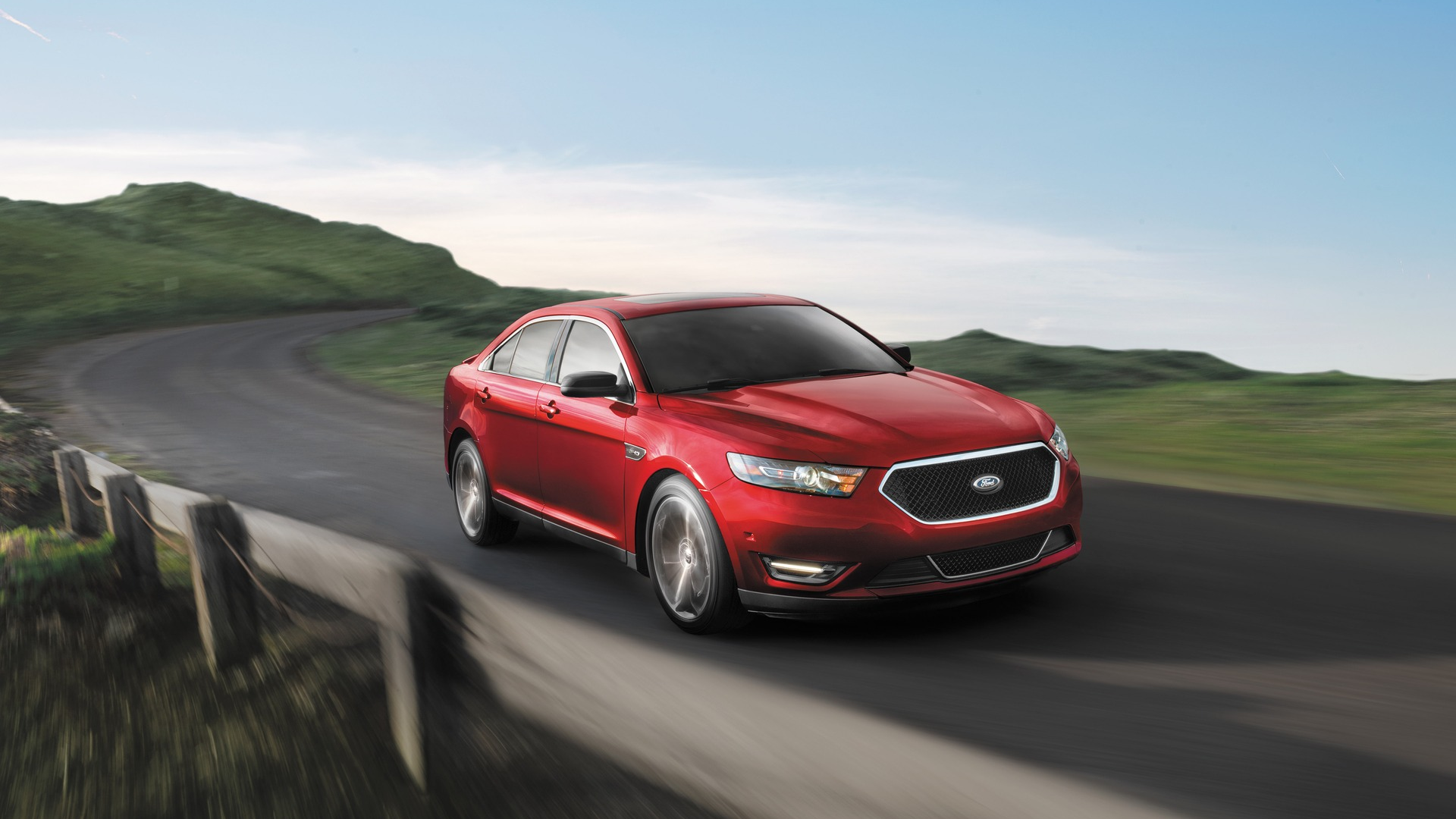
Ford Taurus: The Sedan That Saved Ford and Changed History

The Ford Taurus saved Ford. In 1986, its aerodynamic "jellybean" shape revolutionized automotive design. Over 34 years, it evolved from a radical family sedan to the high-performance SHO legend, and finally into a luxurious full-size cruiser. It remains an icon of American history, offering space, comfort, and surprising performance.

Production: 1986-2019
40 Min Read
Ford Taurus Exterior Photo

Author

HugeGarage Editor

Published

Updated

40 Min Read

The 3 Billion Dollar Gamble

In the mid-1980s, Ford was in financial ruin. Their cars were boxy, boring, and losing sales to the Japanese. Ford bet the entire company—$3 billion—on a radical new project codenamed DN5. The result was the 1986 Ford Taurus. It looked like nothing else on the road. It was aerodynamic, smooth, and futuristic. The press called it the Jellybean or the Flying Potato. The public called it a masterpiece. It became the best-selling car in America, dethroning the Honda Accord and saving Ford from bankruptcy.

When you browse the Taurus listings on Hugegarage, you are looking at the evolution of the American family sedan. From the revolutionary first generation to the oval-obsessed third generation, and finally to the massive, Volvo-based luxury cruiser of the final years, the Taurus has worn many faces. But one thing remained constant: it was always built for the American highway.

The SHO Legend: The Super High Output (SHO) Taurus is a cult icon.
- Gen 1-2 (1989-1995): Used a high-revving V6 engine built by Yamaha. It was faster than a BMW 5-Series of the time.
- Gen 3 (1996-1999): Used a Yamaha-built 3.4L V8. Great sound, but prone to cam sprocket failure.
- Gen 4 (2010-2019): Returned as a twin-turbo AWD monster with 365 HP.

Generation 1 2: The Glory Years (1986–1995)

These cars defined the 90s. They were everywhere.
Engine: The 3.0L Vulcan V6. An ancient pushrod design, but incredibly durable. You will still see these running today with 300,000 miles.
The Weakness: The AXOD / AX4S automatic transmissions were notorious for failing every 80,000 miles. Heat killed them.

Generation 3: The Oval Overload (1996–1999)

Ford tried too hard. The redesign featured oval shapes everywhere—the headlights, the rear window, the radio buttons, even the door handles. It was too weird for buyers, and the Toyota Camry stole the sales crown. This generation is generally considered the low point of the Taurus history.

Generation 4: The Fleet Queen (2000–2007)

Ford softened the styling to be more conservative. It became the default rental car and police detective vehicle. It was boring, reliable, and cheap.
Engine: The 3.0L Duratec DOHC V6 (200 HP) was the optional engine and made this car surprisingly quick.

Generation 6: The Full-Size Luxury Cruiser (2010–2019)

After a brief hiatus (where it was renamed the Five Hundred), the Taurus returned in 2010 as a massive full-size sedan. It shared its D3 platform with the Lincoln MKS and Volvo S80.

The Cabin: A Personal Cockpit

The defining feature of the final Taurus is the high center console. It wraps around the driver, creating a cockpit feel. However, this massive console steals interior space. Despite being a huge car on the outside, the interior feels tighter than a Honda Accord.

Engine Options

3.5L Duratec V6
Specs: 288 HP / 254 lb-ft Torque.
Verdict: The standard engine. Smooth, reliable, and adequate power. It uses a water pump inside the engine (like the Flex), so watch for coolant leaks.
2.0L EcoBoost
Specs: 240 HP.
Verdict: Rare. Good fuel economy, but felt overworked in a 4,000-lb car.
3.5L EcoBoost V6 (SHO)
Specs: 365 HP / 350 lb-ft Torque.
The Drive: Standard AWD. It is a highway missile. With a simple software tune, it can hit 0-60 in 4.5 seconds. It is a police interceptor in civilian clothes.

The Police Interceptor Sedan

Starting in 2012, the Taurus replaced the Crown Victoria as the standard police car.
Differences: The Police Interceptor Sedan has heavy-duty cooling, upgraded brakes, a column shifter, and structural reinforcements for 75 MPH rear-impact crashes. These are fantastic used buys if you can find one that wasn't abused.

Common Issues (2010-2019)

1. Internal Water Pump

As with the Flex and Explorer, the 3.5L V6 has an internal water pump. If it fails, it can dump coolant into the oil. Check the oil dipstick for milky residue.

2. PTU Failure (AWD Models)

The Power Transfer Unit (PTU) that sends power to the rear wheels holds very little fluid (less than a quart) and sits next to the hot catalytic converter. The fluid cooks and turns to sludge.
Hugegarage Tip: Change the PTU fluid every 30,000 miles to prevent failure. Ford says it is lifetime, but it is not.

Why Was It Cancelled?

The same story as the Fusion and Focus: SUVs. Ford killed the Taurus in 2019 to make room for more Explorers. The final Taurus rolled off the Chicago assembly line on March 1, 2019, ending a 34-year run.

Conclusion: The End of an Icon

The Ford Taurus is the most significant American car of the last 40 years. It proved that Detroit could innovate. Today, the final generation (2010-2019) represents an incredible value. You get a quiet, safe, Volvo-engineered chassis with powerful engines for a bargain price. Just be aware of the water pump maintenance on high-mileage examples. For those who want a sleeper, a used Taurus SHO is one of the fastest cars you can buy for under $15,000. Explore the specs below.

Frequently Asked Questions

What does SHO stand for, and is the Ford Taurus SHO actually fast?

SHO stands for Super High Output. The modern Ford Taurus SHO (2010-2019) is widely considered one of the greatest "sleeper" sedans of the 21st century. It abandons the standard engine for a massive 3.5L Twin-Turbo EcoBoost V6 producing 365 HP and 350 lb-ft of torque. Feel the violent, relentless acceleration as the standard All-Wheel Drive (AWD) system grips the pavement, launching this massive 4,300-pound family sedan from 0 to 60 MPH in just over 5 seconds, easily embarrassing dedicated sports cars at stoplights.

What is the most common engine problem with a used Ford Taurus?

If you are exploring the used market for a 6th-generation Taurus (2010-2019) equipped with the standard naturally aspirated 3.5L Cyclone V6, you absolutely must be aware of the internal water pump failure. Ford engineered the water pump to sit inside the engine block, driven by the timing chain.

Hugegarage Technical Tip: When the water pump seal inevitably fails (usually between 100,000 and 150,000 miles), it dumps engine coolant directly into the oil pan. Pull the dipstick; if the oil looks like a thick, frothy "chocolate milkshake," the engine bearings are likely already destroyed. This requires a highly expensive, labor-intensive teardown of the engine front cover to replace the pump before it fails.

Does the Ford Taurus have All-Wheel Drive (AWD)?

Yes, the Ford Taurus is an exceptional winter vehicle when properly equipped. While Front-Wheel Drive (FWD) was standard on the SE, SEL, and Limited trims, Ford offered a highly sophisticated Intelligent All-Wheel Drive (AWD) system as an optional upgrade. However, if you purchase the high-performance Taurus SHO or a retired Police Interceptor Sedan, the AWD system was absolutely mandatory and standard to safely handle the massive torque output of those specific powertrains.

Why did Ford discontinue the Taurus?

Ford officially ended production of the legendary Taurus sedan at the Chicago Assembly Plant in March 2019. The decision was purely financial and reflected a massive shift in American consumer habits. Buyers completely abandoned full-size sedans in favor of taller, more practical crossover SUVs. Ford made the ruthless corporate decision to kill off almost its entire passenger car lineup (including the Taurus, Fusion, and Focus) to reallocate billions of dollars toward developing highly profitable vehicles like the Bronco, Maverick, and Explorer.

How big is the trunk on a Ford Taurus?

The trunk of the 6th-generation Ford Taurus is absolutely cavernous, remaining one of its greatest selling points for road trippers and airport shuttles. It boasts a staggering 20.1 cubic feet of cargo volume. This is significantly larger than almost every modern mid-size sedan and crossover SUV on the market. It can effortlessly swallow four massive suitcases or multiple sets of golf clubs, and the 60/40 split-folding rear seats allow you to easily transport long items like skis or lumber.

What is the difference between a civilian Taurus and the Police Interceptor Sedan?

While they share the same silhouette, the Ford Police Interceptor Sedan (FPIS) is a heavily fortified machine. It features pursuit-rated brakes, a heavy-duty cooling system for prolonged idling, calibrated suspension for hopping curbs, and standard All-Wheel Drive. Furthermore, the interior is stripped of luxury features, utilizing heavy-duty vinyl flooring, specialized anti-stab plates built into the front seatbacks to protect officers, and a column shifter instead of a center console shifter to make room for radio equipment.

Which engine is better: the 3.5L V6 or the 2.0L EcoBoost four-cylinder?

Between 2013 and 2017, Ford offered a highly unusual 2.0L EcoBoost 4-cylinder engine option for the Taurus to maximize fuel economy. It produced 240 HP and was restricted entirely to Front-Wheel Drive. While it delivered slightly better MPG, it struggled to confidently move the massive 4,000-pound sedan, especially when fully loaded. The standard, naturally aspirated 3.5L V6 (producing 288 HP) is vastly superior for daily driving, offering much better highway passing power and proven long-term reliability (water pump caveat notwithstanding).

Is the Ford Taurus a good car for tall drivers?

This is the greatest paradox of the modern Ford Taurus. Despite its massive exterior footprint (it is as long as an Explorer), the interior feels surprisingly cramped. Ford designed the cabin with a massive, sweeping center console and a severely sloping roofline. While average-sized drivers feel wrapped in a sporty cockpit, drivers over 6 foot 2 inches often complain that their right knee is constantly jammed against the wide center console and that rear-seat headroom is uncomfortably tight due to the aggressive rear window slope.

What kind of gas mileage (MPG) does the Ford Taurus get?

Because the Taurus utilizes an incredibly heavy, reinforced Volvo-derived chassis designed for maximum crash safety, fuel economy is mediocre. A standard Front-Wheel Drive (FWD) model equipped with the 3.5L V6 will return an EPA-estimated 18 MPG in the city and 26 MPG on the highway. Upgrading to the heavy All-Wheel Drive (AWD) system drops those numbers to roughly 17/24 MPG. If you drive the 365-HP Taurus SHO aggressively, expect your city fuel economy to easily plunge into the low teens.

Can the Ford Taurus tow a trailer?

While it has a powerful V6 engine, the Taurus is not designed to be a tow vehicle. The unibody chassis and the 6-speed automatic transmission are calibrated strictly for passenger comfort. Ford explicitly states in the owner's manual that the standard Taurus has a maximum towing capacity of only 1,000 pounds. This is barely enough to tow a very light utility trailer or a small jet ski. Attempting to pull a heavy camper will severely overheat the transmission and instantly void any powertrain warranties.