
The Forgotten Best-Seller
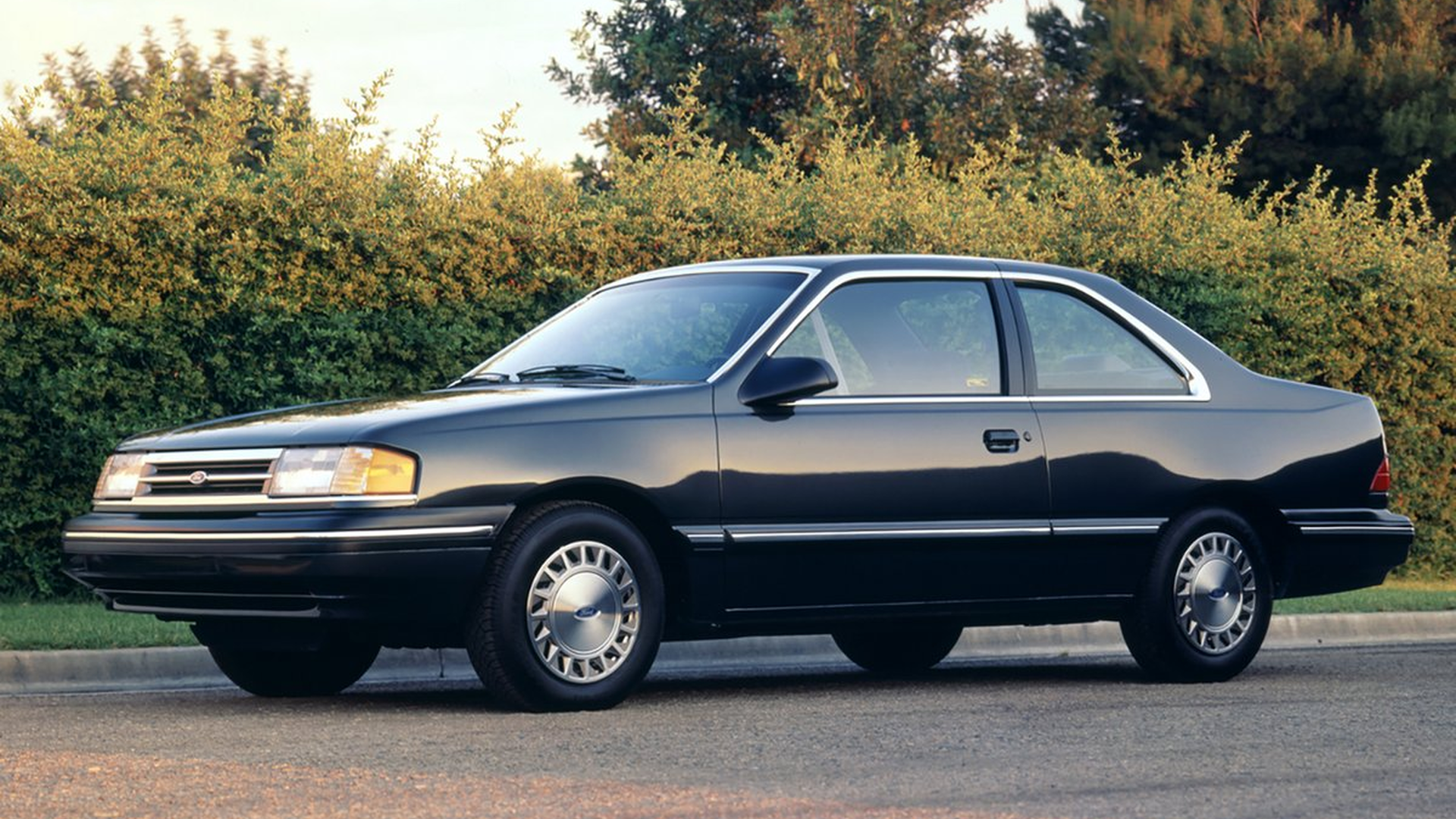
In the early 1980s, the American road was filled with boxes. The Chrysler K-Car and the Chevy Citation were square, sharp-edged appliances. Ford took a different path. They looked at the wind tunnel. The result was the 1984 Ford Tempo (and its Mercury Topaz twin). It looked like a jellybean compared to its competitors. It had aircraft-style doors that cut into the roof, a steep windshield rake, and a high trunk deck. Critics were skeptical, but the public voted with their wallets. The Tempo was a massive success, selling nearly 3 million units and proving that buyers were ready for the "aero" look that would culminate in the legendary Ford Taurus.
When you browse the Tempo listings on Hugegarage, you are finding a rare survivor. Most Tempos were driven into the ground as affordable first cars or commuter appliances. However, a well-preserved Tempoâespecially an AWD or GLS modelâis a fascinating snapshot of 1980s optimism. It represents Fordâs transition from rear-wheel-drive dinosaurs to modern, front-wheel-drive efficiency.
The "HSC" Engine Myth: The Tempo needed a compact engine to fit under its low, sloping hood. Ford engineers took the venerable 200 cubic-inch (3.3L) "Thriftpower" Inline-6âthe engine from the 1960 Falconâand literally cut two cylinders off. They re-engineered the head for "High Swirl Combustion" (HSC), creating a 2.3L pushrod 4-cylinder. It was torquey, durable, and famously loud.
Generation 1: The Aero Experiment (1984â1987)
The first-generation Tempo was revolutionary for its time. It featured a fully independent suspension (MacPherson struts at all four corners), which was rare for an economy car. This gave it handling that was surprisingly competent, if not sporty.
The Diesel Rarity
For a brief period (1984-1986), you could order a Tempo with a 2.0L Mazda diesel engine. With 52 horsepower, it was agonizingly slow (0-60 in 20+ seconds), but it could achieve nearly 45 MPG. These are virtually extinct today.
Generation 2: The Refinement (1988â1994)
In 1988, Ford polished the design. The Tempo got flush-mounted composite headlights, a revised interior, and smoother bumpers. This is the version most people remember.
The All-Wheel Drive (AWD) Tempo
Long before Subaru dominated the AWD sedan market, Ford offered the Tempo AWD (1987-1991).
The System: It was a "part-time" system activated by a vacuum switch on the dashboard (later fully automatic). It sent power to the rear wheels only when needed.
Why itâs cool: An AWD Tempo sits slightly higher than the FWD model and features unique badging. It was an unstoppable winter beater in the Rust Belt, which is ironically why so few survive today.
The Tempo GLS
The GLS was the "driverâs car." It featured:
- High Output (HO) HSC Engine: Tuned to 100 HP.
- Suspension: Stiffer springs and thicker sway bars.
- Interior: Bucket seats with better bolstering and a tachometer.
A 5-speed GLS coupe is genuinely fun to toss around corners, proving the chassis had potential.
The Vulcan V6 Upgrade (1992-1994)
In the final years, Ford finally gave the Tempo the heart it deserved: the 3.0L Vulcan V6. Shared with the Taurus and Ranger, this engine produced 140 HP and 160 lb-ft of torque. In the light Tempo body, the V6 made the car properly quick for its class. If you are looking for a Tempo to actually drive in modern traffic, the V6 is the only logical choice.
Common Issues & Maintenance
1. TFI Module Failure
The Ford Thick Film Ignition (TFI) module is mounted on the distributor. It gets hot, and when it overheats, the car dies instantly. After cooling down, it restarts. Relocating the TFI module or carrying a spare is mandatory for ownership.
2. Automatic Transmission (ATX/FLC)
The 3-speed automatic transmission was adequate but unsophisticated. The lock-up torque converter often failed, causing shuddering. The 5-speed manual (MTX-III) is far more robust and makes the car feel faster.
3. Rust (Strut Towers)
Like many unibody cars of the era, the rear strut towers can rot out, especially on cars driven in salt. Inspect the trunk area under the carpet carefully.
Why Was It Cancelled?
By 1994, the Tempo was dated. The "Cab-Forward" Chrysler LH cars and the refined Toyota Camry had raised the bar. Ford replaced the Tempo (and the Topaz) with the "world car" Ford Contour (Mondeo) in 1995. The Contour was dynamically superior but smaller inside and much more expensive to build.
Conclusion: The Unpretentious Hero
The Ford Tempo isn't a dream car. Itâs a reality car. Itâs the car that took millions of people to work, to college, and on family vacations during the 1980s. Today, it offers an incredibly cheap entry point into the "Radwood" era of car collecting. Finding a clean Tempo GLS V6 is like finding a time capsuleâa reminder of when Ford decided to stop building bricks and start building the future. Explore the specs below.