
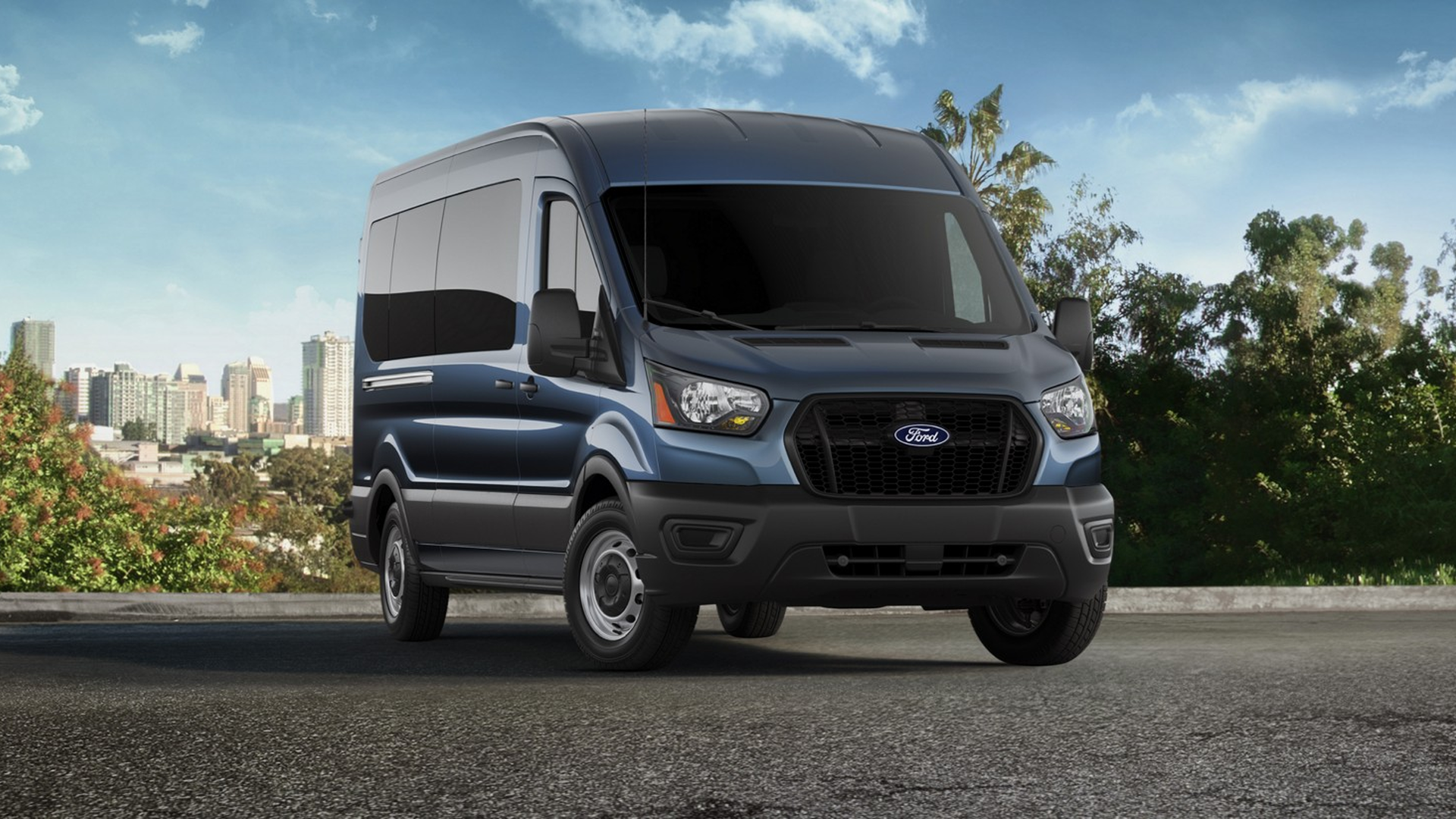
The Euro-Invasion That Conquered America
For 50 years, the Ford E-Series (Econoline) was the undisputed king of American vans. It was a body-on-frame tank that drank gasoline and drove like a boat. But as fuel prices rose and businesses demanded more vertical cargo space, Ford looked across the Atlantic. In 2015, they brought the Ford Transit to North America. It was a seismic shift. Unlike the Econoline, the Transit features a unibody construction, turbocharged engines, andâcruciallyâa High Roof option that allows a 6-foot-5 adult to stand up straight in the back.
When you browse the Ford Transit listings on Hugegarage, you are looking at the best-selling commercial van in the United States. It successfully bridged the gap between the affordable durability of the Chevy Express and the expensive complexity of the Mercedes-Benz Sprinter. Whether outfitted with shelves for a plumber or insulated with shiplap for a digital nomad, the Transit is the blank canvas of the 21st century.
The Van Life Revolution: The Ford Transit is currently the most popular platform for DIY camper conversions in the US. Why? Unlike the Mercedes Sprinter, the Transit can be serviced at any of the 3,000+ Ford dealers in the country, and parts are significantly cheaper. If you break down in rural Nebraska, a Ford dealer can fix a Transit EcoBoost; good luck finding a mechanic for a Sprinter diesel.
Understanding the Body Matrix
Buying a Transit is like ordering a custom suit. You must navigate a matrix of three roof heights and three body lengths. Understanding these codes is critical.
- Roof Heights
- Low Roof (LR): Fits in some parking garages (83 inches tall). Great for city painters/electricians.
Medium Roof (MR): Roughly 100 inches tall. Allows crouching movement.
High Roof (HR): The cathedral. 110 inches tall. Allows full standing room. Mandatory for campers. - Wheelbase Length
- Regular Wheelbase (130): Agile, easy to park.
Long Wheelbase (148): The standard fleet size.
Long Wheelbase / Extended Body (148 EL): Also known as the Jumbo. Adds massive overhang behind the rear wheels for maximum cargo volume. Be careful with tail swing when turning!
Powertrains: Speed vs. Reliability
The Transit abandoned the V8s of the Econoline era for advanced V6s.
1. 3.5L PFDi V6 (The Standard)
Type: Naturally Aspirated (Non-Turbo).
Specs: 275 HP / 262 lb-ft Torque.
Verdict: The fleet manager's choice. It uses Port Fuel and Direct Injection (PFDi) to prevent carbon buildup. It is simple, reliable, and powerful enough for flat deliveries. It lacks the low-end grunt for towing heavy loads in the mountains.
2. 3.5L EcoBoost V6 (The Upgrade)
Type: Twin-Turbocharged.
Specs: 310 HP / 400 lb-ft Torque.
Verdict: The driver's choice. This engine makes the van surprisingly fast. It merges onto highways effortlessly, even when fully loaded. It is highly recommended for high-roof camper builds, as the wind resistance requires massive torque to maintain 75 MPH.
3. The Diesel Experiment (3.2L / 2.0L)
Ford offered the 3.2L Power Stroke Inline-5 (2015-2019) and later the 2.0L EcoBlue (2020+).
Hugegarage Advice: Avoid them. The emissions systems (DPF/DEF) on modern small diesels are prone to expensive failures in stop-and-go city traffic. The gas engines are cheaper to maintain and offer similar longevity.
The Game Changer: Factory All-Wheel Drive (AWD)
In 2020, Ford introduced factory Intelligent AWD.
Before this, if you wanted a 4x4 van, you had to pay a third-party upfitter (like Quigley) $15,000 to install a solid front axle.
How it works: The Ford system is AWD, not 4x4. It normally sends 100% of power to the rear wheels but can send up to 50% to the front when slip is detected.
Why it matters: It turns the Transit into a ski-trip machine and a mud-capable job site vehicle without raising the ride height or ruining the fuel economy.
The Electric Future: E-Transit
Ford beat everyone to the punch with the E-Transit.
Battery: 68 kWh (usable).
Range: ~126 miles (Low Roof).
Use Case: This is strictly for Last Mile delivery. It is perfect for an Amazon route where the driver stops 100 times a day (regenerative braking saves massive wear on brake pads). It is not for camper conversions due to the limited highway range.
Maintenance Common Issues
While robust, the Transit has specific weak points.
1. The Guibo (Driveshaft Flex Disc)
The driveshaft connects to the transmission with a rubber flex disc called a Guibo. On 2015-2019 models, this rubber cracks and fails around 40,000 miles, causing violent vibration. Ford issued a recall to replace it with a stronger U-joint design in some cases.
2. Rear Brake Wear
Because of the advanced stability control and Torque Vectoring (using brakes to help turn the long van), the rear brake pads wear out significantly faster than the frontsâoften in as little as 25,000 miles.
3. EcoBoost Manifold Studs
On the 3.5L EcoBoost, the exhaust manifolds get incredibly hot. The studs holding them to the engine block can snap, causing an exhaust leak (ticking noise on startup). It is a labor-intensive repair.
Upfitting: The Hidden Cost
The Transit is sold as a cargo shell.
Cargo Protection: Factory floor liners are slippery plastic. Most buyers immediately upgrade to a wood or rubber composite floor.
Partition: For safety, a steel bulkhead behind the driver is mandatory to prevent cargo from flying forward in a crash.
Swivel Seats: A popular option for campers, allowing the front seats to spin 180 degrees to face the living area. Factory swivel seats are rare and highly desirable on the used market.
Transit Trail: The Off-Road Factory Option
Released in 2023, the Transit Trail targets the Overland market directly.
Features:
- 3.5-inch ride height lift.
- 30.5-inch Goodyear Wrangler Workhorse tires.
- Wider track.
- Unique grille with marker lights (Raptor style).
It comes as a DIY Kit ready for cabinets and beds, saving builders the hassle of cutting windows and installing fans.
Conclusion: The Standard of the World
The Ford Transit succeeds because it is scalable. It can be a $45,000 plumbing van or a $150,000 luxury touring coach. It drives better than the competition, offers lower ownership costs than the Germans, and has the power of the Ford dealer network behind it. For 99% of commercial and recreational needs, the Transit is the logical, emotional, and financial winner. Explore the detailed dimensions and specs below.