
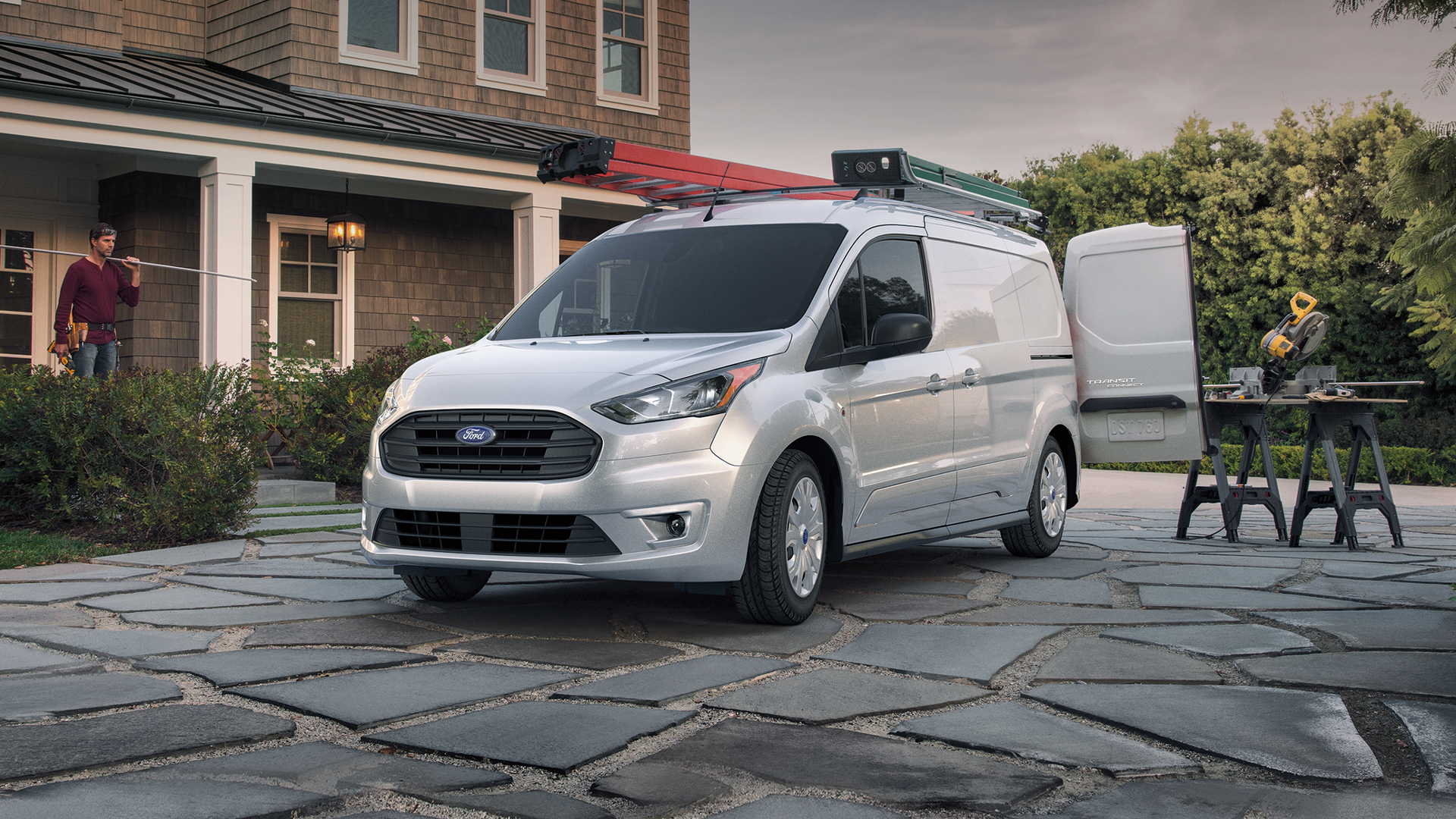
The Anti-Econoline: Thinking Small
In 2009, the American commercial van market was a monolith. You had one choice: a massive, V8-powered, body-on-frame van like the Ford E-Series or Chevy Express. They were durable, yes, but they were impossible to park in downtown Manhattan, drank fuel like cruise ships, and drove with the precision of a waterbed. Ford saw a gap. In Europe, high cube compact vans had been dominating city streets for decades. Ford decided to import its Turkish-built workhorse, the Transit Connect, to the US. It was a gamble that paid off spectacularly, effectively creating the Compact Commercial Van segment overnight and forcing Nissan (NV200) and Ram (ProMaster City) to play catch-up.
When you browse the Transit Connect listings on Hugegarage, you are exploring a vehicle with a split personality. To the small business owner (bakers, locksmiths, dog groomers), it is a mobile billboard that fits in a residential garage. To the family buyer, the Transit Connect Wagon is a quirky, European alternative to the bland minivanâa vehicle that prioritizes vertical headroom and visibility over plush carpets.
The Great Chicken Tax Loophole: The Transit Connect is the protagonist of one of the automotive industry's most famous legal battles. The US imposes a 25% tariff (the Chicken Tax) on imported light trucks. To avoid this, Ford imported every single Transit Connect into the US as a Passenger Wagon with rear seats and windows (taxed at only 2.5%). Once they cleared customs in Baltimore, Ford immediately stripped the rear seats and replaced the windows with metal panels to sell them as cargo vans. The shredded seats were recycled. Customs eventually sued Ford, calling it tariff engineering, a battle that reached the Supreme Court.
Generation 1: The High Cube (2010â2013)
The first-generation models sold in the US are instantly recognizable by their distinct top hat roofline. They look taller than they are wide.
Platform: Built on the Ford C170 platform (the original Ford Focus), giving it a tight turning radius and stiff suspension.
The Powertrain: Simple and Slow
There was only one engine option for the US market:
2.0L Duratec 4-Cylinder: 136 HP / 128 lb-ft Torque.
Transmission: 4-Speed Automatic (4F27E).
The Reality: This powertrain is bulletproof but woefully underpowered for highway merging, especially when fully loaded. It screams at high RPMs at 70 MPH. However, for city speeds (0-45 MPH), the gearing is peppy enough.
Cargo Dimensions
The genius of Gen 1 is the Verticality.
Cargo Volume: 135 cubic feet.
Payload: 1,600 lbs.
Because the walls are nearly vertical, you can stack boxes floor-to-ceiling without wasting space. It became the darling of catering companies and florists.
Generation 2: The Streamliner (2014â2023)
For 2014, Ford completely redesigned the Transit Connect, moving it to the Global C Platform (shared with the Ford Escape and Mk3 Focus). The weird proportions were smoothed out, making it look more like a stretched station wagon than a bread box.
Two Wheelbases, Two Roofs (Sort of)
- Short Wheelbase (SWB): The agile city runner. 104.8-inch wheelbase. Total length ~174 inches (shorter than a Honda Civic).
- Long Wheelbase (LWB): The volume hauler. 120.6-inch wheelbase. Total length ~190 inches.
- Roof Heights: Unlike the full-size Transit, the Gen 2 Connect didn't offer a massive High Roof standing option, but the standard roof was plenty for seated work.
The Engine Evolution
- 2.5L Duratec (The Reliability King)
- Years: 2014-2023.
Specs: 169 HP / 171 lb-ft Torque.
Verdict: This is the engine you want. It is naturally aspirated, uses a timing chain (not a belt), and is widely regarded as one of Ford's most durable modern engines. Fleet managers run these to 300,000 miles routinely. - 1.6L EcoBoost (The Rare Option)
- Years: 2014-2016.
Specs: 178 HP.
Verdict: Avoid. It offered slightly more torque but was plagued by cooling system recalls and fire risks. It adds complexity (turbo) without enough performance benefit. - 2.0L GDI (The Late Model)
- Years: 2019-2023.
Specs: 162 HP.
Transmission: 8-Speed Automatic.
Verdict: Efficient and smooth, thanks to the 8-speed, but the long-term durability of the newer transmission is not yet as proven as the older 6-speed.
The Wagon: The Secret Minivan
The Transit Connect Wagon (Passenger Version) is a fascinating alternative to the Honda Odyssey or Toyota Sienna.
Why buy it?
1. Size: It fits in tight city parking spots where a Sienna would struggle.
2. Visibility: The beltline is low, and the windows are massive. It feels like an aquarium (in a good way).
3. Durability: The interior materials are commercial-grade. Vinyl floors mean you can clean up spilled juice boxes with a spray bottle.
Trim Levels
- XL: The base model. Steel wheels, black plastic bumpers. Usually a taxi or shuttle.
- XLT: Body-color bumpers, cloth seats, cruise control. The standard family spec.
- Titanium: The luxury van. Leather seats, SYNC 3 navigation, alloy wheels, and dual-zone climate control. A Titanium LWB Wagon is a fantastic road trip machine for 6-7 people.
The Micro-Camper Phenomenon
The Transit Connect has a cult following in the Van Life community, specifically for solo travelers.
Why?
- Stealth: It looks like a plumber's van. You can park on a city street overnight without drawing attention.
- Economy: 28 MPG highway is achievable, making travel cheap.
- Space: In the LWB model, you can fit a 6-foot bed platform on one side and a kitchenette on the other. It is the perfect weekend escape pod.
Common Issues Maintenance
1. Transmission Shudder (6F35)
The 6-speed automatic (2014-2018) is generally reliable if maintained. However, in heavy city traffic (stop-and-go), the fluid degrades quickly.
Hugegarage Tip: Change the transmission fluid every 30,000 miles (drain and fill). If you wait for the Ford recommended 150,000 miles, the transmission will fail.
2. Door Latches Rollers
As a delivery van, the sliding doors are opened/closed 50 times a day. The rollers wear out, causing the door to grind or jam. Keeping the tracks clean and greased is essential. Also, faulty door latches that report Door Ajar were a common recall item.
3. Panoramic Roof Leaks (Wagon)
On Titanium models with the panoramic glass roof, ensure the seal is intact. Leaks can drip onto the headliner and ruin the electronics.
The End of the Line
In 2023, Ford announced the discontinuation of the Transit Connect in the US market. Ford cited the decline of the compact van segment (as buyers shifted to larger vans or compact pickups like the Maverick). This has created a surge in demand for late-model, low-mileage examples, keeping resale values surprisingly high.
Comparisons: The Competition
- Nissan NV200 / Chevy City Express
- Cheaper and smaller, but plagued by a fragile CVT (Continuously Variable Transmission). The Transit Connect drives significantly better.
- Ram ProMaster City
- More cargo space and power, but the 9-speed transmission can be jerky, and the interior feels cheaper. Discontinued in 2022.
- Mercedes Metris
- More expensive, RWD, and higher maintenance costs. It occupies a size class slightly larger than the Connect ("Mid-size").
Conclusion: The Logical Choice
The Ford Transit Connect is a triumph of function over form. It doesn't try to be cool (though the first gen has a funky charm); it tries to be useful. For the small business owner, it reduces overhead costs. For the family, it offers utility without the bulk. As the market pivots away from these compact vans, the Transit Connect will likely be remembered as the high-water mark of the segmentâthe vehicle that proved you can haul big things in a small package. Explore the specs and dimensions below.