
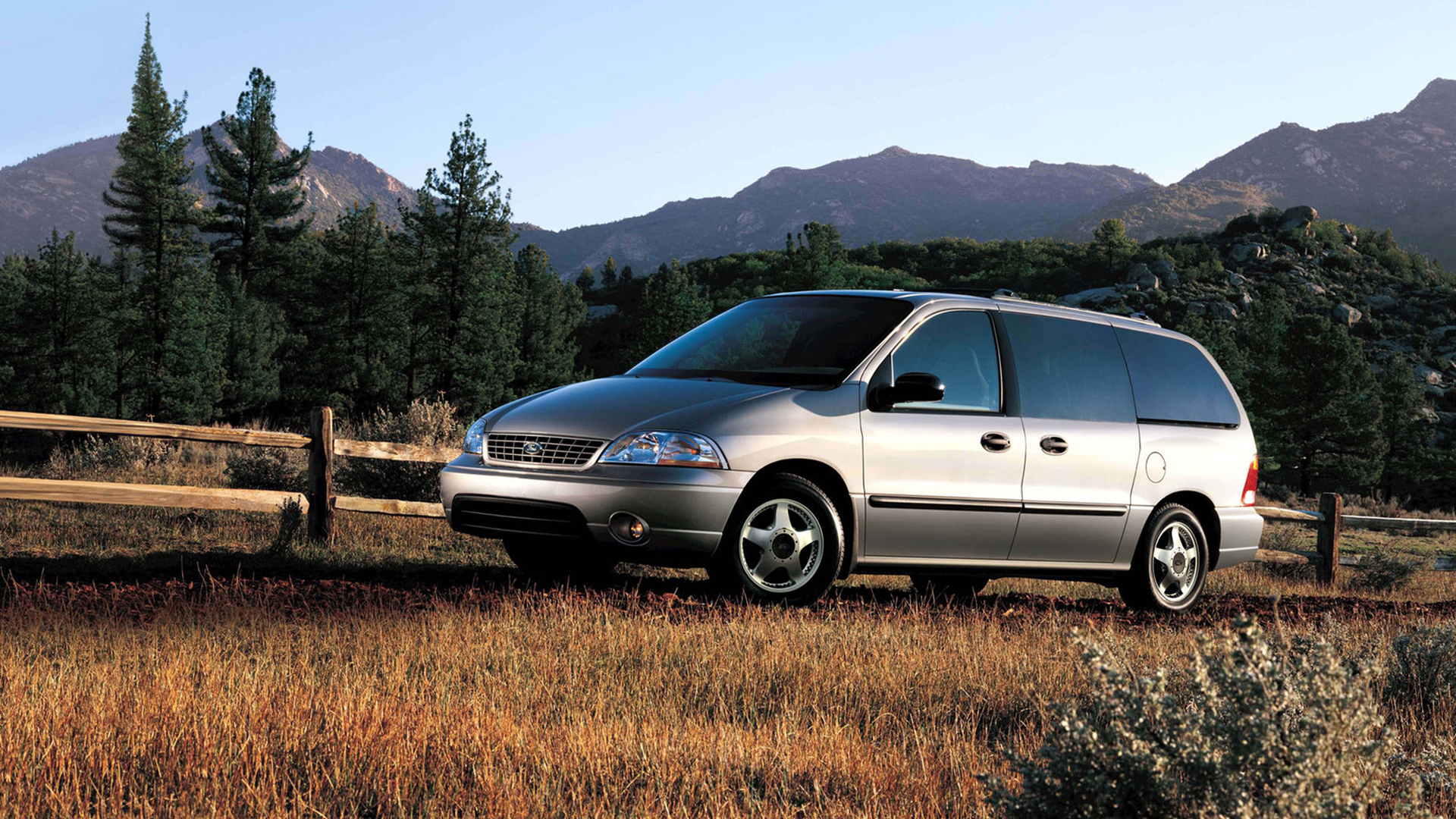
The Anti-Aerostar
In 1994, Ford was losing the minivan war. The rear-wheel-drive Aerostar was a durable workhorse, but it drove like a truck. Chrysler's Dodge Caravan and Plymouth Voyager were car-based, front-wheel-drive, and vastly more comfortable. Ford's response was the Windstar. It was sleek, modern, and built on the D186 platform (derived from the Ford Taurus). It was designed with one goal: to be the safest minivan on the road.
When you browse the Windstar listings on Hugegarage, you are looking at a vehicle that represents both the best and worst of 90s Ford engineering. It was the first minivan to earn a 5-star crash test rating, yet it suffered from catastrophic engine failures that led to massive class-action lawsuits. For the used buyer on a budget, a late-model Windstar (2001-2003) can be an incredible value, provided the head gaskets have been replaced.
The King of Doors Battle: When the Windstar launched in 1995, it only had one sliding door (passenger side). Chrysler shocked the world in 1996 by introducing a driver-side sliding door. Ford scrambled to redesign the Windstar, adding a massive King Door (driver side slider) in 1999 to stay competitive.
Generation 1: The Launch (1995â1998)
The first-gen Windstar was long and low. It looked futuristic compared to the boxy vans of the 80s.
The Engines:
- 3.0L Vulcan V6: 150 HP. Reliable but dangerously slow for a heavy van.
- 3.8L Essex V6: 155-200 HP. This engine is the source of the Windstar's bad reputation.
The Head Gasket Disaster
The 3.8L Essex V6 had a fatal flaw. The aluminum cylinder heads expanded at a different rate than the iron block.
The Result: The head gaskets would shear, dumping coolant into the cylinders or oil. Thousands of owners faced $2,000 repair bills just as the warranty expired. Ford eventually extended the warranty, but the damage to the brand was done.
Generation 2: The Refinement (1999â2003)
Ford fixed the door situation and stiffened the chassis. This generation is the one you will most likely see on the road today.
The Engine Updates
- 3.8L Split Port V6
- Specs: 200 HP / 240 lb-ft Torque.
The Fix: Ford redesigned the intake manifold (Split Port Induction) and improved the head gaskets. While still not perfect, 1999+ models are significantly less prone to failure than the early ones.
The Rear Axle Recall
In snow-belt states, the rear axle beam of the Windstar was prone to rusting from the inside out and literally snapping in half while driving.
The Recall: Ford issued a massive recall to inspect and reinforce (or replace) the rear axle.
Hugegarage Tip: If you are buying a Windstar in the rust belt, look underneath. If you see massive brackets bolted around the rear axle, the recall was performed. If the axle looks rusty and original, walk away.
Interior Features
Despite the mechanical drama, the Windstar was a lovely place to sit.
Conversation Mirror: The Windstar introduced the wide-angle spy mirror in the overhead console, allowing parents to see kids in the back seat without turning around.
Safety: It offered side-impact airbags long before they were mandatory, cementing its reputation as a safe family hauler.
Why Was It Cancelled?
The Windstar name became toxic due to the engine and transmission reliability issues. In 2004, Ford heavily updated the van and renamed it the Freestar to escape the stigma. However, the Freestar was essentially just a Windstar Gen 2.5.
Conclusion: A Cautionary Tale
The Ford Windstar is a van you buy because it is cheap, not because it is the best. A well-maintained 2003 Windstar SEL with the leather interior and the 200 HP engine is a comfortable, quiet highway cruiser that costs less than a set of tires for a new Odyssey. But ownership requires vigilance: watch the temperature gauge, change the transmission fluid, and check the rear axle. It is a piece of history that forced the entire industry to take minivan safety seriously. Explore the specs below.