
Pioneering the Unibody Crossover: The First Generation (2007-2016)
General Motors faced a critical paradigm shift in the mid-2000s as consumers rapidly abandoned heavy, truck-based utility vehicles in favor of smoother, more efficient alternatives. GMC answered this aggressive market shift by introducing the 2007 Acadia. Built upon the massive Lambda platform, the first-generation Acadia completely discarded the rigid steel ladder frame utilized by the outgoing Envoy. Engineers adopted a highly advanced unibody architecture, fusing the chassis and the body shell into a single, cohesive high-strength steel structure. This pivotal engineering decision drastically lowered the vehicle's center of gravity, effectively eliminating the cumbersome, boat-like body roll that plagued traditional full-size SUVs during aggressive cornering.
To propel this spacious three-row crossover, GMC utilized the advanced 3.6-liter High Feature V6 engine (RPO code LY7). Displacing precisely 3564 cm3, this naturally aspirated powerplant featured an aluminum engine block, forged steel connecting rods, and continuously variable valve timing on both the intake and exhaust camshafts. This precise control over valve overlap allowed the engine to generate 275 horsepower and 251 lb-ft of torque. Power flowed through a Hydra-Matic 6T75 six-speed automatic transmission designed with a remarkably wide gear ratio spread, optimizing low-end acceleration while maintaining low engine speeds during highway cruising to minimize overall CO2 emissions.
Ride quality and acoustic isolation were paramount during the development phase. The front suspension utilized a MacPherson strut design mounted to an isolated subframe. Hydraulic ride bushings absorbed violent kinetic impacts from deep potholes before they could transmit harsh vibrations directly into the passenger cabin. GMC engineers deployed extensive liquid-applied sound deadener across the floor pan and injected expandable acoustic foam into the hollow structural pillars. This meticulous attention to noise mitigation created an exceptionally quiet interior environment, allowing passengers in the third row to converse effortlessly with the driver at interstate speeds.
The transition to the Lambda unibody platform marked the exact moment GMC transformed the family hauler from a lumbering, rigid utility vehicle into a highly refined, technologically advanced highway cruiser.
First Generation (2007-2016) Technical Specifications
- Platform Architecture
- GM Lambda (Unibody)
- Upgraded Powertrain (2009+)
- 3.6L LLT V6 with Direct Injection
- Maximum Power Output
- 288 horsepower / 270 lb-ft torque
- Maximum Towing Capacity
- 5,200 lbs (with heavy-duty cooling package)
The Denali Trim: Elevating the Standard
GMC introduced the ultra-premium Denali trim to the Acadia lineup for the 2011 model year, answering a surging demand for luxury within the crossover segment. The Denali transformed the Acadia's visual identity, replacing the standard front fascia with an imposing, signature chrome honeycomb grille and integrating massive 20-inch machined aluminum wheels. The interior received a total overhaul, enveloping occupants in perforated leather seating surfaces, rich mahogany wood trim accents, and a dual-pane panoramic sunroof that flooded the massive cabin with natural ambient light. Engineers upgraded the acoustic package even further by installing acoustic laminated windshield glass, completely rejecting turbulent wind noise and cementing the Acadia Denali as a rolling luxury sanctuary.
The Radical Diet: Second Generation (2017-2023)
Stringent fuel economy mandates and changing consumer preferences forced GMC to completely rethink the Acadia for its second generation. Debuting on the highly modular C1XX platform, the 2017 Acadia underwent a radical physical diet. Engineers strategically utilized advanced high-strength steels and tailored structural adhesives to shed an astonishing 700 pounds of curb weight compared to the outgoing Lambda model. The physical footprint shrank significantly; the Acadia became 7.2 inches shorter and 3.5 inches narrower, firmly repositioning it from a borderline full-size crossover into a true, nimble mid-size SUV.
This massive weight reduction entirely altered the vehicle's driving dynamics. The Acadia felt infinitely more agile, rotating through tight urban corners with the precision of a much smaller vehicle. The powertrain lineup expanded to reflect this lighter architecture. The base engine became a highly efficient 2.5-liter LCV four-cylinder, but the true mechanical masterpiece was the heavily revised 3.6-liter LGX V6. Generating 310 horsepower, the LGX featured direct injection and an advanced Active Fuel Management system. The ECU actively monitored throttle position and engine load, seamlessly deactivating two cylinders during light highway cruising to drastically reduce fuel consumption, then instantly reigniting them the millisecond the driver demanded aggressive passing power.
GMC replaced the aging six-speed gearbox with a highly advanced nine-speed automatic transmission later in this generation. The incredibly tight gear spacing ensured the engine remained perfectly within its optimal powerband. Drivers experienced seamless, nearly imperceptible upshifts under hard acceleration.
Second Generation (2017-2023) Technical Specifications
- Platform
- GM C1XX (Regular Wheelbase)
- Premium Powertrain
- 3.6L LGX V6
- Curb Weight Reduction
- Approximately 700 lbs vs. 1st Generation
- Flagship Off-Road Trim
- AT4 (Introduced 2020)
Conquering the Dirt: The Acadia AT4
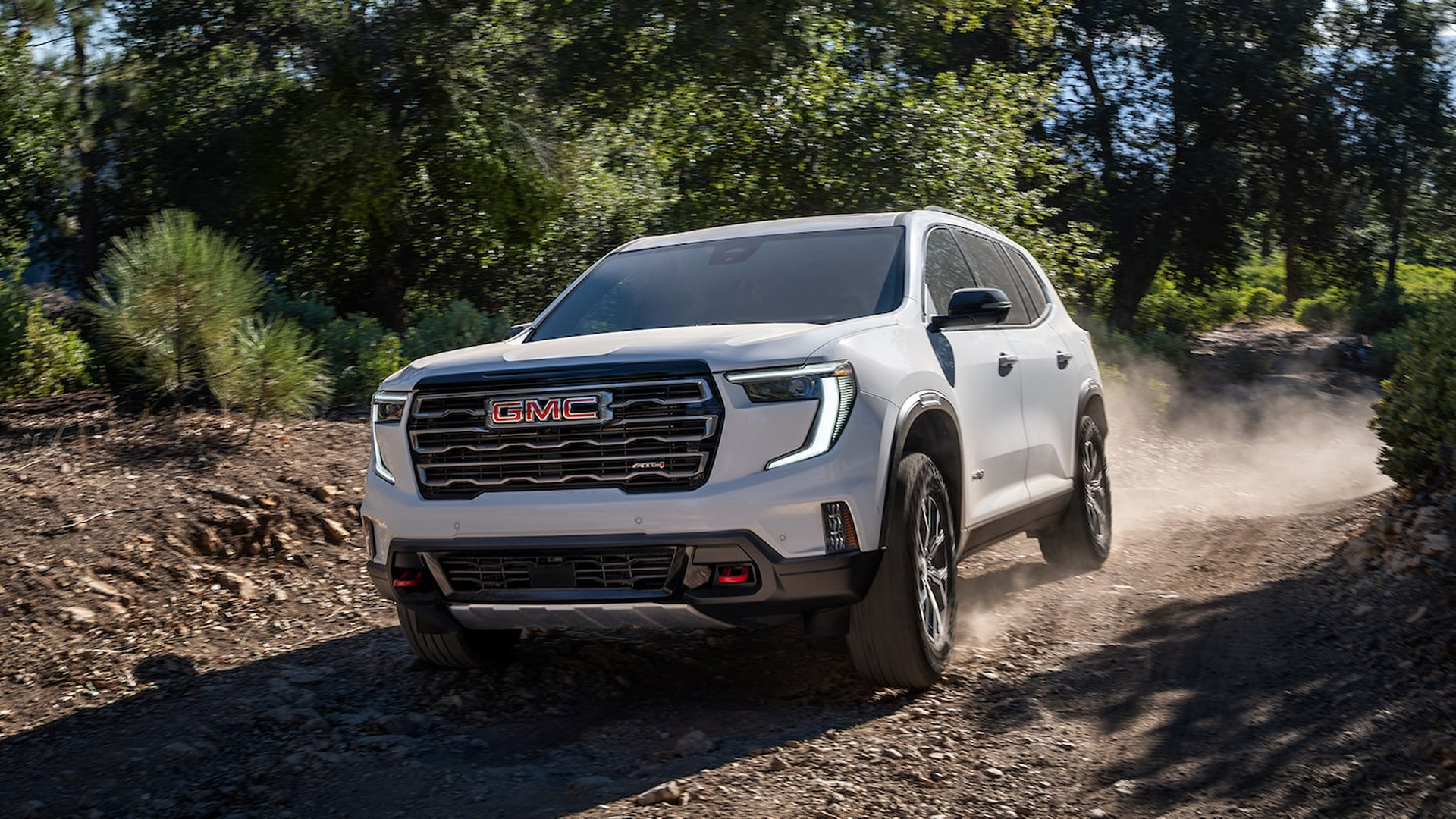
GMC recognized a massive cultural shift toward outdoor recreation and overlanding, prompting the introduction of the Acadia AT4 for the 2020 model year. The AT4 discarded the bright chrome elements favored by the Denali, adopting an aggressive, blacked-out aesthetic with a unique grille, heavy-duty black roof rails, and rugged 17-inch gloss-black wheels wrapped in aggressive all-terrain tires.
The core of the AT4's capability resided in its highly advanced Active Twin-Clutch AWD system. Unlike traditional, reactive slip-and-grip systems, this mechanical network completely transformed how the Acadia handled loose terrain. The system could physically disconnect the rear propeller shaft during dry highway driving to eliminate parasitic mechanical drag and improve fuel efficiency. When the tires hit slick mud or deep snow, the twin-clutch rear differential engaged. Instead of relying on the ABS to pinch the brake rotors on a spinning wheel, the twin clutches actively vectored torque laterally across the rear axle, forcing up to 100 percent of available rear-wheel torque directly to the tire with the most physical traction. This allowed the Acadia AT4 to claw up steep, deeply rutted trails that would easily trap standard crossovers.
The implementation of the twin-clutch all-wheel-drive system fundamentally changed the Acadia AT4's mechanical DNA, providing mechanical torque vectoring capabilities previously reserved for dedicated off-road machines or high-performance track cars.
Expanding the Footprint: Third Generation (2024-Present)
Consumer feedback heavily dictated the engineering direction of the third-generation Acadia. Buyers demanded more cargo volume and adult-friendly third-row legroom. GMC answered by dramatically expanding the vehicle's physical dimensions. The 2024 Acadia grew 10.6 inches longer and 3.2 inches taller, returning the vehicle to its original mission as a massive, commanding family hauler without sacrificing the advanced technological integrations of the modern era.
GMC executed a total powertrain revolution, retiring the naturally aspirated V6 entirely. The sole engine option became an incredibly potent 2.5-liter LK0 turbocharged inline-four. Utilizing a dual-volute turbocharger housing, engineers successfully routed exhaust gases to the turbine wheel with minimal interference, completely eliminating the sluggish turbo lag common in older forced-induction engines. You command 328 horsepower and 326 lb-ft of torque right off idle at a remarkably low RPM. This sheer twisting force rivals traditional V8 engines while keeping NOx emissions incredibly low. Power is distributed through an eight-speed automatic transmission tuned specifically for heavy hauling and smooth urban drivability.
Digital Supremacy and Super Cruise Integration
The interior architecture of the third generation represents a massive leap in digital capability. The dashboard is dominated by a stunning 15-inch diagonal premium infotainment display, running a lightning-fast Google-integrated operating system. This massive high-definition screen processes complex navigational rendering and high-resolution camera feeds instantly. An 11-inch digital driver information center replaces traditional analog gauges, providing customizable telemetry readouts directly in the driver's line of sight.
The crowning technological achievement of the modern Acadia is the availability of Super Cruise. This industry-leading hands-free driver assistance system utilizes a highly complex network of LiDAR map data, real-time high-definition cameras, and precise radar sensors. The system autonomously pilots the massive SUV across hundreds of thousands of miles of compatible North American highways. It actively monitors traffic flow, maintains safe following distances, and executes automated lane changes to pass slower vehicles without the driver ever touching the steering wheel. The Acadia flawlessly executes the dual mandates of a modern SUV: serving as a highly capable, rugged tool for weekend adventures, while simultaneously acting as a hyper-intelligent, technologically advanced luxury cruiser for the daily commute.
Third Generation (2024-Present) Technical Specifications
- Standard Powertrain
- 2.5L LK0 Turbocharged Inline-4
- Performance Metrics
- 328 horsepower / 326 lb-ft torque
- Infotainment Center
- 15-inch diagonal advanced touchscreen
- Autonomous Capability
- Super Cruise hands-free driving network