
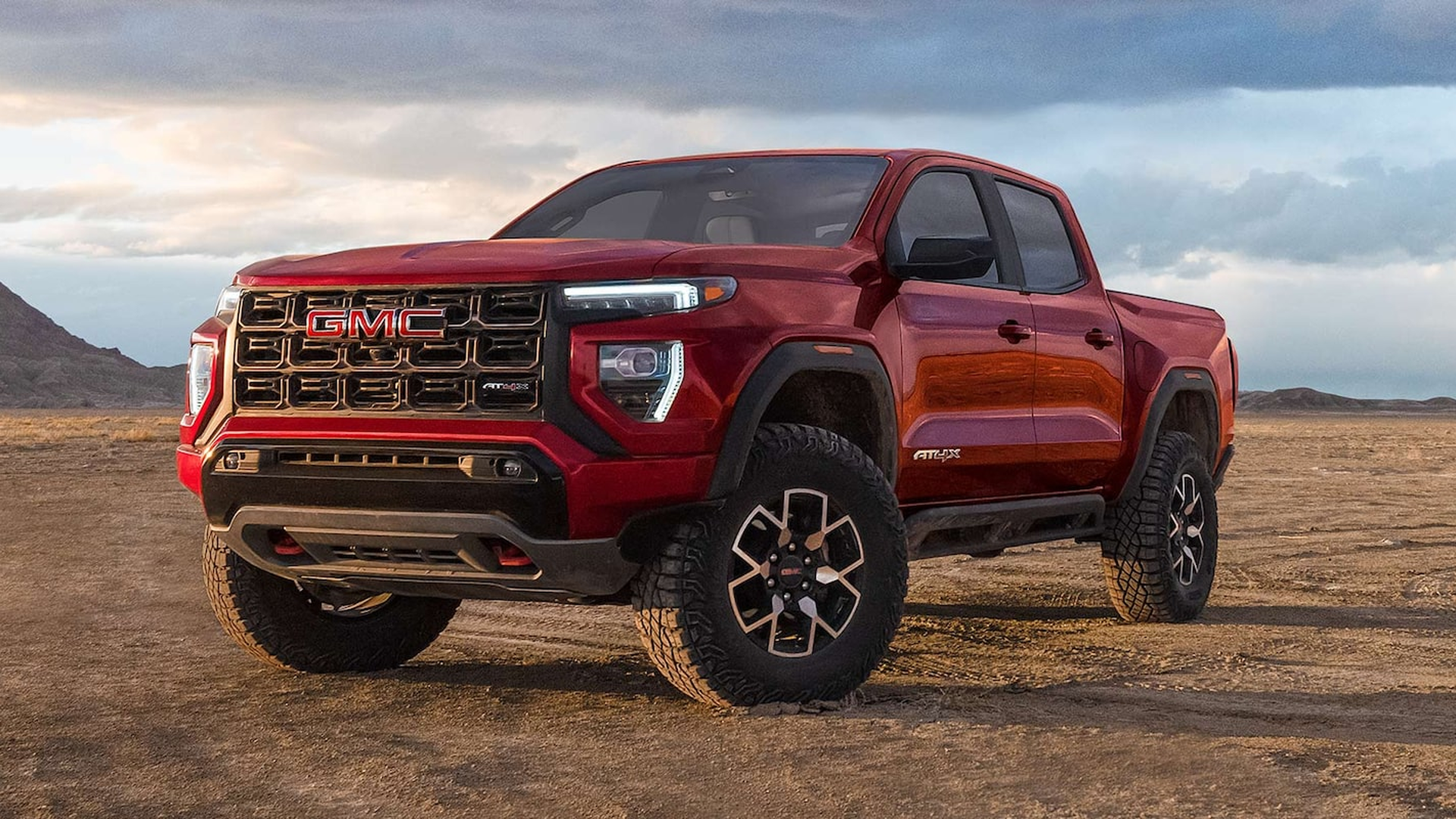
The Genesis of a Premium Mid-Size Contender
General Motors retired the long-running Sonoma in 2004, replacing it with a completely new architecture designed to push the boundaries of the compact truck segment. The GMC Canyon rolled onto dealership lots as a larger, more capable platform designated internally as GMT355. Engineers focused on delivering a driving experience that mirrored full-size trucks while maintaining garageable dimensions. The Canyon immediately distinguished itself from its Chevrolet Colorado sibling by offering distinct exterior styling cues, a bolder grille, and trim packages oriented toward a slightly more premium buyer demographic.
This early era introduced the innovative Atlas inline engine family. Instead of relying on traditional V6 layouts, GM utilized counter-rotating balance shafts within an inline configuration to eliminate harsh engine vibrations. Drivers experienced exceptionally smooth power delivery whether navigating city traffic or hauling materials to a job site. The initial powertrain lineup featured a 2.8-liter LK5 four-cylinder and a robust 3.5-liter L52 inline-five. The 3.5-liter engine, displacing exactly 3460 cm3, generated 220 horsepower-a highly competitive figure for the mid-size segment at the time.
The first-generation Canyon proved that a mid-size footprint could still house a professional-grade work ethic, challenging the long-held notion that only heavy-duty, full-size rigs could handle demanding job sites.
First Generation (2004-2012) Technical Specifications
- Platform Architecture
- GMT355
- Notable Engine Addition (2009)
- 5.3L LH8 V8
- V8 Power Output
- 300 horsepower / 320 lb-ft torque
- Drivetrain Options
- Rear-Wheel Drive (RWD) or Four-Wheel Drive (4WD)
As the first generation evolved, GMC answered consumer demands for increased hauling capabilities by stuffing a massive 5.3-liter V8 engine between the frame rails in 2009. This transformational upgrade gave the Canyon an aggressive edge, allowing it to tow up to 6,000 pounds. The Z71 suspension package also gained popularity during this period, offering increased ground clearance, heavy-duty shocks, and specialized skid plates to protect the underbody during off-road excursions.
The Second Generation: Elevating the Standards (2015-2022)
Following a brief hiatus, the Canyon returned to the American market for the 2015 model year. This second generation, riding on the global GMT31XX architecture, marked a massive leap forward in both refinement and structural rigidity. The frame consisted of high-strength steel, heavily boxed to reduce flex and improve crash safety ratings. This structural integrity directly contributed to a silent, confident ride quality, preventing chassis twist from transmitting vibrations into the passenger compartment.
Powertrain development accelerated rapidly during this production run. The standard engine became a highly efficient 2.5-liter inline-four, but the true workhorse of the gasoline lineup was the 3.6-liter LFX V6, later upgraded to the LGZ variant. The V6 utilized direct injection and variable valve timing to produce over 300 horsepower, providing effortless highway merging speed even with a bed full of cargo.
The engineering masterpiece of the second generation was undoubtedly the introduction of the 2.8-liter Duramax turbodiesel engine (RPO code LWN). Diesel power in a mid-size truck was a rarity in the American market. This engine utilized a variable-geometry turbocharger to force massive amounts of compressed air into the cylinders, generating 369 lb-ft of torque at a remarkably low 2000 RPM. This low-end grunt transformed the Canyon into an incredibly efficient tow rig, maximizing fuel economy while effortlessly pulling heavy trailers.
Second Generation (2015-2022) Technical Specifications
- Platform
- GMT31XX
- Diesel Powertrain
- 2.8L LWN Duramax Turbodiesel
- Maximum Towing Capacity
- 7,700 lbs (with diesel engine)
- Flagship Luxury Trim
- Denali (Introduced in 2017)
GMC also elevated the interior experience by introducing the legendary Denali trim to the Canyon lineup in 2017. Acoustic engineering took center stage. General Motors engineers deployed triple-sealed doors, acoustic laminated windshield glass, and liquid-applied sound deadener to the floor pan. This meticulous attention to isolation created a cabin environment rivaling premium luxury sedans. Passengers could converse effortlessly even at highway speeds. Real ash wood trim, perforated leather seating surfaces, and exclusive chrome exterior accents solidified the Denali as the undisputed luxury king of the mid-size truck segment.
The Third Generation: Turbocharged Dominance (2023-Present)
The 2023 model year marked the arrival of the most aggressive, technologically advanced Canyon ever built. Sitting on the heavily revised GMT31XX-2 platform, the truck gained a wider track and a factory lift across almost all trim levels. The exterior design language became dramatically more muscular, featuring a massive upright grille, high-clearance front bumpers, and a widened stance that clearly communicates its off-road intentions.
GMC simplified the powertrain lineup by offering a single, incredibly potent engine across all trims: the 2.7-liter L3B turbocharged four-cylinder. The High-Output variant standard in the Canyon utilizes a dual-volute turbocharger housing. This design precisely routes exhaust gases to the turbine wheel, nearly eliminating turbo lag and providing immediate throttle response. You command 430 lb-ft of torque right off idle. This sheer twisting force rivals traditional naturally aspirated V8 engines, yet the optimized combustion chamber design ensures efficient fuel burn, effectively lowering overall CO2 emissions compared to older, larger displacement engines. The engine block features a closed-deck design cast from aluminum alloy, reinforced with cast-iron cylinder liners to withstand the massive internal pressures generated by forced induction. Power flows through a rapid-shifting 8L80 eight-speed automatic transmission before being distributed to the wheels.
Engineering the AT4X: An Off-Road Weapon
Off-road enthusiasts instantly recognize the AT4X as a formidable weapon on the trails. At the core of its capability are the Multimatic Dynamic Suspensions Spool Valve (DSSV) dampers. Originally developed for championship-winning open-wheel racing cars, these dampers utilize precision-machined spool valves instead of traditional shim plates. This allows engineers to dictate independent tuning curves for compression and rebound across varying shaft speeds. The result is a truck that completely absorbs violent impacts from high-speed desert whoops while maintaining exceptional body control over slow, technical rock crawls.
The AT4X features selectable front and rear electronic locking differentials, ensuring maximum traction when traversing uneven terrain. Drivers can engage the exclusive Baja drive mode, which remaps the throttle progression, alters transmission shift points, and recalibrates the ABS to allow for controlled wheel slip in loose sand or gravel. Underneath the chassis, hot-stamped boron steel skid plates shield vital components from jagged rocks.
The implementation of Multimatic DSSV technology on a production mid-size truck completely rewrote the rules of factory off-road capability, delivering suspension compliance previously reserved for custom-built trophy trucks.
Third Generation (2023-Present) Technical Specifications
- Standard Powertrain
- 2.7L L3B Turbocharged Inline-4 (High-Output)
- Performance Metrics
- 310 horsepower / 430 lb-ft torque
- Infotainment Center
- 11.3-inch diagonal advanced touchscreen
- AT4X Ground Clearance
- 10.7 inches
Advanced Trailering and Digital Architecture
Beyond brute force and suspension wizardry, the modern GMC Canyon is a rolling computer network. The electrical architecture processes millions of lines of code per second, managing everything from engine timing to the massive 11.3-inch diagonal infotainment display. The digital driver information center provides crisp, customizable readouts of vital truck telemetry, including pitch and roll angles during off-road excursions.
Towing technology represents a massive leap forward. The Canyon offers up to 10 available camera views, including a class-exclusive underbody camera that helps drivers navigate treacherous terrain or precisely align a trailer hitch. The in-vehicle Trailering App allows owners to create custom trailer profiles, monitor tire pressures on the trailer itself, and run automated lighting diagnostics without needing a spotter. By integrating these systems directly into the OEM interface, GMC provides a seamless, stress-free towing experience that instills absolute confidence behind the wheel.
The GMC Canyon continues to define what a premium mid-size truck should be. It flawlessly executes the dual mandates of a modern pickup: serving as a brutally capable tool for towing and off-roading, while simultaneously wrapping its occupants in an incredibly quiet, technologically advanced, and comfortable environment.