
The Resurrection of an Automotive Monolith
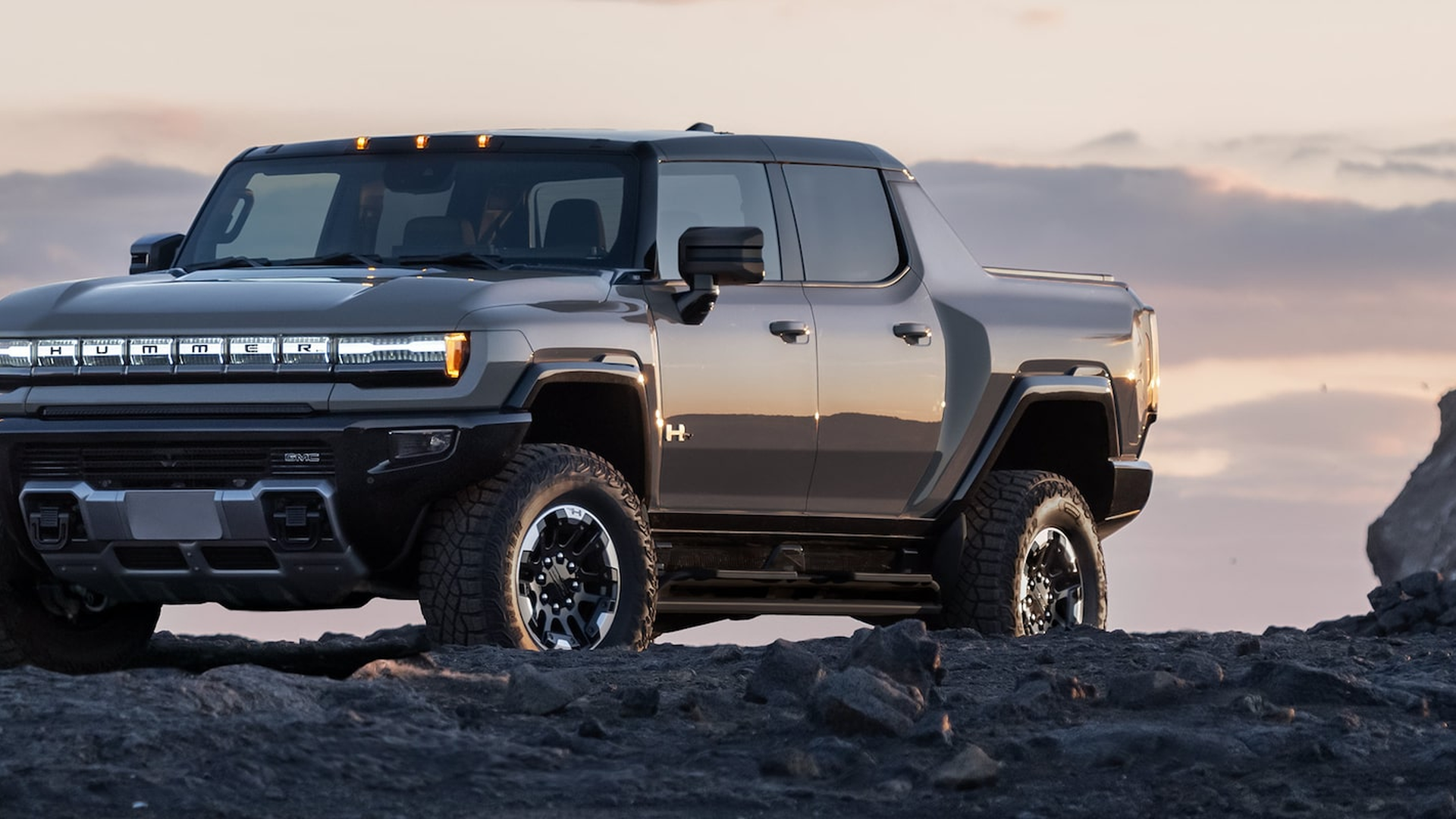
General Motors shattered industry expectations when they announced the return of the Hummer nameplate. Previously synonymous with massive military footprints and excessive fossil fuel consumption, the brand returned not as a compromise, but as a hyper-capable electric supertruck. The GMC Hummer EV Pickup arrived for the 2022 model year as a rolling showcase of what the dedicated Ultium architecture could achieve when entirely unshackled from traditional internal combustion engineering constraints. Before the electric revolution, the Hummer lineage traced its roots directly to the military-grade HMMWV produced by AM General. The civilian H1 and subsequent H2 models established a reputation for unapologetic width, extreme approach angles, and massive fuel consumption. The Hummer EV retains the imposing track width and brutalist design language of its ancestors but completely eliminates the environmental penalty, replacing CO2 emissions with blistering acceleration and digital capability.
The Ultium Architecture and Structural Integrity
The foundation of this 9,000-pound behemoth relies on a completely distinct structural philosophy. Rather than resting a body on a traditional steel ladder frame, the Hummer EV utilizes its massive high-voltage battery pack as the primary structural, load-bearing element. Stamped high-strength steel shear panels enclose the dual-stacked cell modules, creating a chassis with unparalleled torsional rigidity. You feel this stiffness instantly when dropping the truck off a rocky ledge; the cabin refuses to flex, squeak, or twist under immense load.
General Motors deployed their advanced Nickel Cobalt Manganese Aluminum (NCMA) pouch cell chemistry for the energy reserve. By doping the cathode with aluminum, engineers successfully reduced the reliance on rare-earth cobalt by a staggering 70 percent compared to earlier battery designs. This precise chemistry increases overall thermal stability and packs maximum energy density per cm3. The massive 24-module, double-stacked battery pack boasts roughly 212 kilowatt-hours of usable energy. Managing the extreme heat generated by discharging this massive reserve requires a highly sophisticated thermal management system. The truck utilizes an advanced heat pump that scavenges waste thermal energy from the power electronics and drive motors, repurposing it to heat the cabin or precondition the battery cells for optimal DC fast charging without draining the primary energy reserve.
Three Motors, One Thousand Horses
The Edition 1 variant utilizes a breathtaking three-motor setup. One independent motor drives the front axle, while two independent motors power the rear wheels. This specific configuration eliminates the need for mechanical locking differentials in the rear. Instead, the ECU executes digital torque vectoring, independently adjusting the rotational force at each rear wheel in milliseconds. If the right rear tire loses traction on a wet boulder, the system instantly routes maximum power to the left tire to maintain forward momentum without hesitation. Total system output peaks at an astounding 1,000 horsepower and an estimated 1,150 lb-ft of motor torque.
Acceleration in a vehicle of this mass is physically disorienting. Activate the Watts to Freedom (WTF) launch control system, and the truck initiates a theatrical preparation sequence. The adaptive air suspension vents pressure, lowering the entire chassis by two inches to improve aerodynamics and lower the center of gravity. The battery cooling system shifts into maximum overdrive, and the driver's seat violently vibrates to signal system readiness. Release the brake pedal, and the Hummer EV catapults from zero to sixty miles per hour in roughly 3.0 seconds. The sheer kinetic energy generated by moving over four tons of mass at that velocity fundamentally rewrites the physics of full-size pickups.
The execution of Watts to Freedom proves that electric vehicle architecture can deliver a visceral, violently emotional driving experience that completely eclipses the sensory input of traditional large-displacement internal combustion engines.
Ultium Powertrain Technical Specifications
- Platform Architecture
- Ultium Dedicated EV Platform
- Battery Capacity
- 212 kWh Usable (24-Module Double-Stacked)
- Peak Power Output
- 1,000 Horsepower (Edition 1)
- 0-60 MPH Acceleration
- Approximately 3.0 Seconds (WTF Mode)
Rewriting Geometry: CrabWalk and Extract Mode
Navigating a truck this wide through dense timber or narrow canyon switchbacks poses a massive physical challenge. To solve this, the Hummer EV features a sophisticated four-wheel steering system. At high speeds on the interstate, the rear wheels turn slightly in phase with the front wheels to execute smooth, stable lane changes. At low speeds, they turn out of phase, drastically shrinking the turning radius to match that of a standard mid-size sedan.
Engage CrabWalk, and the hydraulic actuators turn both the front and rear wheels in the exact same direction up to 10 degrees. The truck then drives diagonally. This allows the driver to slide laterally past trail obstructions without constantly reversing and repositioning the nose of the vehicle. GMC engineers specifically targeted the world's most punishing trails during the development phase. The standard Air Ride Adaptive Suspension offers immense vertical travel. In its standard ride height, the truck clears regular obstacles with ease. Engage Terrain Mode, and the system raises the chassis for slow-speed rock crawling.
The true off-road party piece is Extract Mode. If the truck completely bottoms out in deep mud or high-centers on a massive rock shelf, the driver can command the air springs to push the suspension to its absolute maximum physical limits. The truck lifts nearly six inches above its standard height, providing a towering 15.9 inches of ground clearance. This extreme elevation radically alters the approach, departure, and breakover angles, allowing the massive OEM 35-inch Goodyear Wrangler Territory MT tires to claw over obstacles that would trap highly modified conventional off-roaders.
Off-Road and Armor Specifications
- Maximum Ground Clearance
- 15.9 inches (Extract Mode)
- Water Fording Depth
- 32 inches
- Four-Wheel Steering
- Standard with CrabWalk capability
- Underbody Armor
- Stamped Boron Steel Skid Plates
Armor, Towing, and the UltraVision Network
A massive battery pack slung between the axles requires extreme protection from jagged terrain. GMC discarded flimsy plastic splash guards, opting instead for heavy-duty, stamped steel skid plates and rock sliders. These boron steel plates form a nearly impenetrable shield across the entire underbelly of the vehicle, protecting the high-voltage architecture from devastating impacts.
The UltraVision system provides up to 18 available camera views. Engineers even mounted waterproof, heavily armored cameras underneath the chassis, pointing forward and backward along the axles. These underbody cameras feature dedicated wash nozzles to clear away mud, allowing the driver to perfectly place the front tires on a precarious rock ledge without needing an outside spotter.
When pulling a heavy load, the electric architecture provides immense benefits. The instantaneous torque eliminates the agonizing strain of pulling a trailer up a steep grade. On the descent, the variable regenerative braking system converts the massive kinetic energy of the trailer back into electricity. The electric motors act as generators, slowing the massive GVWR rig with absolute authority without generating friction heat, effectively eliminating brake fade while extending your driving range. Tipping the scales at over 9,000 pounds, stopping this kinetic missile also requires massive physical friction. Engineers fitted enormous heavy-duty brake rotors clamped by stiff calipers, managed by a fully blended electro-hydraulic braking system. This system seamlessly transitions between the regenerative resistance of the electric motors and the physical bite of the brake pads.
The Infinity Roof and Lunar Interior
The cabin of the Hummer EV feels like the flight deck of a low-orbit spacecraft. The design language heavily leans into lunar exploration themes. The speaker grilles for the premium Bose audio system feature topographical maps of the Sea of Tranquility. You remove the four transparent modular Sky Panels to create a completely open-air driving experience, stowing them securely in the massive power-operated eTrunk (front trunk) which occupies the space where a gas engine would traditionally sit.
Digital interfaces dominate the dashboard. A 13.4-inch diagonal infotainment touchscreen sits center stage, accompanied by a 12.3-inch diagonal digital driver information center. GMC partnered with Epic Games to utilize the Unreal Engine-the same software architecture used to build blockbuster video games-to render the on-screen graphics. When you switch drive modes, the screens explode with high-fidelity, fluid 3D animations displaying the truck navigating various virtual environments.
Super Cruise and High-Speed Charging Infrastructure
Cruising on the highway reveals another layer of technological dominance: Super Cruise. This industry-leading hands-free driver assistance technology utilizes highly detailed LiDAR map data, real-time high-definition cameras, and radar sensors to autonomously pilot the supertruck across hundreds of thousands of miles of compatible North American highways. The system actively monitors traffic flow, maintains following distances, and executes automated lane changes to pass slower vehicles. The steering wheel features an integrated infrared camera that continuously monitors the driver's eye movement and head position; if the system detects that you are not paying attention to the road ahead, it triggers a series of escalating visual and audible alerts before safely bringing the vehicle to a controlled stop.
The battery system utilizes an 800-volt electrical architecture capable of accepting DC fast charging rates up to 350 kW. The pack physically switches its internal wiring from parallel to series to accept this massive influx of power. At a compatible station, you can add nearly 100 miles of driving range in approximately 12 minutes, making long-distance overland travel a realistic endeavor. GMC completely shattered expectations with the Hummer EV Pickup. It stands as an uncompromising monument to American engineering, integrating extreme off-road hardware with revolutionary software to define an entirely new classification of vehicle.