
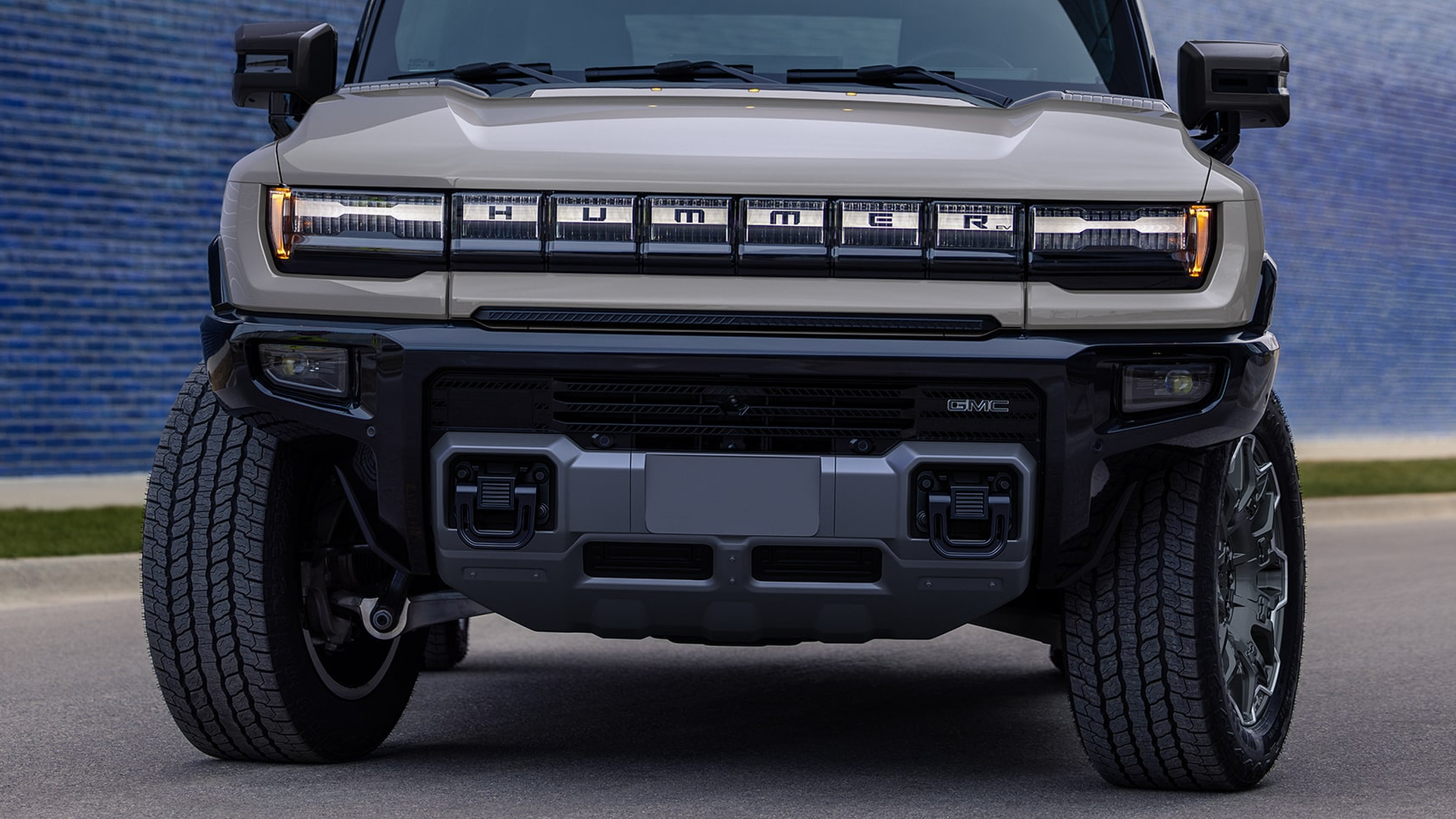
Condensing the Electric Leviathan: The SUV Architecture
General Motors engineers faced a unique physical challenge following the successful launch of the Hummer electric pickup. They needed to adapt the massive footprint of their electric supertruck into an enclosed, highly maneuverable utility vehicle. The resulting GMC Hummer EV SUV executes a radical dimensional shift. By carving exactly 8.9 inches out of the wheelbase and significantly truncating the rear overhang, the engineering team fundamentally altered the physical geometry of the vehicle. This compression transforms the sprawling supertruck into a ruthlessly effective trail weapon. The shorter wheelbase radically sharpens the breakover angle, allowing the heavy SUV to crest jagged rock formations that would easily high-center longer vehicles.
The enclosed rear architecture required a completely distinct structural approach. Because the SUV lacks the rigid bulkhead that separates the passenger cabin from the cargo bed in the pickup variant, engineers heavily fortified the D-pillars and the rear roof structure to maintain absolute torsional rigidity. When traversing deeply rutted trails, the passenger cabin remains remarkably stiff, completely rejecting the flex and creak common in older, body-on-frame utility vehicles. Every input from the suspension is isolated and controlled.
The deliberate reduction in wheelbase length fundamentally altered the Hummer EV SUV's physical capabilities, creating an off-road geometry that actively dominates narrow woodland trails and steep rock faces previously inaccessible to full-size electric vehicles.
The Ultium Power Reserve and Thermal Management
The foundation of this 8,600-pound behemoth relies entirely on the dedicated Ultium architecture. Rather than bolting a traditional body onto a steel ladder frame, the Hummer EV SUV utilizes its massive high-voltage battery pack as the primary structural, load-bearing element. Stamped high-strength steel shear panels enclose the battery cell modules, creating a chassis matrix with unparalleled rigidity.
The SUV utilizes a 20-module, double-stacked battery pack. General Motors deployed their highly advanced Nickel Cobalt Manganese Aluminum (NCMA) pouch cell chemistry for this energy reserve. By doping the cathode with aluminum, chemical engineers successfully reduced the reliance on rare-earth cobalt by a staggering 70 percent compared to legacy battery designs. This precise chemistry increases overall thermal stability and packs maximum energy density per cm3. Managing the extreme heat generated by discharging hundreds of kilowatts requires a highly sophisticated thermal management system. The truck utilizes an advanced heat pump that scavenges waste thermal energy from the power electronics and drive motors. It repurposes this free heat to warm the cabin during winter months or to precondition the battery cells for optimal DC fast charging.
Ultium Battery (SUV Configuration) Technical Specifications
- Platform Architecture
- Ultium Dedicated EV Platform
- Battery Layout
- 20-Module Double-Stacked
- Chemistry
- NCMA (Nickel Cobalt Manganese Aluminum)
- Maximum DC Fast Charging
- 300 kW (800-Volt Architecture)
Tri-Motor Domination and Electronic Torque Vectoring
The Edition 1 variant of the SUV utilizes a breathtaking three-motor setup. One independent motor drives the front axle, while two completely independent motors power the rear wheels. This specific configuration completely eliminates the need for mechanical locking differentials in the rear. Instead, the ECU executes highly precise digital torque vectoring. It independently adjusts the rotational force at each rear wheel in milliseconds. If the right rear tire loses traction on a wet boulder, the system instantly routes maximum power to the left tire to maintain forward momentum without any mechanical hesitation.
Total system output peaks at an astounding 830 horsepower. While this is slightly lower than the pickup variant due to the physically smaller 20-module battery pack, the power-to-weight ratio remains terrifyingly potent. The instantaneous delivery of peak torque at zero RPM means the heavy SUV can surge up 60-percent grades with zero mechanical strain.
Activate the Watts to Freedom (WTF) launch control system, and the truck initiates a theatrical preparation sequence. The adaptive air suspension vents pressure, lowering the entire chassis by two inches to improve aerodynamics and lower the center of gravity. The battery cooling system shifts into maximum overdrive, and the driver's seat violently vibrates to signal system readiness. Release the brake pedal, and the Hummer EV SUV catapults from zero to sixty miles per hour in just 3.5 seconds. The sheer kinetic energy generated by moving over four tons of mass at that velocity completely rewrites the physical expectations of a full-size utility vehicle.
Rewriting Geometry: CrabWalk and Extract Mode
Navigating an intensely wide vehicle through dense timber or narrow canyon switchbacks poses a massive physical challenge. To solve this, the Hummer EV SUV features a highly sophisticated four-wheel steering system. At high speeds on the interstate, the rear wheels turn slightly in phase with the front wheels to execute perfectly flat, stable lane changes. At low speeds, they turn out of phase. Because of the shorter wheelbase, this system shrinks the turning radius to an incredible 35.4 feet-tighter than a standard compact crossover.
Engage CrabWalk, and the hydraulic actuators turn both the front and rear wheels in the exact same direction up to 10 degrees. The truck then drives diagonally. Drivers can slide laterally past trail obstructions without constantly reversing and repositioning the nose of the vehicle.
The true off-road party piece is Extract Mode. If the truck completely bottoms out in deep mud or high-centers on a massive rock shelf, the driver can command the air springs to push the suspension to its absolute maximum physical limits. The truck lifts nearly six inches above its standard height, providing a towering 14.9 inches of ground clearance. This extreme elevation radically alters the approach, departure, and breakover angles, allowing the massive OEM 35-inch Goodyear Wrangler Territory MT tires to claw over obstacles that would trap highly modified conventional off-roaders. Heavy-duty stamped boron steel skid plates form a nearly impenetrable shield across the entire underbelly, protecting the high-voltage architecture from devastating impacts.
Off-Road Geometry Technical Specifications
- Maximum Ground Clearance
- 14.9 inches (Extract Mode)
- Water Fording Depth
- 32 inches
- Turning Circle
- 35.4 feet
- Underbody Armor
- Stamped Boron Steel Skid Plates
The Infinity Roof and Acoustic Engineering
Creating an enclosed SUV from an open-bed pickup architecture creates severe acoustic challenges. A large, enclosed cargo area essentially acts as a massive drum, amplifying road and tire noise. GMC acoustic engineers attacked this problem by deploying extensive liquid-applied sound deadener across the rear floor pan and utilizing active noise cancellation technology through the 14-speaker Bose premium audio system. This network emits phase-inverted sound waves to physically cancel out the drone of the aggressive mud-terrain tires at highway speeds.
The cabin design heavily leans into lunar exploration themes, featuring topographical maps of the Sea of Tranquility etched into the speaker grilles. You remove the four transparent modular Sky Panels to create a completely open-air driving experience. Because the vehicle lacks a traditional internal combustion engine, these panels stow securely in the massive power-operated eTrunk (front trunk).
The rear cargo area is accessed via a massive, power-operated swing gate. Traditional liftgates cannot physically support the immense weight of a 35-inch spare tire. Engineers designed a heavy-duty side-hinged vault door that swings wide to reveal a cavernous storage area. The floor beneath the cargo mat conceals additional hidden storage compartments, maximizing the utility of the fully enclosed rear architecture.
Digital Dominance and Super Cruise
Digital interfaces dominate the dashboard. A 13.4-inch diagonal infotainment touchscreen sits center stage, accompanied by a 12.3-inch diagonal digital driver information center. GMC partnered with Epic Games to utilize the Unreal Engine-the exact software architecture used to build blockbuster video games-to render the on-screen graphics. When you switch drive modes, the screens explode with high-fidelity, fluid 3D animations displaying the truck navigating various virtual environments.
Cruising on the highway reveals the ultimate technological integration: Super Cruise. This industry-leading hands-free driver assistance technology utilizes highly detailed LiDAR map data, real-time high-definition cameras, and radar sensors to autonomously pilot the super-utility vehicle across compatible North American highways. The system actively monitors traffic flow, maintains following distances, and executes automated lane changes to pass slower vehicles. An integrated infrared camera continuously monitors the driver's eye movement to ensure they remain engaged with the road ahead.
The Hummer EV SUV operates as a rolling power grid. The Power Station Pro hardware enables bi-directional charging. The onboard inverter supplies up to 10.2 kW of offboarding power through a network of 120-volt and 240-volt outlets. You can run heavy-duty power tools on a remote job site, power a luxury RV in the backcountry, or keep your home's essential appliances running for days during a catastrophic grid blackout. The GMC Hummer EV SUV represents an absolute lack of compromise, merging the brutal mechanical geometry required for elite off-roading with the advanced digital intelligence of the electric era.