
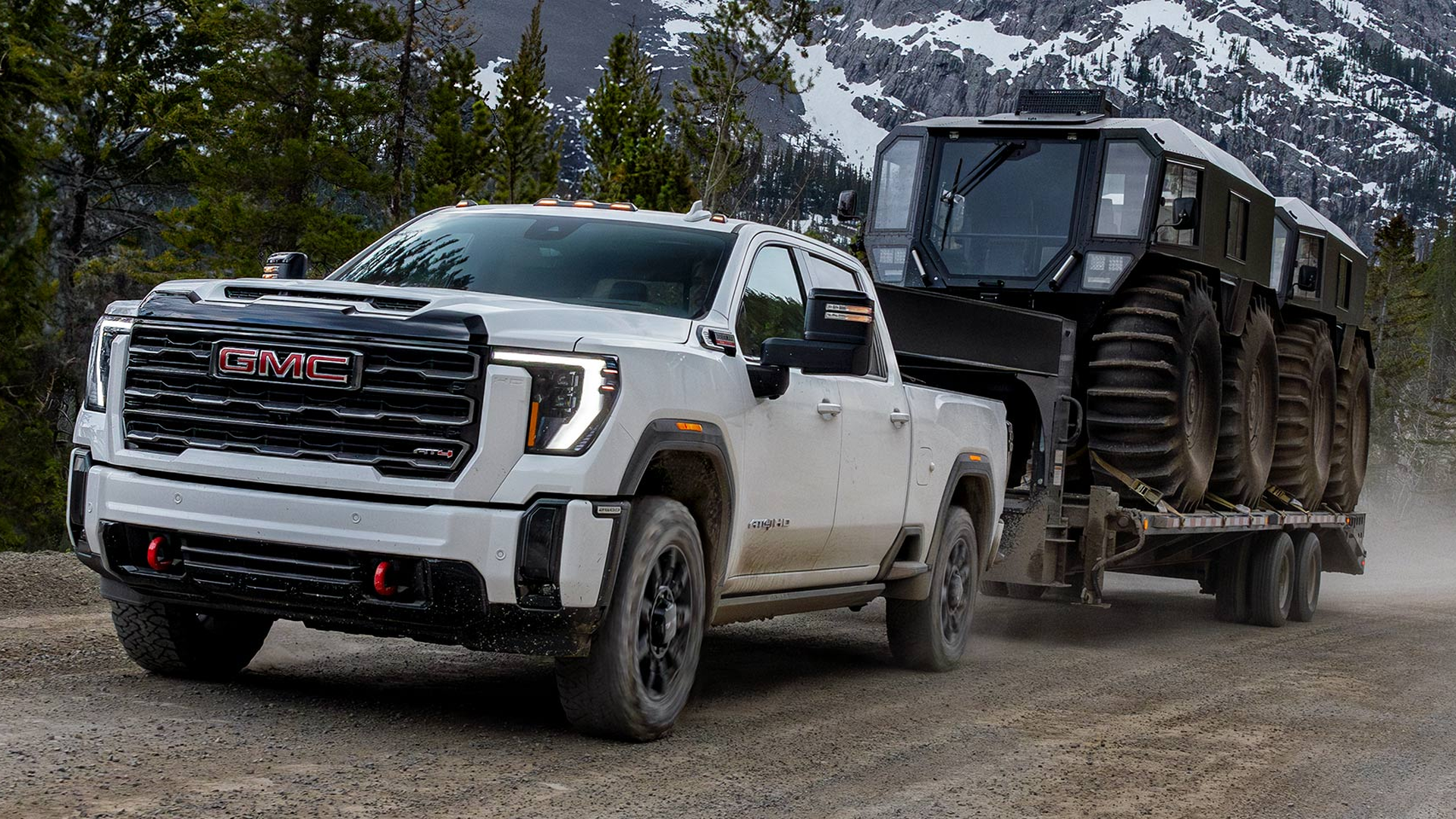
Establishing the One-Ton Standard: The GMT800 Era (2001-2006)
At the turn of the millennium, General Motors completely overhauled its heavy-duty truck strategy, moving away from the aging C/K 3500 nomenclature to introduce a dedicated, purpose-built architecture. The GMT800 generation GMC Sierra 3500 HD was engineered from the ground up to handle extreme commercial loads. Unlike the 2500HD, the 3500 HD was explicitly designed around the Dual Rear Wheel (DRW) configuration, commonly known as a dually. This setup utilized four tires on the rear axle, drastically increasing the contact patch with the pavement and providing unparalleled lateral stability when towing massive gooseneck trailers or carrying heavy slide-in campers.
The foundation of this immense capability was the frame. Engineers utilized hydroformed front sections, forcing highly pressurized water through tubular steel to shape the metal without creating the stress fractures associated with traditional stamping. This created an incredibly rigid mounting point for the powertrain. The front suspension utilized a massive Independent Front Suspension (IFS) system with forged torsion bars. While competitors relied on solid front axles that transferred brutal impacts directly into the cabin, the Sierra 3500 HD delivered a remarkably isolated, controlled ride quality under heavy load.
The defining mechanical triumph of this era was the debut of the 6.6-liter LB7 Duramax diesel V8. Displacing exactly 6599 cm3, this engine utilized an advanced 32-valve aluminum cylinder head design and a Bosch high-pressure common-rail injection system. It delivered smooth, immediate power, completely eliminating the sluggish, smoke-heavy characteristics of older mechanical diesels.
The implementation of the Duramax V8 paired with the Allison 1000 transmission shifted the entire automotive industry, proving that a one-ton commercial truck could deliver massive towing capability while maintaining the drivability of a daily commuter.
First Generation 3500 HD (GMT800) Technical Specifications
- Platform Architecture
- GMT800 HD
- Debut Diesel Engine
- 6.6L LB7 Duramax V8 (300 horsepower / 520 lb-ft torque)
- Transmission Partner
- Allison Transmission (5-speed automatic)
- Rear Axle Configuration
- Single Rear Wheel (SRW) or Dual Rear Wheel (DRW)
Emissions, Rigidity, and the Birth of HD Luxury: GMT900 (2007-2014)
As federal mandates forced heavy-duty trucks to clean up their exhaust profiles, the GMT900 generation introduced a wave of highly advanced emissions control systems. The LMM variant of the Duramax engine debuted with a DPF to trap soot before it entered the atmosphere. Later in the generation, the LML Duramax integrated a DEF injection system, utilizing a urea solution to scrub NOx emissions from the exhaust stream, transforming them into harmless nitrogen and water vapor.
Despite the restrictive emissions equipment, engineers extracted massive power from the LML engine, peaking at 397 horsepower and 765 lb-ft of torque. To control this immense twisting force while hauling 23,000-pound trailers down steep mountain grades, GMC integrated a smart exhaust braking system. The engine computer actively altered the pitch of the vanes inside the variable-geometry turbocharger, restricting exhaust flow and creating massive engine backpressure. This provided wear-free deceleration, saving the massive Duralife disc brakes from catastrophic thermal fade.
GMC recognized that fleet owners and equestrian professionals spent countless hours inside their trucks. They introduced the luxurious Denali trim to the 3500 HD lineup. The Denali transformed the barren, plastic-heavy commercial cabin into a mobile executive office, featuring heated and ventilated leather seating, acoustic glass to block wind noise, and premium Bose audio systems.
Second Generation 3500 HD (GMT900) Technical Specifications
- Peak Diesel Engine
- 6.6L LML Duramax V8
- Maximum Power Output
- 397 horsepower / 765 lb-ft torque
- Braking Innovation
- Smart Exhaust Brake System
- Frame Enhancement
- Fully boxed high-strength steel front sections
Forged in Steel: The K2XX Architecture (2015-2019)
The K2XX generation represented a relentless pursuit of structural integrity. While competitors began experimenting with aluminum cargo boxes to save weight, GMC engineers doubled down on the durability of roll-formed, high-strength steel for the Sierra 3500 HD bed. The cold-working process of roll-forming maintained the steel's metallurgical strength, creating a cargo box capable of withstanding impacts from heavy equipment, dropped fifth-wheel hitches, and sharp construction debris.
Under the massive hood, the 2017 model year brought the L5P Duramax. This was a complete, ground-up redesign of the legendary engine. General Motors cast an entirely new, stronger cylinder block, installed massive forged connecting rods, and bolted on a gigantic BorgWarner turbocharger. This combination pushed output to an earth-moving 445 horsepower and 910 lb-ft of torque. To keep this monstrous powerplant from melting under extreme load, engineers designed a fully functional hood scoop. This patented induction system separated heavy water droplets and dust from the incoming air charge, driving cold, dense oxygen directly into the intake tract.
The rear axle and suspension were drastically fortified. The massive 11.5-inch and 12-inch ring gears in the rear differential were engineered to handle the brutal, continuous stress of pulling maximal payloads without shearing teeth. The rear leaf springs utilized a multi-stage design; the primary pack absorbed normal road imperfections, while a massive secondary overload spring engaged only when thousands of pounds of pin weight were dropped onto the rear axle.
The 36,000-Pound Behemoth: T1XX Platform (2020-Present)
The current generation of the GMC Sierra 3500 HD defies the limits of light-duty vehicle classification, blurring the line between a pickup truck and a Class 4 commercial semi-tractor. The physical architecture grew in every dimension. The wheelbase was stretched to provide unmatched highway tracking stability when pulling massive trailers, and the cooling grilles were expanded to consume thousands of cubic feet of air per minute.
The powertrain evolution reached its zenith with the integration of an Allison 10-speed automatic transmission. Previous generations utilized six gears; the jump to ten allowed engineers to create incredibly tight gear spacing. This ensures the Duramax engine operates precisely at its peak torque RPM, regardless of whether the truck is pulling a steep grade at 35 mph or cruising the interstate at 70 mph. The latest iteration of the L5P Duramax produces a staggering 470 horsepower and 975 lb-ft of torque.
For operations that do not require diesel power, GMC developed the L8T 6.6-liter gas V8. Discarding fragile fuel-saving technologies like cylinder deactivation, this cast-iron block, heavy-duty gas engine runs continuously under high stress, generating 401 horsepower and 464 lb-ft of torque. It serves as a virtually indestructible alternative for fleets operating in extremely cold climates where diesel fuel gelling is a concern.
Redefining the Science of Maximum Trailering
When properly configured as a regular cab, dual rear wheel, two-wheel-drive model with the Duramax engine and the Max Trailering Package, the Sierra 3500 HD achieves a GCWR that allows it to tow up to an astonishing 36,000 pounds via a gooseneck hitch. Stopping that much mass requires enormous friction. Engineers fitted the T1XX chassis with massive 14-inch Duralife brake rotors clamped by heavy-duty calipers, providing highly linear, fade-resistant stopping power.
Towing technology completely transformed the driving experience. The ProGrade Trailering System integrates directly into the massive central touchscreen. It processes feeds from up to 15 different camera views. The most impressive is the Transparent Trailer view, which stitches together feeds from the tailgate camera and a remote camera mounted on the back of the trailer. The system virtually erases the trailer from the screen, allowing the driver to monitor traffic directly behind a 40-foot load.
The ProGrade Trailering System eliminates the blind spots that have plagued heavy-duty towing for decades, utilizing digital processing to provide total situational awareness around massive fifth-wheel payloads.
The Pinnacle of Trim Levels: Denali Ultimate and AT4X
The modern Sierra 3500 HD proves that a one-ton truck can possess the interior refinement of a European luxury sedan. The Denali Ultimate trim envelops occupants in full-grain Alpine Umber leather. Real open-pore Paldao wood spans the dashboard, and a microsuede headliner absorbs ambient noise. 16-way power-adjustable, massaging front seats ensure that drivers arrive at their destination completely free of fatigue, even after hundreds of miles of white-knuckle towing.
GMC also extended the extreme off-road AT4X treatment to the 3500 HD lineup. Traditionally, one-ton trucks are too heavy and stiff to perform well in the dirt. The 3500 HD AT4X shatters this limitation by integrating Multimatic DSSV (Dynamic Suspensions Spool Valve) dampers. These advanced shock absorbers utilize precision-machined internal spool valves rather than standard deflecting shims, giving the massive truck incredible suspension compliance over rough terrain. Heavy-duty aluminum skid plates protect the steering gear and transfer case, while an electronic locking rear differential ensures maximum traction in deep mud.
Current Generation 3500 HD (T1XX) Technical Specifications
- Available Powertrains
- 6.6L L8T Gas V8 / 6.6L L5P Duramax Diesel V8
- Maximum Gooseneck Towing
- Up to 36,000 lbs (DRW configuration)
- Transmission
- Allison 10-speed automatic
- Off-Road Flagship
- AT4X (Available in SRW configurations)
The GMC Sierra 3500 HD stands as a monument to American industrial design. It seamlessly fuses the raw, unyielding mechanical strength required for extreme commercial towing with the advanced digital intelligence and absolute luxury demanded by the modern professional. It is an engineering masterpiece built without compromise.