
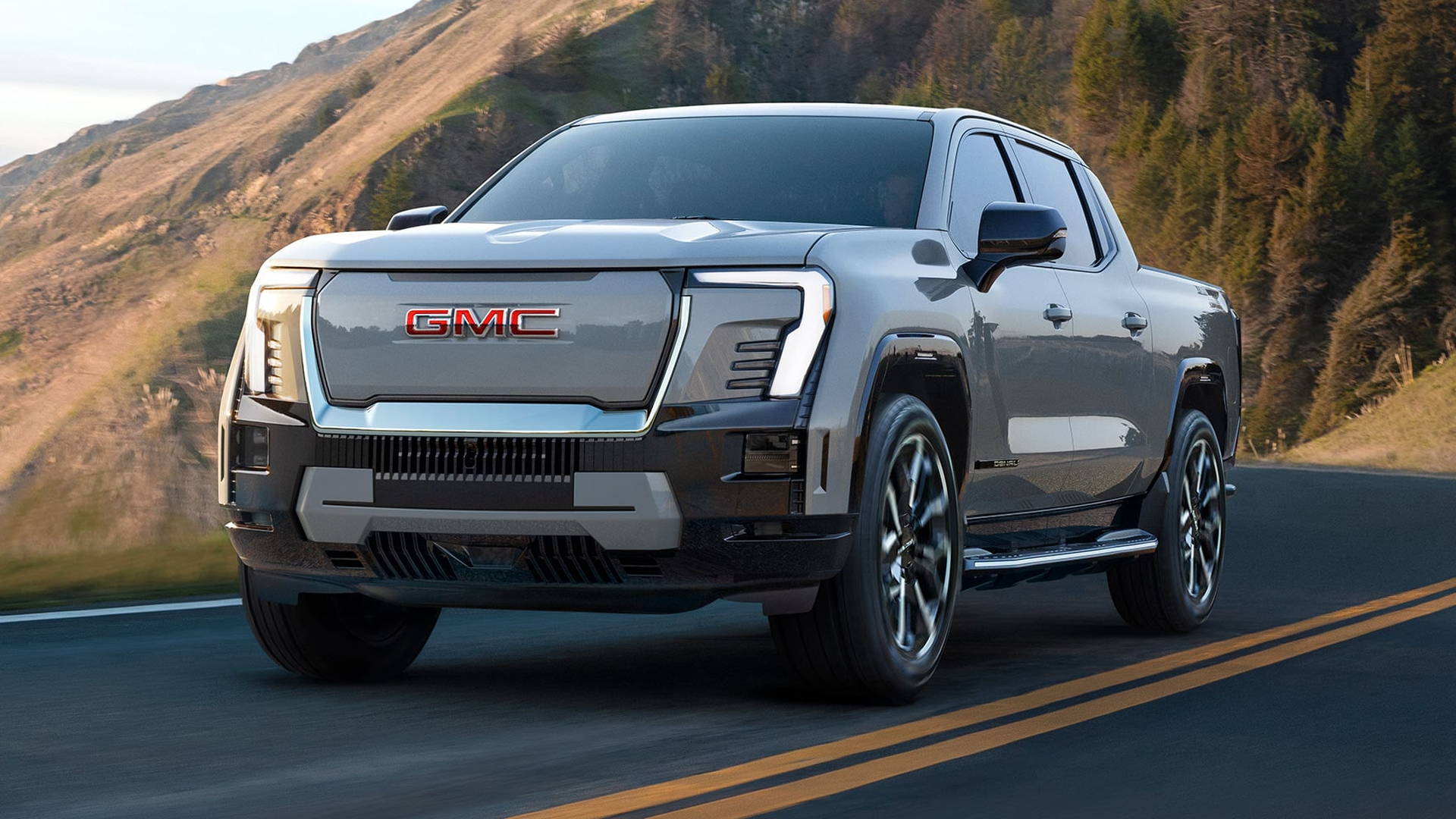
The Ultium Architecture and Structural Integrity
The GMC Sierra EV represents a violent paradigm shift in the American truck market. General Motors stripped the full-size pickup concept down to its atomic level, discarding over a century of internal combustion dogma to build a professional-grade workhorse around the revolutionary Ultium platform. This architecture abandons the traditional, heavy ladder frame setup, replacing it with a structural battery pack that serves as the literal foundation of the chassis. Engineers integrated the massive energy storage system directly into the vehicle's structural matrix. The steel enclosure housing the battery cells features heavy-duty crossmembers that act as sheer panels, achieving torsional rigidity that completely eclipses legacy high-strength steel frames. You experience this rigidity instantly over rough, pothole-riddled pavement; the cab refuses to shudder, structural flex is eliminated, and the suspension geometry remains perfectly isolated.
This structural dominance allows the suspension to do its job without fighting chassis twist. The independent front and rear suspension systems utilize massive forged aluminum control arms to reduce unsprung weight, ensuring the heavy truck tracks true over washboard dirt roads. Every kinetic input is managed with absolute precision.
Powertrain Dynamics: Brute Force Meets Digital Precision
Forget the slow spooling of a heavy-duty turbocharger or the dramatic downshifts of a traditional automatic transmission. The Sierra EV relies on massive front and rear electric drive units to deliver instantaneous, brutal acceleration. Engage the Max Power mode, and the high-voltage digital controllers dump massive amperage from the battery directly into the motors, unleashing 754 horsepower and an earth-moving 785 lb-ft of torque. Because there is no physical driveshaft connecting the axles, nor a mechanical transfer case to bind up under load, the ECU dictates torque distribution to individual wheels in milliseconds.
This e4WD (electronic four-wheel drive) system is vastly superior to mechanical counterparts. It calculates slip angles, steering wheel position, and wheel speed, adjusting power delivery hundreds of times per second. This ensures the violent acceleration translates directly to forward momentum rather than vaporized tire rubber. You can execute highway merging maneuvers with a massive trailer in tow with the exact same confidence as an unladen sports car.
Battery Chemistry and Thermal Management Mastery
Range anxiety evaporates when examining the technical specifications of the high-voltage system. The Sierra EV Denali Edition 1 achieves an EPA-estimated 440 miles on a single charge. This massive capacity relies on a highly advanced Nickel Cobalt Manganese Aluminum (NCMA) pouch cell chemistry. General Motors successfully reduced the reliance on rare-earth cobalt by 70 percent compared to their previous battery cell designs, replacing it with aluminum. This specific chemical doping increases thermal stability, prevents catastrophic dendrite formation within the cells, and maximizes energy density per cubic centimeter (cm3).
Managing the heat generated by discharging massive amounts of electricity requires brilliant thermal engineering. The Sierra EV utilizes an advanced heat pump system that scavenges waste heat from the drive motors and the power electronics, repurposing it to warm the passenger cabin during harsh winter driving. This drastically reduces the energy draw on the primary battery pack, preserving your driving range when the temperature drops below freezing.
The integration of a highly efficient thermal heat pump essentially recycles ambient and mechanical heat, proving that the Sierra EV was engineered to conquer the brutal realities of winter operation, not just mild-weather highway cruising.
Reimagining Utility: The MultiPro MidGate and eTrunk
Removing the massive V8 engine and its associated cooling pack from the nose of the truck liberated an immense volume of physical space. GMC repurposed this void into the eTrunk. This secure, weatherproof, and lockable front storage compartment features a 120-volt power outlet, cargo tie-downs, and molded-in drains. You can fill it with ice to use as a massive cooler, or securely store expensive power tools out of sight.
The true cargo revolution occurs directly behind the cab. The MultiPro MidGate resurrects a structural concept pioneered by the early-2000s Avalanche but executes it with modern, watertight precision. Owners can fold down the rear cabin wall and the rear glass independently. This action extends the standard 5-foot 11-inch bed deep into the passenger compartment, allowing the truck to swallow items nearly 11 feet long while keeping the tailgate closed.
The Power Station Pro hardware transforms the truck into a mobile energy grid. The onboard inverter supplies up to 10.2 kW of offboarding power through 10 distinct electrical outlets scattered across the eTrunk, cabin, and bed. You can run heavy-duty table saws and air compressors on a remote job site, power a luxury RV in the backcountry, or keep your home's essential appliances running for days during a catastrophic grid blackout.
GMC Sierra EV Denali Edition 1 Technical Specifications
- Platform Architecture
- Ultium Dedicated EV Platform
- Battery Chemistry
- NCMA (Nickel Cobalt Manganese Aluminum)
- Maximum Power Output
- 754 horsepower / 785 lb-ft torque (Max Power Mode)
- DC Fast Charging Capability
- 800-Volt architecture, up to 350 kW
Chassis, Air Ride, and CrabWalk
Maneuvering a full-size pickup through tight urban grids or deeply rutted forest trails traditionally requires massive steering effort and frustrating multi-point turns. The Sierra EV obliterates this physical limitation via a standard four-wheel steering system. At low speeds, the rear wheels turn in the opposite direction of the front wheels, drastically tightening the turning radius and making the massive rig feel as agile as a compact crossover.
Engage CrabWalk, and the steering logic shifts. The rear wheels pivot in the exact same direction as the fronts. The massive truck glides diagonally across the pavement or dirt, allowing drivers to effortlessly slide into incredibly tight parallel parking spaces or navigate around trail boulders without constantly reversing and altering the vehicle's forward orientation.
The Air Ride Adaptive Suspension supports this mechanical agility. It utilizes high-volume air springs at all four corners to raise or lower the chassis by two full inches. Lowering the truck at highway speeds significantly reduces the frontal area, optimizing aerodynamic efficiency to lower overall drag and reduce the energy consumption rate. Raising the suspension provides crucial ground clearance for clearing off-road obstacles or navigating deep snow.
The Denali Sanctuary and Hands-Free Dominance
Wearing the Denali badge demands an uncompromising interior luxury experience. The cabin operates as an electrified, whisper-quiet sanctuary. It is dominated by a massive 16.8-inch vertically oriented infotainment touchscreen. This highly responsive digital command center controls every aspect of the vehicle's telematics, yet GMC wisely retained tactile, physical switches for critical climate controls and audio volume, recognizing that professional drivers need immediate, eyes-free access to core functions. Authentic open-pore wood spans the dashboard, interrupted only by the precision-machined aluminum speaker grilles of the Bose premium audio system.
Super Cruise integration fundamentally alters the fatigue of long-distance travel. This industry-leading hands-free driving assistance technology utilizes highly detailed LiDAR map data, real-time high-definition cameras, and radar sensors to autonomously pilot the truck across hundreds of thousands of miles of compatible North American highways. It will actively monitor traffic flow and execute automated lane changes to pass slower vehicles, functioning flawlessly even while you are pulling a heavy trailer.
The Unrelenting Physics of EV Towing
Pulling a massive load requires immense low-end grunt. The Sierra EV is rated to conventionally tow up to 10,000 pounds, supported by a robust 1,450-pound payload capacity. Electric motors are inherently superior for towing applications because they produce their absolute maximum torque at zero RPM. You will never experience the agonizing strain of an internal combustion engine screaming at redline, fighting to climb into its powerband while dragging a heavy piece of construction equipment up a steep grade.
On the descent, the advantages multiply. The variable regenerative braking system captures the massive kinetic energy of the heavy trailer. The electric drive motors instantly switch roles, acting as massive generators. They slow the entire rig with absolute authority without generating friction heat, effectively eliminating brake fade while simultaneously pushing free electricity back into the battery pack to extend your range.
Aerodynamics and Acoustic Isolation
Pushing a full-size truck through the air requires massive energy. To hit the 440-mile range target, GMC aerodynamicists sculpted the Sierra EV in the wind tunnel. The traditional open grille is replaced by a sealed front fascia that directs high-pressure air smoothly over the hood rather than trapping it in the engine bay. Active aero shutters behind the lower bumper open only when the battery cooling systems demand airflow. The massive 24-inch aerodynamic wheels reduce turbulent drag along the flanks of the vehicle.
This sleek exterior profile directly benefits the interior acoustic environment. Without the roar of a V8 engine to mask wind and tire noise, EVs can sound surprisingly loud inside. GMC deployed extensive liquid-applied sound deadener across the floor pan, utilized acoustic laminated glass for the windshield and side windows, and injected sound-absorbing foam into the hollow structural pillars. The result is a cabin that remains crypt-quiet even at 80 mph, allowing occupants to converse in whispers or fully appreciate the immersive depth of the premium audio system while completely rejecting outside environmental noise.
Charging Infrastructure and Software Integration
Owning an electric truck necessitates seamless integration with public charging networks. General Motors engineered the Sierra EV's software to eliminate range anxiety before you even shift into drive. The onboard navigation system constantly communicates with the battery management ECU. If you plot a route that exceeds your current state of charge, the system autonomously identifies the fastest, most reliable DC fast charging stations along your path. It preconditions the battery as you approach the station-heating or cooling the cells to the exact optimal temperature-ensuring the truck can accept the full 350 kW charging rate the moment you plug in. At maximum flow, you can add 100 miles of range in roughly 10 minutes.
This software ecosystem also manages the bi-directional charging capabilities. Through the GM Energy portal, the Sierra EV can interface directly with compatible home charging hardware. In the event of a severe weather-induced power outage, the truck's massive battery pack seamlessly switches from being a consumer of electricity to a provider. It pushes stored power directly into your home's electrical panel, keeping refrigerators cold, medical devices operating, and communication networks alive. This transitions the truck from a mere transportation device into a critical piece of localized infrastructure.