
Forging a New Standard: The First Generation (2010-2017)
General Motors introduced the GMC Terrain for the 2010 model year, aggressively targeting a compact crossover market that had grown saturated with rounded, car-like profiles. The Terrain completely rejected this soft aesthetic. Riding on the Theta Premium architecture-a highly modified variant of the platform shared with the Chevrolet Equinox-the Terrain established its presence through sheer visual mass. Designers sculpted prominent, squared-off fender flares, a massive three-bar chrome grille, and a high beltline that visually connected the SUV to GMC's heavy-duty truck lineage.
Underneath the muscular sheet metal, engineers focused on structural isolation to deliver a refined ride. The front subframe was hydraulically isolated from the primary chassis, effectively absorbing harsh impacts and preventing engine vibrations from transmitting directly into the steering column. This attention to mechanical isolation immediately separated the Terrain from economy-class competitors, offering a surprisingly serene highway cruising experience.
The initial powertrain lineup utilized advanced direct injection to balance performance with fuel efficiency. The standard engine was the 2.4-liter EcoTec inline-four (engine code LAF), generating 182 horsepower. To combat the inherent buzzing associated with four-cylinder engines under heavy acceleration, GMC engineers deployed an active noise cancellation system. This sophisticated electronic network utilized headliner-mounted microphones to detect undesirable engine frequencies, subsequently broadcasting precise, phase-inverted sound waves through the audio speakers to electronically erase the noise. Drivers demanding greater pulling power opted for the 3.0-liter LF1 V6, producing 264 horsepower and 222 lb-ft of torque.
The initial release of the Terrain proved that a compact footprint could successfully house a bold, truck-like attitude without subjecting the driver to a punishing, unrefined ride quality. It demonstrated that utility and daily drivability were not mutually exclusive concepts.
GMC drastically escalated the performance metrics in 2013 by replacing the 3.0-liter engine with the massive 3.6-liter LFX V6. Displacing 3564 cm3, this advanced powerplant featured integrated exhaust manifolds cast directly into the aluminum cylinder heads. This structural innovation reduced overall engine weight and allowed the engine to reach optimal operating temperature much faster, significantly lowering cold-start CO2 emissions. The LFX delivered a staggering 301 horsepower and 272 lb-ft of torque. This sheer mechanical force allowed the compact Terrain to merge onto aggressive highways with effortless authority and raised the maximum towing capacity to a highly competitive 3,500 pounds.
First Generation (2010-2017) Technical Specifications
- Platform Architecture
- GM Theta Premium
- High-Output Powertrain (2013+)
- 3.6L LFX V6
- Performance Output
- 301 horsepower / 272 lb-ft torque
- Maximum Towing Capacity
- 3,500 lbs (V6 configuration)
The Denali Elevation: Redefining Compact Luxury
Recognizing a growing consumer appetite for smaller vehicles equipped with premium amenities, GMC introduced the legendary Denali trim to the Terrain lineup for the 2013 model year. This was not merely an aesthetic package; it was a comprehensive re-engineering of the vehicle's tactile and dynamic experience.
The exterior received the signature Denali chrome mesh grille, satin-chrome accents, and exclusive 19-inch polished aluminum wheels. However, the true transformation occurred beneath the chassis. Engineers equipped the Terrain Denali with exclusive dual-flow dampers. These advanced shock absorbers featured internal valving that mechanically adapted to varying road surfaces. Over smooth pavement, the valves provided a firm, controlled ride, minimizing body roll during aggressive cornering. When the tires struck a harsh pothole, a secondary fluid circuit opened instantly, softening the damping force to absorb the kinetic shock before it reached the passenger compartment.
Inside the cabin, occupants were surrounded by soft-touch materials, French-stitched leather seating surfaces, and authentic mahogany wood trim. Acoustic laminated glass was installed in the windshield and front side windows, creating a whisper-quiet sanctuary that completely rejected turbulent wind noise at 80 mph.
The Second Generation Revolution: D2XX Architecture (2018-2024)
The automotive landscape shifted rapidly toward strict efficiency standards, prompting GMC to completely rethink the Terrain for its second generation. Debuting for the 2018 model year, the SUV transitioned to the advanced D2XX global architecture. This move yielded a massive weight reduction, shedding nearly 400 pounds compared to the outgoing model. Engineers achieved this dramatic diet by extensively utilizing tailor-welded blanks and ultra-high-strength steel in critical areas like the A-pillars and rocker panels. This metallurgical strategy significantly increased torsional rigidity, yielding a chassis that responded with surgical precision to driver steering inputs while simultaneously improving crash safety ratings.
The powertrain strategy underwent a radical transformation, abandoning naturally aspirated displacement in favor of a fully turbocharged, downsized engine lineup. The base engine became the 1.5-liter LYX turbocharged inline-four, delivering 170 horsepower. The true performance option was the potent 2.0-liter LTG turbocharged four-cylinder. Generating 252 horsepower and a massive 260 lb-ft of torque available low in the RPM range, the 2.0-liter delivered aggressive acceleration that rivaled the older V6, yet vastly improved overall fuel economy.
Power was routed through a highly advanced 9T50 nine-speed automatic transmission. The tight gear spacing kept the turbocharged engines operating precisely within their optimal powerbands. To control this transmission, GMC discarded the traditional mechanical shift lever, introducing the Electronic Precision Shift system. This intuitive layout utilized a series of push-buttons and pull-triggers mounted directly on the lower center console. This electronic architecture eliminated bulky mechanical linkages, liberating massive amounts of storage space beneath the console while preventing drivers from accidentally shifting into reverse while moving forward.
The Turbodiesel Experiment
For drivers who prioritized ultimate highway cruising range, GMC offered a rare 1.6-liter LH7 turbodiesel engine between 2018 and 2019. Dubbed the "Whisper Diesel" due to its remarkable lack of traditional diesel clatter, this engine produced a modest 137 horsepower but a highly effective 240 lb-ft of torque. It transformed the Terrain into an incredibly efficient long-distance cruiser, capable of achieving up to 39 MPG on the highway, a staggering figure for a non-hybrid compact SUV of its size.
Second Generation (2018-2024) Technical Specifications
- Platform
- GM D2XX
- Premium Powertrain
- 2.0L LTG Turbocharged Inline-4
- Transmission
- 9-speed 9T50 Automatic
- Shifting Interface
- Electronic Precision Shift (Push-Button/Trigger)
Conquering the Trail: The Arrival of the AT4
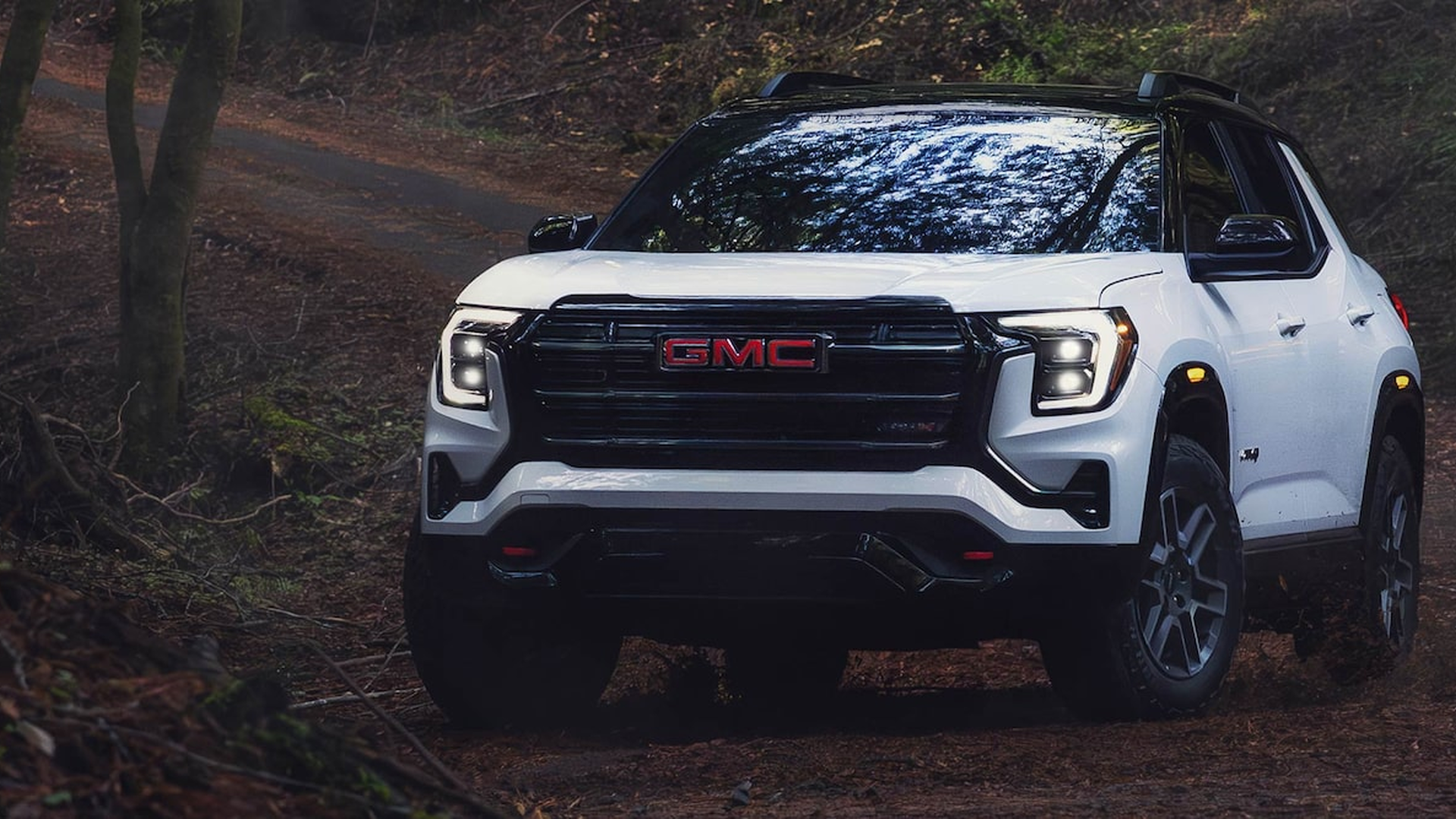
Responding to a massive surge in outdoor recreation, GMC expanded its rugged AT4 sub-brand to the Terrain for the 2022 mid-cycle refresh. The AT4 replaced the generic all-wheel-drive SLT trims for buyers seeking genuine backcountry capability. Designers blacked out the chrome exterior elements, applying dark gloss finishes to the grille and replacing the standard rubber with aggressive Goodyear Sport Terrain tires wrapped around exclusive gloss-black wheels.
Mechanically, the AT4 was fortified to withstand off-road abuse. A heavy-duty steel skid plate was bolted beneath the front fascia to protect vital engine and cooling components from jagged rocks and deep ruts. The proprietary Traction Select System was recalibrated specifically for the AT4. In its off-road setting, the ECU altered transmission shift points to hold lower gears longer, providing steady engine braking during steep descents. The All-Wheel Drive (AWD) system actively monitored wheel slip, instantly shuttling torque to the rear differential the moment the front tires lost grip on loose gravel or slick mud, ensuring relentless forward momentum in unpredictable environments.
Advanced Digital Integration and Pro Safety
The modern GMC Terrain operates as a highly advanced digital hub. The central infotainment architecture provides seamless integration with Apple CarPlay and Android Auto, processing navigational data and media instantly without frustrating screen lag. Higher trim levels feature a High-Definition Surround Vision network, utilizing multiple digital cameras stitched together by the OEM software to provide a virtual overhead bird's-eye view. This technology completely eliminates blind spots, allowing the driver to navigate incredibly tight urban parking garages or rocky trail obstacles with absolute confidence.
Active safety is managed by the standard GMC Pro Safety suite. Utilizing forward-facing radar and high-resolution cameras, the Terrain continuously scans the road ahead. If the system detects an imminent collision with a vehicle or pedestrian, it automatically triggers the Automatic Emergency Braking system. This rapid application of maximum hydraulic brake pressure occurs faster than human reaction time, mitigating collision severity or avoiding the impact entirely.
The Next Chapter: Third Generation Engineering (2025-Present)
GMC pushed the design language of the Terrain even closer to its heavy-duty truck siblings for the third generation. The track was widened to create an intensely aggressive, planted stance, and the front fascia adopted a massive, upright grille heavily inspired by the Sierra 1500. This wider footprint directly translates to enhanced cornering stability and crosswind resistance on the open highway.
The interior architecture experienced a total technological revolution. The dashboard is now dominated by a massive 15-inch diagonal premium infotainment display, paired with an 11-inch digital driver information center. This dual-screen setup processes vital vehicle telemetry, navigation, and media through a lightning-fast operating system. Mechanical propulsion is handled by a refined 1.5-liter turbocharged engine paired with an eight-speed automatic transmission, striking a precise balance between stoplight acceleration and long-range fuel efficiency. The GMC Terrain continues to define exactly what it means to be a professional-grade compact SUV. It seamlessly blends the raw visual authority of a traditional truck with the precise digital technology and quiet refinement expected by modern premium buyers, dominating both the suburban commute and the remote weekend trail.