
The Genesis of the Modern SUV: GMT400 Architecture (1992-1999)
General Motors retired the aging, two-door K5 Jimmy nomenclature in 1991, launching the completely redesigned GMC Yukon for the 1992 model year. Riding on the robust GMT400 truck architecture, the first-generation Yukon utilized a massive, fully boxed steel ladder frame engineered to handle extreme payload and towing stress. Early models featured a heavy-duty solid rear axle paired with an independent front suspension utilizing forged torsion bars. This mechanical configuration struck a deliberate balance, providing substantial off-road articulation while vastly improving high-speed highway tracking stability compared to older solid-axle front designs.
Powering this imposing steel structure was the proven 5.7-liter naturally aspirated V8 engine (RPO code L05), displacing exactly 5733 cm3. This cast-iron block powerplant generated immense low-end torque, allowing the heavy SUV to pull significant loads right off idle. By 1995, GMC recognized a massive shift in consumer demographics. Families demanded the towing capacity of a heavy-duty truck combined with the passenger volume of a station wagon. GMC responded by introducing a longer four-door variant of the Yukon. This longer wheelbase model rapidly captured the American market, offering comfortable seating for up to six passengers while retaining cavernous rear cargo volume.
The introduction of the four-door Yukon on the GMT400 platform fundamentally shifted the American automotive landscape, transitioning the full-size SUV from a rugged, two-door wilderness tool into the definitive suburban family hauler.
First Generation (1992-1999) Technical Specifications
- Platform Architecture
- GMT400
- Flagship Powertrain
- 5.7L L31 Vortec V8 (Introduced 1996)
- Maximum Power Output
- 255 horsepower / 330 lb-ft torque
- Suspension Layout
- Independent Front Torsion Bar / Solid Rear Axle with Leaf Springs
The Luxury Revolution: GMT800 and the Denali (2000-2006)
The turn of the millennium brought the heavily revised GMT800 platform. GMC aerodynamicists smoothed the sharp, squared-off edges of the previous generation, optimizing the frontal area and windshield rake to reduce turbulent wind resistance, significantly lowering high-speed CO2 emissions and improving cabin acoustics. The chassis received substantial stiffening through hydroformed front frame sections. By using highly pressurized water to shape the tubular steel, engineers eliminated stress fractures common in traditional metal stamping, preventing suspension binding under heavy cornering loads.
This era witnessed the birth of the modern luxury SUV with the widespread adoption of the Denali trim level. GMC engineers transformed the historically utilitarian cabin by integrating premium perforated leather seating, advanced Bose acoustic audio systems, and extensive liquid-applied sound deadening materials across the floor pan. To guarantee the premium badge carried genuine mechanical superiority, the Yukon Denali received an exclusive powertrain: a massive 6.0-liter LQ4 V8 engine paired with a sophisticated full-time AWD system. Standard Yukon models utilized the highly durable 5.3-liter LM7 Vortec V8, an engine praised by independent mechanics for its cross-bolted main bearing caps and incredible long-term longevity under severe towing conditions. The suspension also saw a major upgrade with the introduction of the Autoride system, which utilized computer-controlled pneumatic shock absorbers to automatically level the rear of the vehicle when dragging heavy trailers.
Second Generation (2000-2006) Technical Specifications
- Platform
- GMT800
- Denali Exclusive Powertrain
- 6.0L LQ4 V8 (320 horsepower / 365 lb-ft torque)
- Steering Mechanism
- Recirculating Ball
- Advanced Suspension
- Autoride Auto-Leveling System
Aerodynamics and Efficiency: The GMT900 Platform (2007-2014)
Facing aggressive federal fuel economy mandates, GMC completely redesigned the Yukon for 2007 on the GMT900 platform. The windshield angle was aggressively raked, and panel gaps were tightened to microscopic tolerances to drag the coefficient of friction down. Handling characteristics received a massive, overdue upgrade through the implementation of power-assisted rack-and-pinion steering. This eliminated the vague, wandering sensation common in older heavy-duty steering boxes, providing the driver with precise, immediate feedback during tight urban maneuvers.
Engineers attacked fuel consumption by integrating Active Fuel Management (AFM) into the 5.3L and 6.2L V8 engines. The ECU actively monitored engine load and throttle position, physically shutting down the lifters on four of the eight cylinders during light highway cruising. This transformed the massive V8 into a highly efficient four-cylinder engine to save fuel, seamlessly reactivating all cylinders the exact millisecond the driver demanded acceleration. Late in this generation, GMC mated these engines to a new 6L80 six-speed automatic transmission, utilizing two overdrive gears to drop highway RPM significantly.
Third Generation (2007-2014) Technical Specifications
- Platform
- GMT900
- Flagship V8 Option
- 6.2L L92 V8 (380 horsepower)
- Efficiency Technology
- Active Fuel Management (Cylinder Deactivation)
- Steering Architecture
- Rack-and-Pinion
Forged in High-Strength Steel: The K2XX Generation (2015-2020)
The K2XX generation pushed the Yukon into a new stratosphere of structural rigidity and technological integration. Engineers constructed the frame from high-strength steel, yielding a chassis that felt incredibly planted and secure. The exterior doors were redesigned to be fully inlaid-fitting flush into the body side openings rather than wrapping over the roofline. This design, combined with acoustic laminated windshield glass, isolated occupants from harsh road noise, establishing the Yukon as an incredibly luxurious highway cruiser.
The powertrain lineup underwent a total revolution with the EcoTec3 engine family. These engines retained the proven, highly reliable pushrod architecture but integrated three critical modern technologies: Direct Injection, continuously Variable Valve Timing (VVT), and an upgraded AFM system. Direct injection pressurized fuel directly into the combustion chamber at thousands of PSI, aggressively cooling the charge air and allowing engineers to run a higher, more efficient compression ratio.
The suspension on the top-tier Denali models featured third-generation Magnetic Ride Control. These advanced shock absorbers abandoned traditional hydraulic valves, filling the damper tubes with magnetorheological fluid. Electrical coils generated magnetic fields that aligned iron particles suspended within the fluid, instantly altering the fluid's viscosity. The system read the road surface 1,000 times per second, adjusting damping force in milliseconds to float over violent potholes while immediately stiffening during aggressive cornering to prevent body roll.
Fourth Generation (2015-2020) Technical Specifications
- Engine Family
- EcoTec3 (Direct Injection, VVT, AFM)
- Braking System
- Duralife ferritic nitro-carburized brake rotors
- Top V8 Option
- 6.2L L86 V8 (420 horsepower / 460 lb-ft torque)
- Advanced Suspension
- Magnetic Ride Control
The Independent Rear Suspension Paradigm: T1XX (2021-Present)
The current T1XX generation of the GMC Yukon represents the most radical engineering departure in the history of the nameplate. For decades, full-size SUVs relied on a solid live rear axle. While incredibly durable for towing, a solid axle requires massive vertical clearance above it so the differential does not violently impact the floor pan over large bumps. GMC engineers finally abandoned this archaic setup, engineering a highly sophisticated multi-link Independent Rear Suspension (IRS). Because the rear differential is now fixed directly to the chassis, the wheels articulate independently. This monumental design change allowed engineers to lower the rear floor of the vehicle by over five inches.
The physical results of the IRS are staggering. Third-row passengers gained over ten inches of legroom, transforming a historically cramped penalty box into comfortable seating for full-grown adults. Overall cargo volume expanded massively, adding crucial cm3 of space for luggage and equipment. The vehicle rides and handles with the precision of a modern luxury sedan, completely eliminating the harsh, side-to-side axle hop over uneven pavement.
Powertrain Mastery: Dynamic V8s and the Duramax
Propulsion is handled by a diverse, highly advanced engine lineup. The legendary 6.2L L87 V8 produces 420 horsepower and utilizes Dynamic Fuel Management (DFM). Unlike older systems that simply shut off four cylinders, DFM features 17 distinct cylinder firing fractions. The computer calculates optimal torque requirements 80 times per second, capable of operating the massive V8 on just a single cylinder to maximize fuel economy during specific coasting scenarios.
For drivers focused on extreme efficiency and towing range, GMC introduced the 3.0-liter LZ0 Duramax inline-six turbodiesel. Inline-six engines possess perfect primary and secondary physical balance, resulting in buttery-smooth operation entirely free of the harsh vibrations common in V-shaped diesels. Generating massive torque at a remarkably low 1500 RPM, the Duramax allows the Yukon to tow heavy trailers effortlessly while returning exceptional highway fuel economy figures that rival much smaller crossover vehicles. Power flows through a Hydra-Matic 10-speed automatic transmission. Engineers utilized four simple planetary gearsets and six friction clutches to create incredibly tight gear spacing, ensuring the engine operates precisely within its optimal powerband under any load condition.
The AT4 Sub-Brand: Engineered for the Backcountry
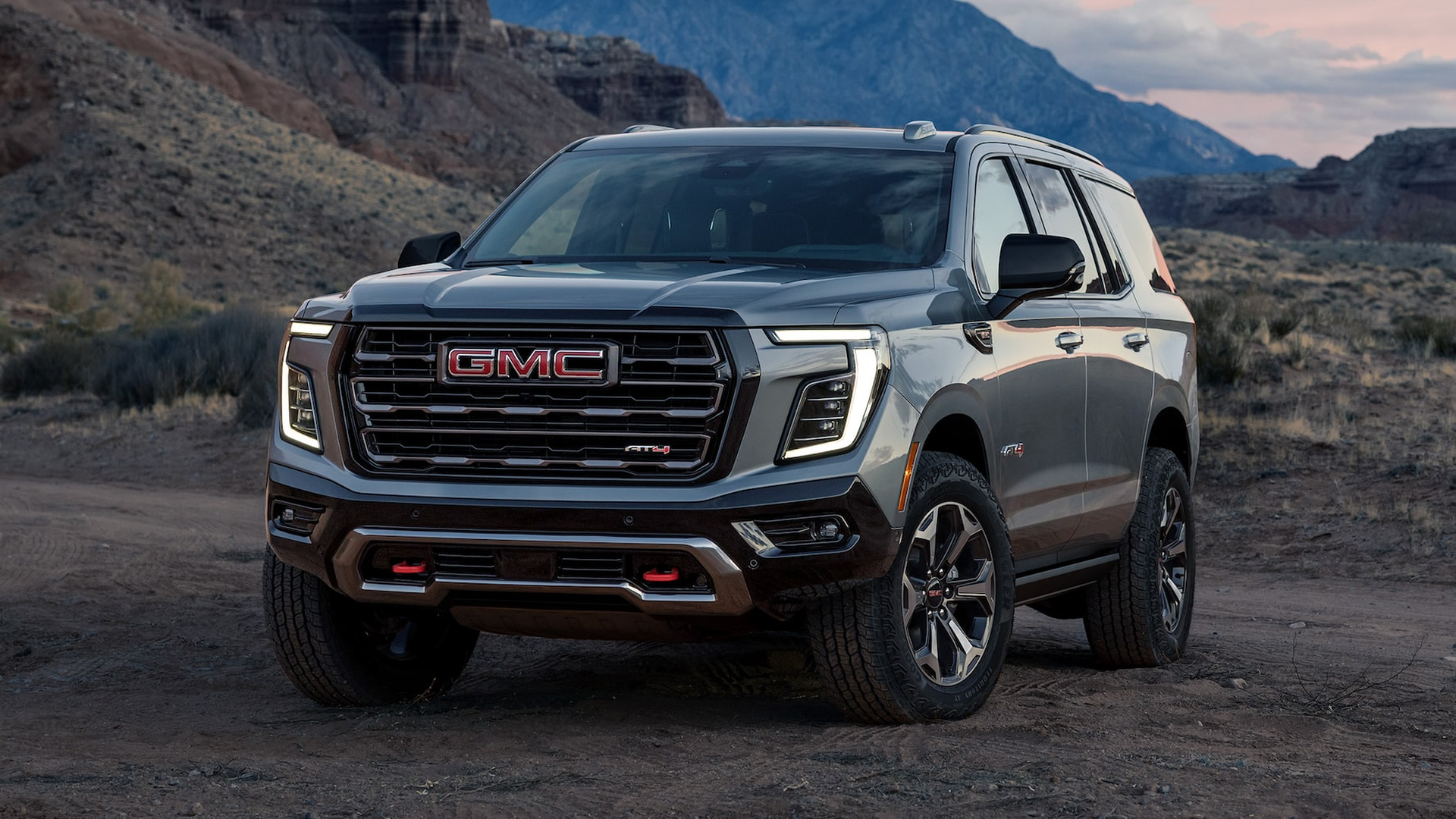
Recognizing massive demand for factory-warrantied off-road capability, GMC unleashed the Yukon AT4. This dedicated off-road trim features a unique front fascia designed explicitly to increase the physical approach angle, allowing the massive SUV to attack steep inclines without destroying its front bumper. A heavy-duty steel skid plate protects the vital steering gear and engine oil pan. The AT4 utilizes the Active Response 4WD system, pairing an Electronic Limited-Slip Differential (eLSD) with the Air Ride Adaptive Suspension. The suspension can raise the chassis by a full two inches to clear jagged rocks, while the eLSD actively vectors torque side-to-side across the rear axle, ensuring maximum forward momentum in deep mud or slick shale.
Denali Ultimate: The Pinnacle of American Luxury
GMC pushed the boundaries of full-size opulence with the introduction of the Denali Ultimate trim. The cabin operates as an isolated, luxurious sanctuary. Occupants are enveloped in full-grain Alpine Umber leather seating surfaces. Authentic open-pore Paldao wood spans the dashboard, laser-etched with the topographical map of Mount Denali. The acoustic environment is strictly controlled by a massive 18-speaker Bose Performance Series audio system, which includes stainless steel speaker grilles integrated directly into the front seat headrests.
The driving experience is elevated by Super Cruise, the industry's first true hands-free driver assistance technology. Utilizing highly detailed LiDAR map data, real-time cameras, and precise radar sensors, the Yukon can autonomously steer, brake, and execute lane changes on hundreds of thousands of miles of compatible highways. The modern GMC Yukon executes dual mandates flawlessly: serving as a brutally capable tool for towing heavy loads while simultaneously wrapping its occupants in an incredibly quiet, technologically advanced, and comfortable environment.
Current Generation (T1XX) Technical Specifications
- Flagship Diesel Engine
- 3.0L LZ0 Duramax Inline-6 Turbodiesel
- Transmission
- 10-Speed Automatic
- Rear Suspension
- Multi-Link Independent Rear Suspension
- Advanced Technology
- Super Cruise Hands-Free Driving