
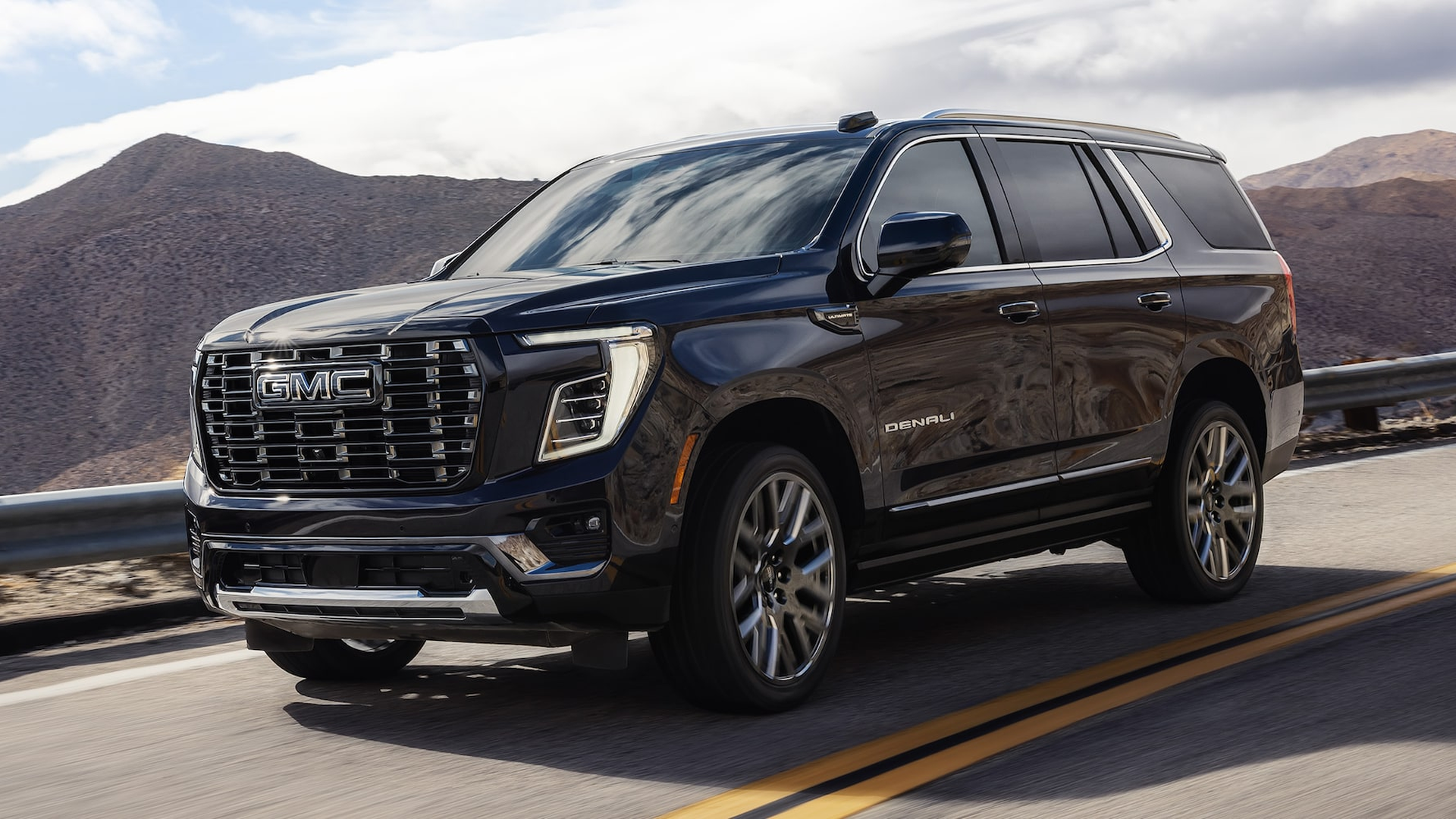
The Birth of a Leviathan: GMT800 Architecture (2000-2006)
General Motors executed a decisive branding pivot at the dawn of the new millennium. They retired the historic GMC Suburban nameplate, folding their massive, extended-wheelbase utility vehicle directly into the Yukon family architecture to create a unified, premium lineup. The resulting 2000 GMC Yukon XL retained the staggering 130-inch wheelbase of its predecessor but adopted the heavily modernized GMT800 chassis. Engineers focused intensely on structural rigidity, utilizing high-pressure hydroforming to shape the tubular steel front frame rails. This advanced cold-working technique eliminated the micro-fractures associated with traditional metal stamping, creating a robust foundation capable of absorbing extreme torsional stress when towing massive loads across unpredictable terrain.
The early powertrain matrix included the highly durable 5.3-liter LM7 V8, but drivers demanding pure, unadulterated pulling force opted for the massive 8.1-liter L18 Vortec V8. Displacing an immense 8128 cm3, this big-block iron beast generated 340 horsepower and 455 lb-ft of torque. To maneuver this massive length in tight urban environments, GMC briefly offered the revolutionary Quadrasteer system. This electromechanical rear-wheel-steering technology, developed by Delphi, physically pivoted the rear axle up to 15 degrees in the opposite direction of the front wheels at low speeds. It effectively shrank the turning radius of the massive Yukon XL to match a compact sedan, fundamentally rewriting the physical limitations of a heavy-duty family hauler.
The integration of Quadrasteer on the early GMT800 Yukon XL demonstrated a relentless pursuit of maneuverability, proving that a vehicle exceeding 18 feet in length could successfully navigate tight suburban infrastructure without subjecting the driver to profound fatigue.
First Generation Yukon XL (GMT800) Technical Specifications
- Platform Architecture
- GMT800 (Extended Wheelbase)
- Maximum Powertrain
- 8.1L L18 Vortec V8
- Maneuverability Innovation
- Quadrasteer 4-Wheel Steering (Available 2002-2005)
- Premium Trim Debut
- Denali (Introduced 2001)
Aerodynamics and Intelligence: The GMT900 Era (2007-2014)
For the 2007 model year, the GMT900 generation attacked aerodynamic drag with ruthless precision. Engineers sculpted the front fascia, raked the windshield at a much steeper angle, and tightened body panel gaps to microscopic tolerances. This sleek exterior profile dictated exactly how high-pressure air flowed over the expansive greenhouse, drastically reducing wind noise and improving high-speed fuel efficiency by lowering total CO2 output. The chassis dynamics received a massive, overdue upgrade through the adoption of a power-assisted rack-and-pinion steering mechanism. This system completely eliminated the vague, floating sensation of older recirculating-ball gearboxes, providing drivers with crisp, immediate directional feedback.
Under the massive hood, the EcoTec engine family introduced Active Fuel Management. The ECU actively calculated engine load algorithms thousands of times per second. During light highway cruising, special hydraulic lifters collapsed, physically sealing the intake and exhaust valves on four of the eight cylinders. This effectively transformed the massive 6.2-liter V8 of the Denali into a fuel-sipping four-cylinder block, seamlessly reigniting the dormant cylinders the exact millisecond the driver demanded aggressive passing acceleration.
Second Generation Yukon XL (GMT900) Technical Specifications
- Platform
- GMT900
- Flagship Engine
- 6.2L L92 V8 (380 horsepower)
- Steering Architecture
- Rack-and-Pinion
- Efficiency Technology
- Active Fuel Management (Cylinder Deactivation)
Forged in High-Strength Steel: K2XX Generation (2015-2020)
The K2XX architecture forged the Yukon XL in ultra-high-strength steel, yielding a chassis that felt incredibly planted and secure at high speeds. The structural focus shifted heavily toward absolute acoustic isolation and occupant protection. Designers implemented inlaid doors that fit perfectly flush into the body side openings rather than wrapping over the roofline. This precise fitting, combined with acoustic laminated windshield glass and triple-sealed weatherstripping, created a vault-like interior environment that rivaled premium European luxury sedans.
The EcoTec3 V8 engines advanced significantly, utilizing direct fuel injection for the first time. High-pressure mechanical pumps blasted atomized fuel directly into the combustion chambers at thousands of pounds per square inch, aggressively cooling the charge air and permitting engineers to run a much higher, more efficient compression ratio. The Denali trim dominated this era, heavily relying on third-generation Magnetic Ride Control. These advanced shock absorbers abandoned traditional hydraulic shim valves entirely. Engineers filled the damper tubes with a proprietary magnetorheological fluid. When the suspension control module detected a harsh pothole, electrical coils generated a magnetic field that instantly aligned iron particles suspended within the fluid. This reaction altered the fluid's physical viscosity in milliseconds, allowing the massive SUV to float over shattered pavement while immediately stiffening the outboard dampers during aggressive cornering to neutralize body roll completely.
Third Generation Yukon XL (K2XX) Technical Specifications
- Engine Family
- EcoTec3 (Direct Injection, VVT)
- Flagship V8 Output
- 6.2L L86 V8 (420 horsepower / 460 lb-ft torque)
- Advanced Suspension
- Magnetic Ride Control
- Acoustic Innovation
- Inlaid Doors and Acoustic Laminated Glass
The IRS Paradigm Shift: T1XX Generation (2021-Present)
The current T1XX generation represents the most violent engineering departure in the history of the extended-wheelbase platform. For over eight decades, General Motors' massive utility vehicles relied on a solid live rear axle. While practically indestructible for towing heavy trailers, a solid axle requires massive vertical clearance beneath the floor pan to prevent the heavy differential from smashing into the cabin over large bumps. GMC engineers finally shattered this archaic constraint, developing a highly sophisticated multi-link IRS. Because the rear differential now bolts securely directly to the stationary frame, the rear wheels articulate completely independently of one another.
This single structural change allowed engineers to drop the rear load floor by over five inches. Third-row passengers suddenly gained massive amounts of natural legroom, transforming the rearmost seating area from a cramped penalty box into comfortable accommodations for full-grown adults. Total cargo volume expanded exponentially, offering a staggering 144.7 cubic feet of space with all rear passenger seats folded flat. The vehicle rides and handles with the precision of a modern luxury car, completely eliminating the harsh, side-to-side axle hop over uneven pavement.
Powertrain Mastery: Dynamic V8s and the Duramax
Propulsion for the modern Yukon XL includes the legendary 6.2L L87 V8, but the absolute crown jewel of engineering is the 3.0-liter LZ0 Duramax turbodiesel. Utilizing an inline-six cylinder configuration, this engine possesses perfect primary and secondary physical balance. It operates with buttery smoothness, entirely free from the harsh, clattering vibrations common in traditional V-shaped diesels. The advanced variable-geometry turbocharger forces compressed air into the block, generating a staggering 460 lb-ft of torque at a remarkably low 1500 RPM. This low-end grunt allows the Yukon XL to pull heavy boats up slippery ramps with minimal throttle input, while simultaneously returning highway fuel economy figures that rival small, unibody crossovers.
Power flows through a highly advanced Hydra-Matic 10-speed automatic transmission. Engineers utilized four complex planetary gearsets and six friction clutches to create incredibly tight gear spacing. This ensures the engine operates precisely within its peak powerband under any heavy load condition, executing upshifts so seamlessly they are nearly imperceptible to the driver. To stop this massive kinetic energy, the chassis relies on huge Duralife ferritic nitro-carburized brake rotors. This specialized chemical surface treatment hardens the steel, doubling the rotor's lifespan and virtually eliminating the steering wheel shudder caused by brake rotor warping under extreme thermal stress.
Trail Domination: The AT4 Sub-Brand
GMC expanded the highly successful AT4 sub-brand to the Yukon XL, targeting buyers who demand factory-warrantied off-road supremacy without sacrificing interior volume. The AT4 features a heavily modified front fascia that dramatically increases the physical approach angle. Heavy-duty stamped steel skid plates armor the vital steering gear and engine oil pan against devastating rock strikes. The Active Response 4WD system pairs an Electronic Limited-Slip Differential (eLSD) with the Air Ride Adaptive Suspension. Drivers can command the air springs to raise the entire chassis by a full two inches, providing massive ground clearance to clear jagged trail obstacles, while the eLSD actively vectors rotational torque across the rear axle to maintain forward momentum in deep, sucking mud.
Denali Ultimate: The Pinnacle of American Luxury
The Denali Ultimate trim level pushes the boundary of American luxury to its absolute limit. Step inside, and you are enveloped in full-grain Alpine Umber leather seating surfaces that feature 16-way power adjustments and active massage functionality. Authentic open-pore Paldao wood spans the dashboard, intricately laser-etched with the topographical map of Mount Denali. The acoustic environment is strictly dictated by a massive 18-speaker Bose Performance Series audio system, which integrates stainless steel speaker grilles directly into the front seat headrests for an immersive surround-sound experience.
The driving experience is completely transformed by the integration of Super Cruise. This industry-leading hands-free driver assistance network utilizes highly detailed LiDAR map data, real-time high-definition cameras, and precise radar sensors. The Yukon XL can autonomously steer, manage braking distances, and execute automatic lane changes to navigate around slower traffic on hundreds of thousands of miles of compatible North American highways. It perfectly encapsulates the dual mandate of the modern Yukon XL: serving as a brutally capable, heavy-duty cargo and towing tool while simultaneously operating as an ultra-luxurious, hyper-intelligent executive transport.
Current Generation (T1XX) Technical Specifications
- Flagship Diesel Powertrain
- 3.0L LZ0 Duramax Inline-6 Turbodiesel
- Transmission
- 10-Speed Automatic
- Rear Suspension Architecture
- Multi-Link Independent Rear Suspension
- Maximum Cargo Volume
- 144.7 cubic feet (seats folded)