
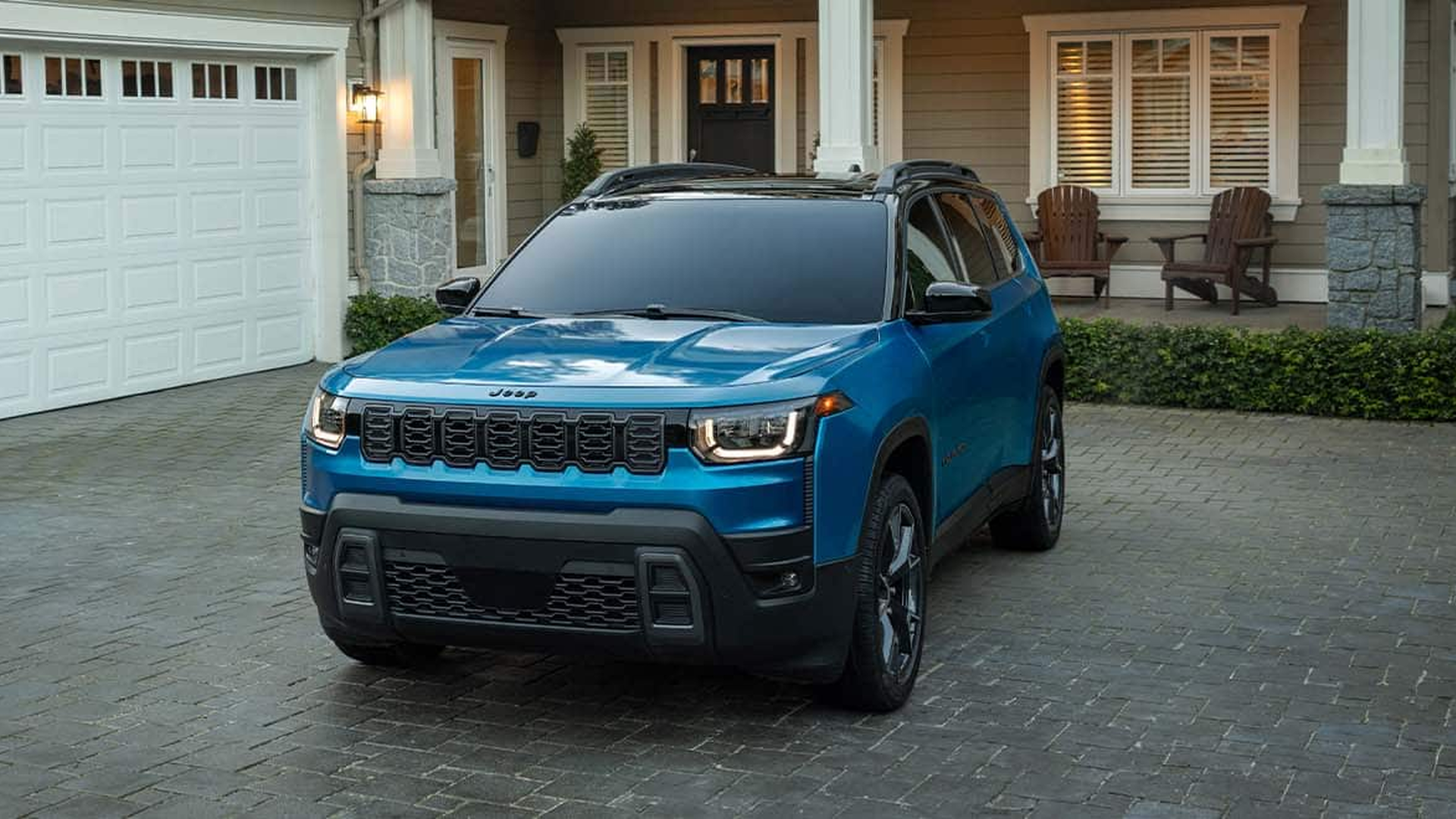
The Genesis of the American Family 4x4
The Jeep Cherokee did not just enter the sport utility vehicle segment; it fundamentally created the template for the modern American family hauler. Long before the suburbs were flooded with aerodynamic crossovers, the Cherokee stood as a mechanical bridge between hardcore military derivatives and comfortable station wagons. The nameplate has adorned several distinct architectural platforms over its multi-decade run, but its core ethos remains rooted in providing exceptional 4WD capability without entirely sacrificing on-road drivability.
The SJ and XJ Era: Engineering the Unibody Revolution
The Cherokee's most transformative moment arrived with the XJ generation (1984-2001). Faced with the fuel crises of the late 1970s, AMC engineers embarked on a radical program to downsize their flagship SUV. The resulting XJ Cherokee dropped traditional body-on-frame architecture in favor of a groundbreaking UniFrame design. By integrating the frame rails directly into the floor pan, they created a unibody structure that was significantly lighter and infinitely more rigid than its contemporaries.
The XJ Cherokee was so advanced for its time that it remained in production for 18 years, establishing the 'Quadra-Link' front suspension as the gold standard for maintaining off-road articulation while delivering civilized highway manners.
The Indestructible 4.0L Inline-Six
No discussion of the Cherokee's legacy is complete without the AMC 4.0-liter inline-six. This cast-iron masterpiece utilized a long piston stroke to prioritize low-end torque. Its primary and secondary mechanical forces were naturally balanced, creating a smooth power delivery that made it famous for surviving hundreds of thousands of miles in extreme climates ranging from the Alaskan tundra to the Mojave desert.
- XJ 4.0L High Output Specifications
- Displacement: 3,956 cm3
- Block Architecture
- Cast Iron Block and Cylinder Head
- Peak Horsepower
- 190 hp @ 4,600 RPM
- Peak Torque
- 225 lb-ft @ 3,000 RPM
The 2026 Renaissance: The KM Generation
After a short hiatus following the KL generation, the Cherokee returns for the 2026 model year (KM), reimagined from the ground up on the STLA Large platform. This modern resurrection shifts the Cherokee's engineering focus toward electrification while drastically expanding its physical footprint. The KM features a 6.5-inch longer wheelbase than its predecessor, providing class-leading interior volume and the structural rigidity required to house massive high-voltage battery packs.
Aerodynamics dictate the new silhouette. The vertical front end and signature seven-slot grille have been resculpted to manage the slipstream, reducing the low-pressure drag wake and minimizing cabin wind noise. Engineers utilized ultra-high-strength steel in 68 percent of the unibody shell, ensuring the new Cherokee meets the most stringent modern crash safety protocols while maintaining its aggressive, Trail Rated agility.
Hybrid Kinematics: The 4xe Revolution
The 2026 Cherokee KM introduces the brand's first North American series hybrid architecture. The primary propulsion system is a turbocharged 1.6-liter four-cylinder engine paired with an integrated electric motor. For enthusiasts demanding absolute off-road authority, the 4xe Plug-in Hybrid variant utilizes a dual-motor topology. This system provides instantaneous electric torque, allowing the Cherokee to crawl over extreme obstacles without the lag associated with traditional internal combustion gear hunting.
Energy management is handled by a sophisticated heat pump system that scavenges waste thermal energy from the motors to warm the cabin, preserving the battery's Li-Ion chemistry during freezing winter temperatures. This thermodynamic efficiency allows for an all-electric driving mode, perfect for silent, zero-emission trail exploration.
2026 Cherokee KM Performance Estimates
- Engine Architecture
- 1.4L / 1.6L Turbocharged Hybrid Inline-4
- Total System Output
- Estimated 210 hp / 230 lb-ft (Base Hybrid)
- Drivetrain
- Active Drive All-Wheel Drive with Rear Axle Disconnect
- Emissions Tech
- Advanced catalytic converters reducing CO2 output
The Trailhawk Legacy: Active Drive Lock
Even in its modern hybrid form, the Trailhawk trim remains the mechanical heart of the nameplate. The KM Trailhawk utilizes the 'Active Drive Lock' system, featuring a two-speed power transfer unit (PTU) and a genuine mechanical rear differential locker. When engaged, the system forces both rear tires to spin at the exact same velocity, ensuring forward momentum even when a wheel is suspended in mid-air. With a factory-installed suspension lift and skid plates protecting the high-voltage components, the 2026 Cherokee proves that the future of adventure is both electrified and unapologetically rugged.