
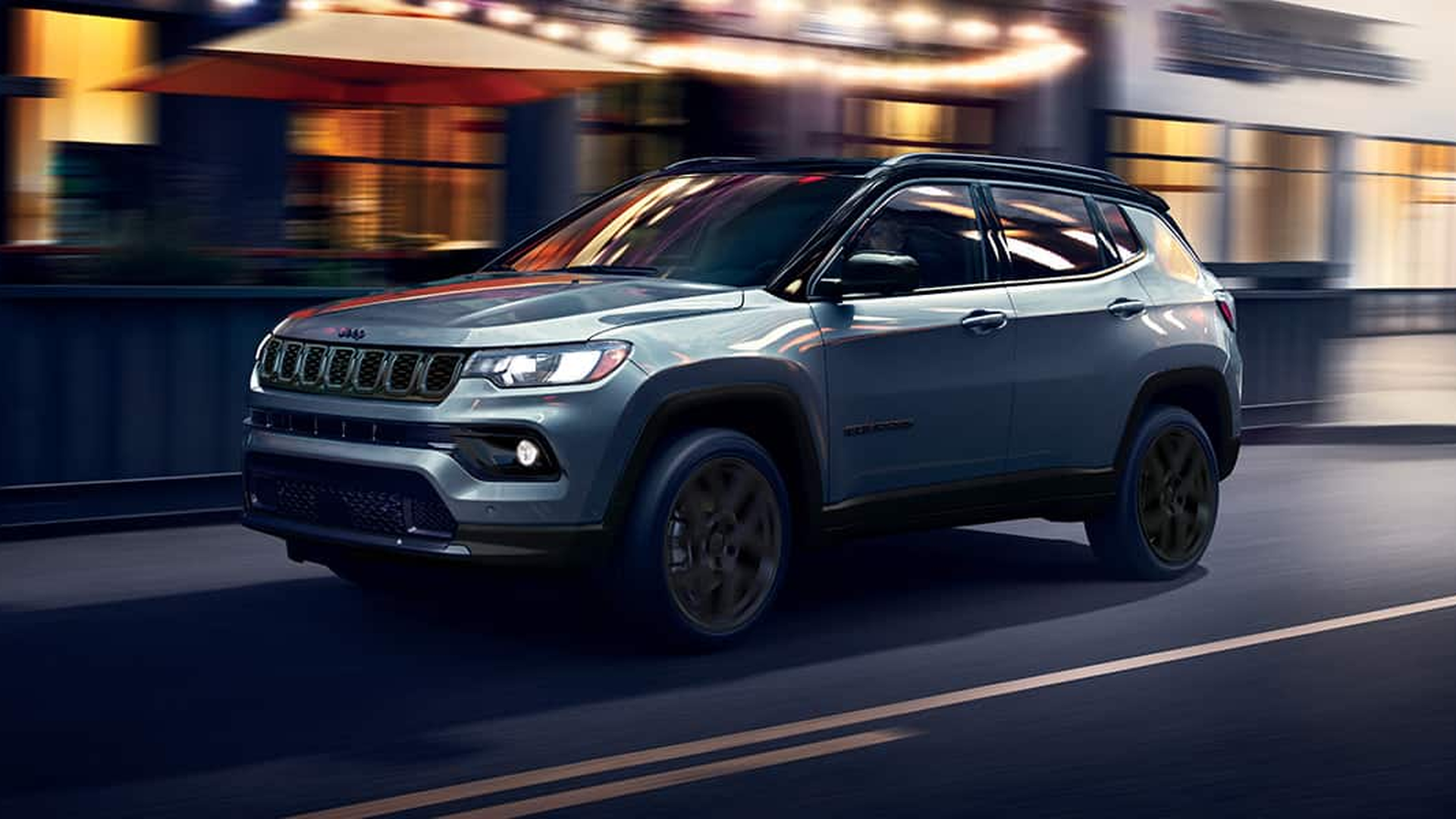
The Subcompact Pivot: Reimagining the Jeep Paradigm
The Jeep Compass fundamentally altered the trajectory of the American off-road brand. Prior to its 2007 introduction, the automaker relied almost exclusively on heavy, body-on-frame architectures or solid-axle unibody designs like the Cherokee. The Compass broke this mold entirely. Engineers recognized a rapidly expanding market demographic demanding higher seating positions and all-weather traction without the severe fuel consumption penalty associated with traditional sport utility vehicles. The resulting compact crossover faced immediate scrutiny from purists but undeniably secured the brand's financial future by tapping into a massive global audience.
Transitioning from rock-crawling solid axles to fully independent suspension geometries required a complete rethink of how a Jeep should handle asphalt. The design mandate forced a delicate balancing act: provide soft, compliant highway cruising dynamics while retaining enough mechanical grip to conquer snow-covered mountain passes and rutted forest service roads. Over two distinct generations, the Compass morphed from an experimental platform-sharing exercise into a highly refined, technologically advanced global platform.
The introduction of the Jeep Compass marked the first time the historic brand produced a vehicle featuring a front-wheel-drive biased architecture and fully independent suspension, prioritizing daily drivability alongside foul-weather security.
The First Generation (MK): Platform Sharing and Mechanical Evolution
The original MK generation emerged from a complex global alliance between DaimlerChrysler and Mitsubishi Motors. Built upon the GS platform, the Compass shared significant structural underpinnings with the Dodge Caliber. This architecture heavily favored front-wheel-drive dynamics. The exterior styling of the early models proved polarizing, attempting to graft traditional Jeep design cues onto a soft, rounded hatchback profile that lacked the aggressive stance expected from the brand.
Under the hood, the MK Compass utilized the World Engine family. The primary powerplant was a 2.4-liter naturally aspirated inline-four cylinder, delivering 172 horsepower. Early models suffered from the integration of a Jatco-sourced CVT. This transmission generated excessive drone under heavy acceleration and sapped the engine's low-end torque, leading to sluggish highway merging dynamics. Acknowledging fierce consumer feedback, engineers executed a massive mid-cycle refresh in 2011. They ditched the awkward early styling for a miniature Grand Cherokee aesthetic, retuned the spring and damper rates to reduce body roll, and eventually replaced the problematic CVT with a highly reliable conventional 6-speed automatic transmission.
MK Generation Technical Specifications
- Platform Architecture
- Chrysler/Mitsubishi GS Platform (Transverse Front-Engine)
- Standard Engine
- 2.4L World Engine (2359 cm3), DOHC 16-valve
- Peak Horsepower
- 172 hp @ 6,000 RPM
- Peak Torque
- 165 lb-ft @ 4,400 RPM
- Four-Wheel Drive System
- Freedom Drive I (Full-time active 4WD with lock mode)
The MP Generation: Forging the Small Wide 4x4 Architecture
Jeep completely reinvented the vehicle for the 2017 model year. The MP generation migrated to the FCA Small Wide LWB 4x4 platform, sharing its core structural DNA with the Renegade but featuring an extended wheelbase to maximize rear-seat legroom and volumetric cargo capacity. This chassis utilizes an upper unibody structure manufactured from roughly 65 percent high-strength and ultra-high-strength steel. Engineers applied advanced structural adhesives extensively throughout the robotic welding process, drastically increasing the vehicle's torsional rigidity. A stiffer chassis allows the suspension to do its job without fighting unibody flex, directly translating into highly precise steering response and a significantly quieter passenger cabin.
The exterior design language matured perfectly. The MP Compass features an aggressive shark-nose profile, wide stance, and sloping roofline that drastically drops the aerodynamic drag coefficient. It looks purposefully planted on the asphalt. The flared trapezoidal wheel arches remain, housing up to 19-inch aluminum alloy wheels on premium trims, while the gloss black roof option visually lowers the crossover's center of gravity.
Powertrain Revolution: The Twin-Scroll Turbocharger
For the first several years of the MP generation, propulsion relied heavily on the 2.4-liter Tigershark engine. Featuring MultiAir2 technology, this naturally aspirated block utilized an electro-hydraulic variable valve timing system to control intake air volume precisely, optimizing combustion across the rev range. While highly reliable, the Tigershark lacked the aggressive off-the-line thrust desired by modern American consumers competing in heavy urban traffic.
The true mechanical revolution occurred during the 2023 model year overhaul. Jeep engineers discarded the Tigershark entirely, replacing it with a highly advanced 2.0-liter direct-injection turbocharged inline-four. This powerplant fundamentally transforms the crossover's driving dynamics. By utilizing a twin-scroll turbocharger mounted directly to the aluminum cylinder head, the engine virtually eliminates frustrating turbo lag. Exhaust gases pulse through two completely separate channels to spool the turbine wheel instantly. The result is a massive surge of low-end grunt. Producing 200 horsepower and a staggering 221 lb-ft of torque available exceptionally early in the rev range, the turbocharged Compass merges effortlessly onto fast-moving freeways and powers out of deep sand with absolute authority.
Jeep mated this turbocharged block exclusively to a heavy-duty 8-speed automatic transmission. The highly calibrated ECU maps shifts perfectly, holding gears during aggressive canyon carving and immediately dropping into high overdrive ratios to reduce tailpipe CO2 emissions and maximize MPG during interstate cruising.
2.0L Turbocharged Engine Specifications
- Engine Block Architecture
- Aluminum alloy block and cylinder head, Direct Fuel Injection
- Forced Induction
- Twin-scroll turbocharger with electronic wastegate
- Peak Horsepower
- 200 hp @ 5,000 RPM
- Peak Torque
- 221 lb-ft @ 1,750 - 4,250 RPM
- Transmission
- 8-Speed Automatic
- Maximum Towing Capacity
- 2,000 lbs (With factory tow package)
Conquering the Dirt: Active Drive and the Power Transfer Unit
Standard crossover utility vehicles utilize passive slip-and-grip all-wheel-drive systems that react far too slowly for serious off-road recovery. The Compass employs specific Jeep Active Drive hardware to maintain its legendary off-road pedigree. The core of this system is a complex Power Transfer Unit (PTU) mounted directly to the front transaxle and a Rear Drive Module featuring a heavy-duty wet clutch pack.
During dry, steady-state highway cruising, the PTU physically disconnects the entire rear driveshaft. The heavy steel driveshaft stops spinning completely, eliminating parasitic mechanical drag and significantly boosting highway fuel economy. The instant the front wheel speed sensors detect slip-whether on black ice or wet leaves-the PTU engages the driveshaft, and the rear clutch pack clamps down within milliseconds. This action seamlessly vectors up to 100 percent of available engine torque to the rear axle. The driver feels zero mechanical binding or hesitation; the crossover simply claws forward.
Trailhawk: Engineering the Badge
The Trailhawk trim elevates the Compass from a competent urban commuter to a legitimate trail machine, earning the brand's coveted Trail Rated badge. Achieving this specific rating required aggressive mechanical upgrades over the standard model. The Trailhawk replaces the standard 4x4 setup with the Jeep Active Drive Low system. This configuration electronically reprograms the 8-speed transmission to provide a dedicated first-gear low range, resulting in a highly aggressive 20:1 crawl ratio. This mechanical advantage allows the vehicle to inch up steep, rocky inclines using engine braking alone, entirely without the driver touching the friction brake pedal.
Ground clearance dictates off-road survival. Engineers installed a factory 1-inch suspension lift, bumping the physical ride height to a highly capable 8.6 inches. They redesigned the lower front and rear fascias, drastically improving the approach angle to prevent the front bumper from smashing into boulders. Heavy-gauge steel skid plates armor the cast aluminum oil pan, transmission casing, transfer case, and plastic fuel tank against catastrophic rock strikes. The exterior is easily identifiable by the aggressive matte black hood decal-specifically designed to reduce blinding sun glare during steep climbs-and the signature red recovery hooks bolted directly into the high-strength unibody frame rails.
The Selec-Terrain traction management system acts as the digital brain of the Trailhawk. It integrates a specific "Rock" mode that recalibrates the ABS module to act as a brake-lock differential. It clamps down aggressively on freely spinning wheels, forcing mechanical torque exclusively to the tires with actual physical traction.
Trailhawk Off-Road Geometry
- Ground Clearance
- 8.6 inches
- Approach Angle
- 30.4 degrees
- Breakover Angle
- 23.6 degrees
- Departure Angle
- 34.0 degrees
- Water Fording Depth
- 19.0 inches
Suspension Dynamics: Frequency Selective Damping
Achieving premium passenger comfort on a relatively short wheelbase over broken urban pavement requires highly sophisticated shock absorbers. The MP Compass utilizes a fully independent MacPherson strut front suspension and a Chapman strut rear design. Jeep partnered directly with Koni to integrate Frequency Selective Damping (FSD) struts across the entire vehicle lineup. These mechanical dampers feature a highly specialized internal bypass valve system.
When the wheels encounter high-frequency, low-amplitude chatter-like a washboard dirt road or grooved concrete highways-the internal valve opens, allowing hydraulic fluid to flow freely between chambers. This softens the damping rate instantly and absorbs the harsh vibrations before they transfer into the passenger cabin. Conversely, during low-frequency, high-amplitude chassis movements-like aggressive lateral cornering or heavy emergency braking-the valve snaps closed. This immediately stiffens the strut, controlling severe body roll and keeping the crossover firmly planted on the asphalt. It is brilliant, passive mechanical engineering that mimics the effects of complex electronic adaptive air suspensions without the massive weight penalty or long-term reliability concerns.
Interior Ergonomics, NVH Isolation, and Digital Integration
The modern Compass cabin aggressively targets premium European marques in both layout architecture and material quality. Engineers focused heavily on Noise, Vibration, and Harshness (NVH) eradication. They installed thick acoustic laminated windshield glass, injected liquid-applied sound deadener directly into the steel floor pan, and utilized triple-sealed door weatherstripping. This creates a remarkably serene rolling environment, perfectly complementing the highly advanced digital architecture.
The dashboard architecture centers entirely around the Uconnect 5 infotainment ecosystem. Running on an Android-based automotive operating system, the available 10.1-inch high-definition touchscreen processes inputs five times faster than the previous hardware generation. It offers flawless wireless integration for smartphone mirroring and simultaneously supports dual active Bluetooth device connections. The driver views critical vehicle telemetry through an available 10.25-inch frameless digital instrument cluster. This screen allows the pilot to customize the display to show traditional analog-style gauges, full-screen turn-by-turn navigation mapping, or real-time pitch and roll articulation data during severe off-road excursions.
Advanced Driver Assistance Systems (ADAS)
Shedding kinetic energy safely requires robust digital intervention. The modern Jeep Compass integrates a massive suite of active safety hardware. High-resolution radar sensors mounted in the front fascia pair with a windshield-mounted optical camera to provide Full-Speed Forward Collision Warning with Active Braking. If the computer detects an imminent rear-end collision and the driver fails to react, the system will autonomously clamp the brake calipers to mitigate the impact severity.
The Highway Assist System combines Adaptive Cruise Control with Lane Centering technology, providing Level 2 semi-autonomous driving capability on divided interstates. The crossover actively steers itself to remain perfectly centered between highway lines while maintaining a safe following distance from the vehicle ahead. This digital armor ensures that the Compass protects its occupants just as fiercely on the morning commute as it attacks the trails on the weekend. The Jeep Compass definitively proves that a compact footprint does not necessitate a compromise in all-weather capability, structural refinement, or digital luxury.