
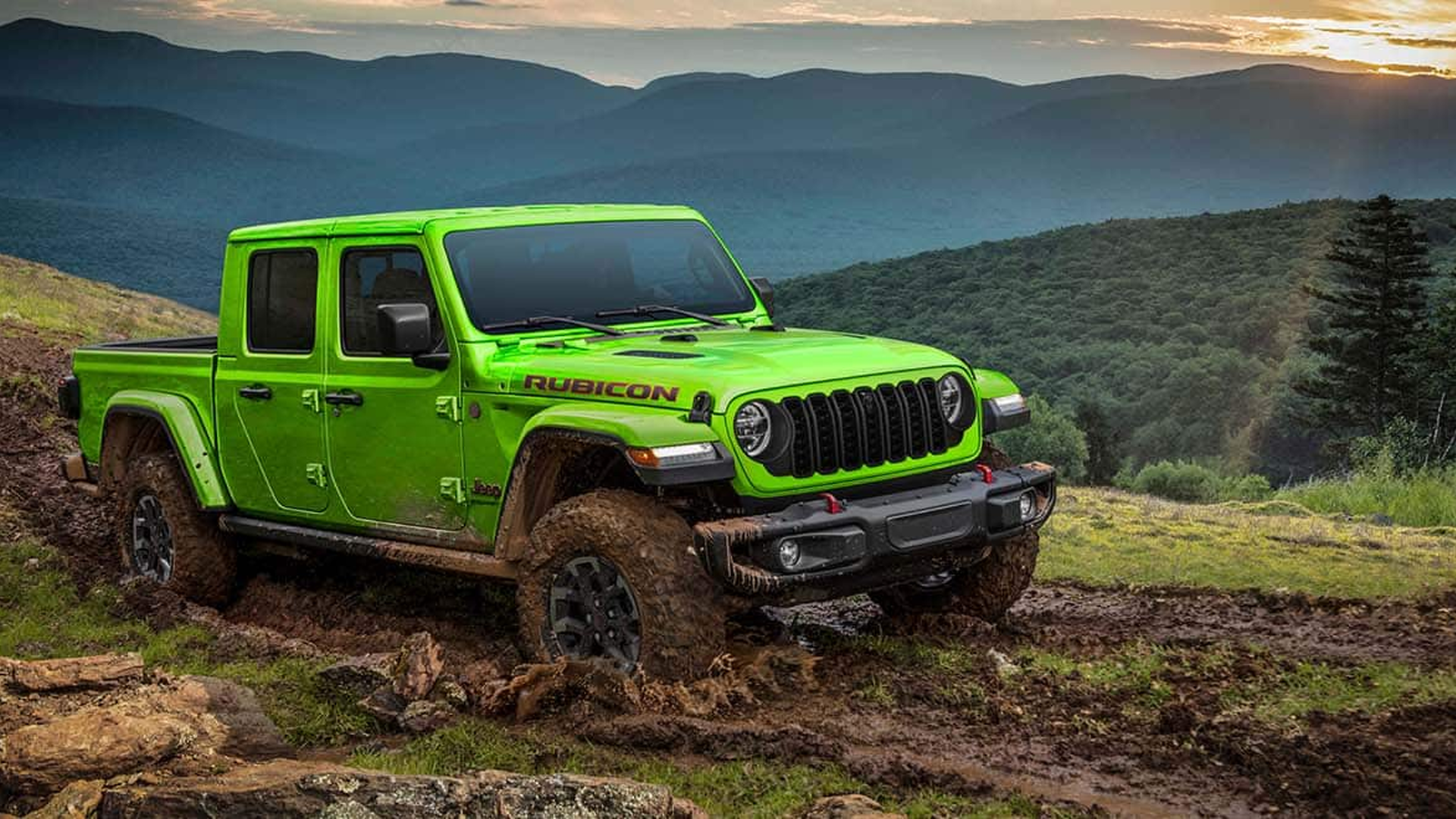
The Resurrection of the Jeep Truck
The Jeep Gladiator shatters the conventional pickup truck mold. It marries the unyielding, boulder-crawling 4WD capability of the Wrangler with the immense utility of a five-foot steel bed. Jeep resurrected the iconic Gladiator nameplate for the 2020 model year, answering decades of enthusiast demands for a factory-built Jeep truck. This machine is not a Wrangler with a bed tacked onto the rear; it is a purpose-built, high-strength mid-size pickup engineered to tow heavy loads while maintaining severe off-road geometry.
To understand the modern JT-generation Gladiator, you must look back to 1962. The original SJ-platform Gladiator established the blueprint for civilian four-wheel-drive trucks. It served farmers, military personnel, and outdoor adventurers with rugged dependability. Following the demise of the Comanche in 1992, Jeep left the pickup segment entirely. For nearly thirty years, fans relied on aftermarket conversion kits to build their own Jeep trucks. The 2020 JT Gladiator silenced the aftermarket, rolling out of the Toledo assembly plant as a fully realized OEM masterpiece.
The original 1962 Jeep Gladiator (J-Series) utilized the advanced Tornado OHC engine, making it one of the first mass-produced American trucks to feature an overhead cam configuration, well ahead of industry standards at the time.
Platform Architecture and High-Strength Steel Frame
Engineering a convertible truck capable of hauling heavy payloads over jagged rocks required a bespoke chassis. Jeep engineers started with the Wrangler JL architecture but stretched the wheelbase by a massive 18.9 inches. The overall frame length grew by 31 inches to support the cargo box properly behind the rear axle. This structural extension dramatically alters the vehicle's driving dynamics.
The longer wheelbase transforms highway cruising. The Gladiator tracks straighter and absorbs pavement imperfections far better than its shorter SUV sibling. The frame itself utilizes advanced high-strength steel to minimize flex. When you load a truck bed with hundreds of pounds of gear, torsional rigidity becomes paramount. Jeep strategically reinforced the frame rails to prevent the truck from twisting like a pretzel during extreme articulation events on uneven terrain.
Core Technical Specifications
- Body Style
- 4-Door Mid-Size Crew Cab Pickup
- Drivetrain
- Part-Time or Full-Time 4WD
- Standard Engine
- 3.6L Pentastar V6
- Optional Engine
- 3.0L EcoDiesel V6
- Wheelbase
- 137.3 inches
- Overall Length
- 218 inches
- Max Towing Capacity
- Up to 7,700 lbs
- Max Payload
- Up to 1,710 lbs
Powertrain Dynamics: Pentastar vs. EcoDiesel
Propulsion in the Gladiator requires massive low-end grunt to rotate heavy 33-inch tires through deep mud and pull trailers up steep grades. The standard power plant is the proven 3.6-liter Pentastar V6 engine. Displacing 3604 cm3, this naturally aspirated block delivers 285 horsepower and 260 lb-ft of torque. It pairs with either a traditional 6-speed Aisin manual transmission or a highly calibrated 8-speed ZF automatic. The automatic transmission features specific shift mapping that holds gears longer when operating in 4-Low, preventing unwanted upshifts during critical hill climbs.
For drivers demanding maximum efficiency and crawling power, the 3.0L EcoDiesel V6 transforms the truck entirely. Generating a staggering 442 lb-ft of torque at just 1,400 RPM, the diesel engine allows the Gladiator to idle over obstacles that would require heavy throttle inputs in the gas model. Advanced selective catalytic reduction and exhaust gas recirculation systems keep the EcoDiesel compliant with strict emissions standards, significantly reducing tailpipe CO2 output compared to older heavy-duty diesel engines. Experiencing the raw, tractor-like pull of the EcoDiesel on a slick rock face is an absolute revelation for off-road purists.
Mastering the Terrain: Transfer Cases and Axles
The secret to the Gladiator's trail dominance lies in its sophisticated mechanical hardware. Depending on the trim level, Jeep equips the truck with different four-wheel-drive systems. The Sport and Overland models utilize the Command-Trac part-time system featuring a 2.72:1 low-range gear ratio. This setup provides excellent traction for snowy commutes and moderate trails.
Step up to the high-performance trims, and the hardware gets serious. Jeep installs massive third-generation Dana 44 front and rear solid axles across the lineup. These axles feature thicker tubes and larger forgings than previous generations, completely eliminating the risk of bending an axle tube when dropping the truck heavily off a rock ledge. The solid axle design guarantees that as one wheel gets pushed up into the fender well, the opposite wheel is forced down into the dirt, maximizing traction.
Rubicon vs. Mojave: A Tale of Two Environments
Jeep forced a massive paradigm shift in the mid-size truck segment by offering two distinct, extreme off-road trims: the rock-crawling Rubicon and the desert-running Mojave.
The Rubicon earns Jeep's legendary "Trail Rated" badge. It features the Rock-Trac 4x4 system with a massive 4:1 low-range gear ratio. Engage the Tru-Lok electronic front and rear locking differentials, and both wheels on an axle turn at the exact same speed, clawing the truck forward even if three wheels are suspended in the air. An electronic front sway bar disconnect frees up the front axle, allowing for a staggering 84-to-1 crawl ratio (when equipped with the manual transmission).
The Mojave, conversely, wears the brand's first-ever "Desert Rated" badge. Engineers built this truck for high-speed runs across washboard roads and sand dunes. It abandons the front locker and sway bar disconnect in favor of Fox 2.5-inch internal bypass shock absorbers with external reservoirs. These massive shocks resist heat fade during sustained high-speed compression. Furthermore, the Mojave features industry-exclusive Fox hydraulic jounce bumpers. When the truck bottoms out after catching air off a dune, these hydraulic bump stops absorb the violent impact, preventing structural damage to the frame and keeping the driver's spine intact.
The development of the Gladiator Mojave required engineers to reinforce the cast-iron steering knuckles and add a one-inch factory front lift simply to accommodate the violent forces generated by high-speed desert running.
Utility and Cargo Capabilities
Beyond the dirt, the Gladiator is a serious workhorse. The five-foot steel bed features a payload capacity of up to 1,710 pounds. The tailgate itself is a marvel of engineering, capable of stopping in a midway position. This specific angle aligns the top edge of the tailgate exactly with the tops of the rear wheel wells, allowing owners to lay 4x8 sheets of plywood completely flat across the bed without them sliding out.
Towing capacity leads the mid-size 4x4 class. When equipped with the Max Towing Package (which includes an upgraded engine cooling system, a 240-amp alternator, and 4.10 axle ratios), the Sport model can pull up to 7,650 pounds. You can haul a substantial dual-axle travel trailer, a heavy boat, or a pair of UTVs deep into the wilderness without breaking a sweat. The long wheelbase directly contributes to trailering stability, mitigating the terrifying trailer sway often experienced in shorter SUVs.
Open-Air Modularity and Interior Tech
No other truck on the planet allows you to strip it down to its skeleton. The Gladiator retains the Wrangler's signature modularity. You can unbolt and remove all four aluminum doors. You can fold the front windshield flat across the hood. You can remove the roof completely. Experiencing a technical trail with no doors and no roof provides unmatched visibility; you can lean out and physically watch your front tires grab the rocks.
Inside the cabin, the rugged exterior gives way to modern comfort. Premium trim levels offer leather-trimmed seats, heated steering wheels, and dual-zone climate control. The dashboard centers around the Uconnect infotainment system. The high-resolution touchscreen provides crisp graphics and instant response times, integrating seamlessly with smartphone projection. Jeep even designed a portable, weatherproof Bluetooth speaker that charges directly behind the rear seats, ensuring the music follows you down to the campsite.
The Jeep Gladiator defies compromise. It refuses to be just a truck, and it refuses to be just a Jeep. By fusing legendary solid-axle capability with heavy-duty towing and payload metrics, it stands entirely alone in the automotive market. It is the ultimate tool for those who measure a vehicle's worth by the sheer volume of adventure it can facilitate.