
Defining the American Premium Standard: The SJ Era
The Jeep Grand Wagoneer nameplate carries a profound historical weight, occupying a singular space in the automotive pantheon as the definitive originator of the ultra-luxury sport utility vehicle. While the standard Wagoneer established the blueprint in 1963, Jeep officially introduced the Grand Wagoneer designation in 1984 to distinguish its absolute highest trim level from the downsized XJ Cherokee models. This classic SJ generation vehicle became instantly recognizable by its extensive simulated woodgrain side paneling, a visual signature that dominated affluent American suburbs throughout the decade.
Beneath the opulent exterior lay a rugged, unyielding mechanical foundation. Engineers utilized a heavy-duty body-on-frame architecture paired with robust Dana 44 solid axles at both the front and rear. This provided the massive structural integrity required to tow heavy horse trailers across rural estates. The interior isolated occupants from the harsh realities of the road with deeply padded leather seating, thick pile carpeting, and factory air conditioning-amenities that were exceptionally rare in four-wheel-drive utility vehicles of the era.
The 1984 Jeep Grand Wagoneer set the benchmark for premium off-road transport, combining the mechanical ruggedness of a commercial truck with the interior refinement of a luxury sedan, essentially creating a market segment that competitors would spend decades attempting to replicate.
Classic SJ Powertrain Engineering
Propulsion for the classic Grand Wagoneer relied entirely on massive displacement and low-end grunt. The primary powerplant was the venerable American Motors Corporation (AMC) 360 cubic-inch V8 engine. While it generated modest horsepower figures due to strict 1980s emissions regulations, the 5.9-liter block produced an immense wave of torque just above idle. This characteristic made it exceptional for slow-speed trail navigation and heavy towing operations.
- AMC 360 V8 Specifications (Late 1980s)
- Displacement: 5896 cm3
- Fuel Delivery
- Motorcraft 2-Barrel Carburetor
- Peak Horsepower
- 144 hp @ 3,200 RPM
- Peak Torque
- 280 lb-ft @ 1,500 RPM
- Transfer Case
- Selec-Trac Full-Time 4WD (NP229)
The WS Generation: Resurrecting an Ultra-Luxury Titan
Following a thirty-year hiatus, Jeep resurrected the Grand Wagoneer for the 2022 model year. The mandate was clear: build an ultra-luxury vehicle capable of directly confronting the established European and domestic premium giants without sacrificing the brand's Trail Rated heritage. The resulting WS generation utilizes a heavily modified variant of the DT platform, sharing its core skeletal structure with the heavy-duty Ram 1500. This fully boxed ladder frame is constructed almost entirely from advanced high-strength steel, maximizing torsional rigidity to prevent the massive vehicle from flexing over jagged terrain.
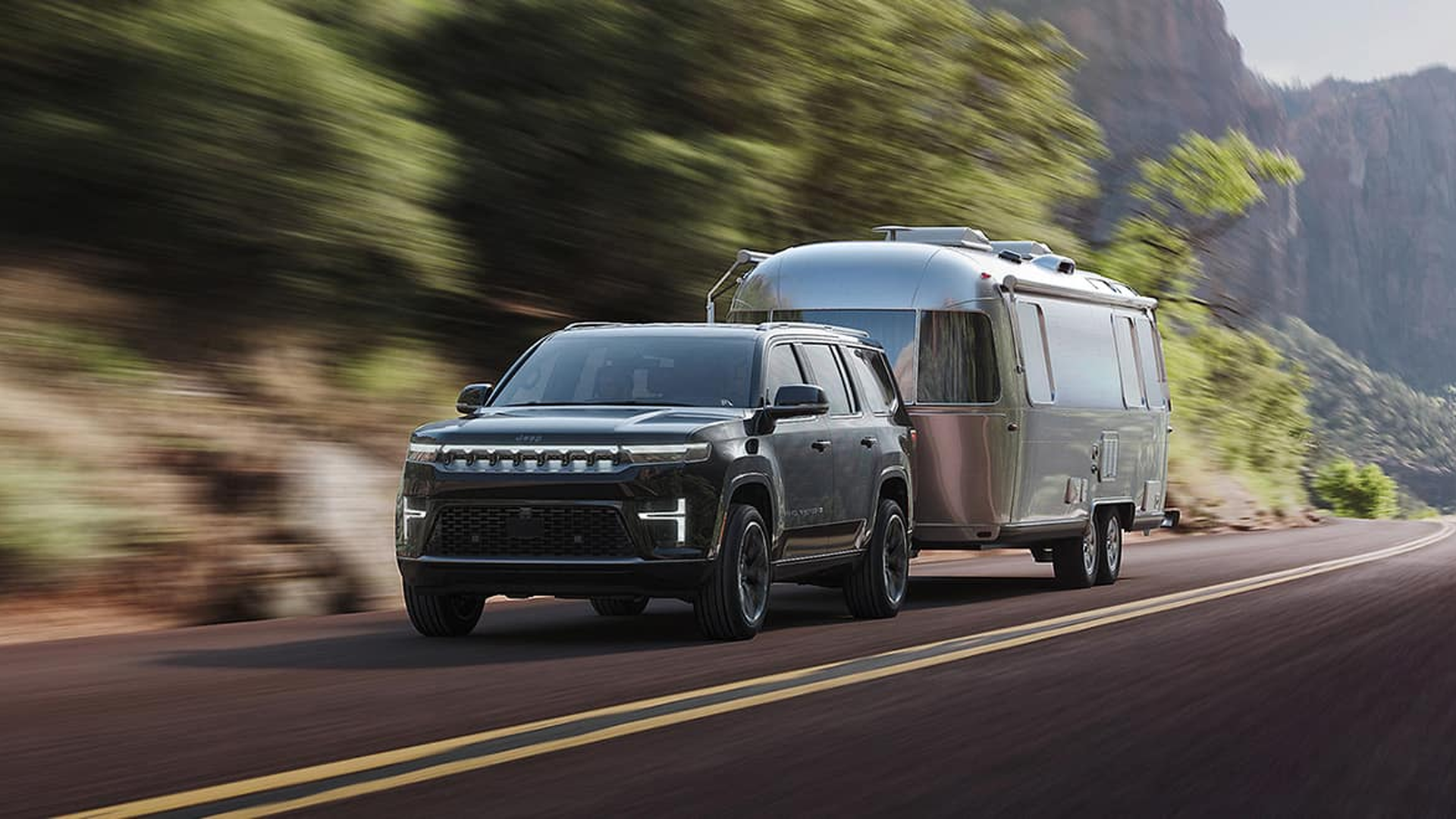
To differentiate the Grand Wagoneer from the standard Wagoneer, designers applied a significantly more aggressive and opulent exterior aesthetic. The front fascia features a distinct, laser-etched seven-slot grille, surrounded by a two-tone black accent roof that visually lowers the high center of gravity. Premium trims ride on massive 22-inch machined aluminum wheels, requiring heavy-duty suspension components to manage the increased unsprung mass.
Architectural Integrity and Independent Rear Suspension
The most critical engineering advancement separating the WS platform from its pickup truck origins is the integration of an independent rear suspension. Replacing a traditional solid rear axle with a complex multilink setup fundamentally alters the spatial geometry of the vehicle. A solid axle requires massive vertical space beneath the cargo floor to articulate upward during compression. By utilizing an independent layout, engineers dropped the rear floor pan substantially.
This architectural shift provides a cavernous interior, yielding best-in-class third-row legroom and massive cargo capacity. Adults can inhabit the third row during cross-country road trips with exceptional comfort. Furthermore, the independent suspension isolates severe impacts to the specific wheel encountering an obstacle. This prevents lateral head-toss inside the cabin, ensuring the heavy SUV tracks perfectly straight over washboard dirt roads and harsh highway expansion joints.
Propulsion Mastery: From 6.4L HEMI to Hurricane HO
Jeep initially launched the modern Grand Wagoneer with the monstrous 6.4-liter (392 cubic-inch) HEMI V8. Generating 471 horsepower and 455 lb-ft of torque, this naturally aspirated cast-iron block delivered visceral acceleration and a thunderous exhaust note. It utilized cylinder deactivation technology to shut down four cylinders during highway cruising, attempting to mitigate the massive fuel consumption inherent to a 6,400-pound vehicle.
The true mechanical revolution occurred shortly after launch with the introduction of the 3.0-liter Hurricane High Output (HO) Twin-Turbo Inline-Six. This completely modern powerplant replaces massive iron displacement with highly pressurized forced induction and advanced metallurgy. Engineers utilized Plasma Transfer Wire Arc (PTWA) technology, melting steel wire at 35,000 degrees Fahrenheit to spray a micro-thin, ultra-hard friction surface directly onto the aluminum cylinder walls. This process eliminates heavy iron sleeves, reducing physical engine weight while radically improving thermal efficiency.
Dual low-inertia turbochargers force highly pressurized oxygen into a dedicated water-to-air charge cooler. This drops the intake air temperature dramatically before it enters the combustion chamber, preventing pre-ignition and allowing for aggressive ignition timing. The result is a mechanical leviathan that produces V8-destroying power while strictly managing tailpipe CO2 emissions.
Hurricane High Output (HO) Specifications
- Engine Architecture
- 3.0L Twin-Turbocharged Inline-Six, Aluminum Block
- Fuel Delivery
- High-Pressure Direct Injection (5,075 psi)
- Peak Horsepower
- 510 hp @ 5,700 RPM
- Peak Torque
- 500 lb-ft @ 3,500 RPM
- Transmission
- TorqueFlite 8HP75 8-Speed Automatic
Absolute Traction: Quadra-Drive II and Air Suspension
An ultra-luxury Jeep must possess uncompromising mechanical grip. The Grand Wagoneer ships standard with the brand's most advanced four-wheel-drive architecture: Quadra-Drive II. This system utilizes a two-speed active transfer case featuring a dedicated 2.72:1 low-range gear ratio for extreme rock crawling. It pairs this transfer case with an electronic limited-slip differential (eLSD) integrated into the rear axle.
The system constantly monitors wheel speed and steering angle. If the vehicle detects a loss of traction on ice or slick mud, the eLSD instantly locks, routing up to 100 percent of available engine torque to the single rear wheel with the most physical grip. The heavy SUV pulls itself forward without the driver ever feeling a loss of momentum.
This mechanical hardware operates in tandem with the standard Quadra-Lift air suspension system. Heavy-duty pneumatic bladders replace traditional steel coil springs. The onboard compressor automatically drops the chassis 0.6 inches at highway speeds to slice through the wind and improve MPG. When the pavement ends, the driver can manually raise the vehicle, securing up to 10.0 inches of ground clearance to clear jagged boulders and ford rivers up to two feet deep without breaching the cabin seals.
The integration of active tuned mass dampers attached directly to the high-strength steel frame absorbs low-frequency drivetrain vibrations, ensuring the massive torque of the Hurricane HO engine never disturbs the serenity of the passenger cabin.
The Ultra-Luxury Command Center
Opening the heavy doors of the Grand Wagoneer reveals an interior that rivals bespoke European luxury sedans. Engineers aggressively attacked Noise, Vibration, and Harshness (NVH) by utilizing acoustic laminated glass on the windshield and front doors, transforming the cabin into an absolute isolation chamber. This silence provides the perfect acoustic canvas for the exclusive McIntosh MX1375 Reference Entertainment System. Pumping an unbelievable 1,375 watts through a 24-channel amplifier and 23 custom-designed speakers, it delivers audiophile-grade clarity completely free of distortion at maximum volume.
Top-tier trims swathe every visible surface in hand-wrapped, diamond-quilted Palermo leather. Genuine open-pore American walnut wood spans the dashboard and center console, providing a warm, organic contrast to the cold aluminum switchgear. The vehicle features up to 75 inches of total digital display area. The driver monitors telemetry through a 12.3-inch frameless digital instrument cluster, while the center stack houses a massive 12.0-inch Uconnect 5 touchscreen. A dedicated 10.25-inch passenger display allows the co-pilot to monitor navigation routes, view exterior camera feeds, and control media playback without distracting the driver.
Dimensional Geometry and Heavy-Duty Towing
- Overall Length
- 214.7 inches (Standard Wheelbase)
- Overall Width
- 83.6 inches
- Maximum Ground Clearance
- 10.0 inches
- Water Fording Depth
- 24.0 inches
- Max Towing Capacity
- 9,800 lbs
Hauling massive loads requires severe thermal management. The heavy-duty trailer tow package equips the Grand Wagoneer with a heavy-duty engine cooling system, an active air dam to maximize radiator airflow, and a specialized transmission fluid cooler. This ensures the internal components remain within optimal operating temperatures even when dragging a 9,800-pound boat up a steep mountain grade in the dead of summer.
The Jeep Grand Wagoneer is an absolute mechanical triumph. It honors the groundbreaking luxury of the 1984 original by surrounding occupants in unparalleled opulence, yet it utilizes a massive high-strength steel frame, highly pressurized twin-turbocharged thrust, and complex low-range gearing to ensure it can still conquer the most hostile environments on earth. It stands alone as the undisputed sovereign of the American ultra-luxury 4x4 segment.