
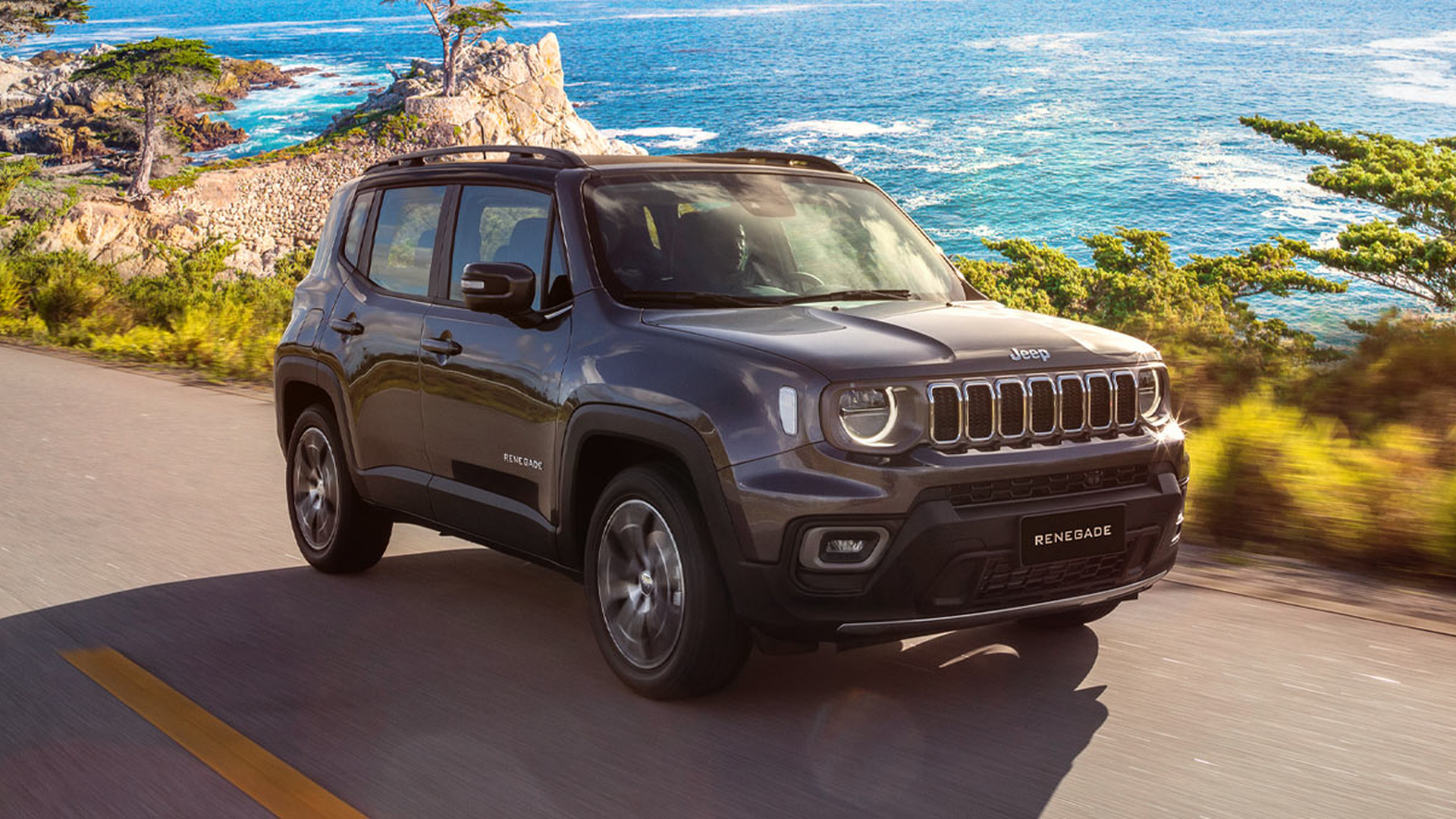
Forging a Global Alliance: The Small Wide 4x4 Architecture
Prior to 2015, the subcompact crossover segment consisted primarily of lifted economy hatchbacks masquerading as utility vehicles. Jeep explicitly rejected this superficial approach when engineering the Renegade. Leveraging the massive industrial resources of the newly formed Fiat Chrysler Automobiles (FCA), the brand utilized the highly adaptable Small Wide 4x4 unibody platform. This architecture was co-developed by American and Italian engineers, creating a machine that feels equally at home carving through narrow Roman cobblestone streets as it does crawling over jagged rocks in Moab, Utah.
The structural foundation relies on an extensive application of advanced high-strength steel, comprising approximately 70 percent of the upper unibody shell. Engineers utilized massive amounts of structural adhesives during the robotic welding process. This specific metallurgical strategy drastically increases the torsional rigidity of the short-wheelbase chassis. You pitch the compact Renegade into a sharp, off-camber trail, and the unibody refuses to twist or groan. This immense structural stiffness allows the suspension to absorb harsh impacts independently, completely preventing chassis flex from ruining the vehicle's dynamic stability on the highway.
The Jeep Renegade became the first vehicle in the history of the brand to be manufactured exclusively outside of North America. Produced in Melfi, Italy, and Goiana, Brazil, it represents a true mechanical synthesis of European handling dynamics and American off-road brute force.
Suspension Dynamics: Chapman Struts and Koni FSD
Achieving passenger comfort on a subcompact wheelbase over decaying urban infrastructure requires highly sophisticated shock absorbers. The Renegade utilizes a fully independent suspension geometry at all four corners. Up front, heavy-duty MacPherson struts provide precise steering feedback, specifically tuned to manage the mass of the transaxle and transfer case. The rear architecture employs a complex Chapman strut setup, maximizing vertical wheel articulation while minimizing intrusion into the rear cargo hold.
Jeep partnered directly with Koni to integrate Frequency Selective Damping (FSD) struts across the entire vehicle lineup. These passive mechanical dampers feature a highly specialized internal bypass valve system. When the wheels encounter high-frequency, low-amplitude chatter-like a washboard dirt road or broken concrete-the internal valve opens, allowing hydraulic fluid to flow freely. This instantly softens the damping rate and absorbs harsh vibrations before they transfer into the passenger cabin. During low-frequency, high-amplitude chassis movements-like aggressive lateral cornering or heavy emergency braking-the valve snaps closed. This immediately stiffens the strut, controlling severe body roll and keeping the tall crossover firmly planted on the asphalt.
Powertrain Evolution: The 1.3L GSE FireFly Turbo
Early North American iterations of the Renegade relied on the naturally aspirated 2.4-liter Tigershark engine and the Fiat-sourced 1.4-liter turbo. Engineers eventually discarded both powerplants in favor of the highly advanced 1.3-liter Global Small Engine (GSE), frequently branded as the FireFly. This direct-injection turbocharged inline-four cylinder fundamentally transforms the driving dynamics of the heavy subcompact unibody.
The 1.3-liter block utilizes an all-aluminum construction to shed critical mass from the front axle. The technological centerpiece is the integration of MultiAir III variable valve timing. Engineers entirely eliminated the traditional mechanical intake camshaft. An ECU precisely regulates oil pressure to individual hydraulic solenoids, providing infinite, per-cylinder control over intake valve lift and duration on every single combustion stroke. This system completely eradicates the restrictive throttle butterfly valve, maximizing volumetric efficiency. Pushing 177 horsepower and a massive 210 lb-ft of torque at low RPM, this engine provides the explosive off-the-line thrust necessary to confidently merge into fast-moving interstate traffic.
Jeep mated this turbocharged block exclusively to a heavy-duty ZF 9-speed automatic transmission (the 948TE). The highly calibrated software utilizes nested dog clutches to disconnect specific gear sets when not in use, drastically reducing parasitic internal drag. The incredibly wide ratio spread ensures an aggressive first gear for rapid acceleration while offering deep overdrive gears to reduce engine speed and tailpipe CO2 emissions during highway cruising.
1.3L GSE Turbocharged Engine Specifications
- Engine Block Architecture
- 1.3L (1332 cm3) Aluminum Block and Head, Direct Fuel Injection
- Valvetrain
- Single Overhead Cam with MultiAir III Electro-Hydraulic Intake Actuation
- Peak Horsepower
- 177 hp @ 5,750 RPM
- Peak Torque
- 210 lb-ft @ 1,750 RPM
- Transmission
- 9-Speed ZF Automatic
The 4xe Plug-In Hybrid Revolution
While the internal combustion engine dominates traditional markets, Jeep completely future-proofed the Renegade platform for global distribution by engineering the 4xe Plug-in Hybrid (PHEV) variant. This architecture completely redefines how the crossover achieves all-wheel traction. The 1.3-liter turbocharged engine drives the front wheels through a 6-speed automatic transmission. Engineers completely discarded the physical mechanical driveshaft running to the rear of the vehicle.
Traction at the rear axle is generated entirely by a dedicated 60-horsepower electric motor integrated directly into the rear subframe. This eAWD system draws power from an 11.4-kWh lithium-ion battery pack packaged securely within the central tunnel and beneath the rear seats to preserve cargo volume. By decoupling the front and rear axles mechanically, the digital traction control system can vector instantaneous electric torque to the rear wheels in milliseconds, reacting to slick winter pavement far faster than traditional hydraulic clutches ever could. The combined system output reaches up to 240 horsepower, making the 4xe the fastest, most capable Renegade configuration ever produced.
Conquering the Dirt: Active Drive and Rear Axle Disconnect
Standard crossover utility vehicles utilize passive slip-and-grip all-wheel-drive systems that react far too slowly for serious off-road recovery. Internal combustion versions of the Renegade employ specific Jeep Active Drive hardware to maintain their off-road pedigree. The core of this system is a complex Power Transfer Unit (PTU) mounted directly to the front transaxle and a Rear Drive Module featuring a heavy-duty wet clutch pack.
During dry, steady-state highway cruising, the PTU physically disconnects the entire rear driveshaft. The heavy steel driveshaft stops spinning completely, eliminating parasitic mechanical drag and significantly boosting highway fuel economy. The instant the front wheel speed sensors detect slip, the PTU engages the driveshaft, and the rear clutch pack clamps down within milliseconds. This action seamlessly vectors up to 100 percent of available engine torque to the rear axle. The driver feels zero mechanical binding or hesitation; the crossover simply claws forward through the mud.
Trailhawk: Engineering the Subcompact Mountain Goat
The Trailhawk trim elevates the Renegade from a competent urban commuter to a highly lethal trail machine, earning the brand's coveted Trail Rated badge. Achieving this specific rating required aggressive mechanical intervention. The Trailhawk replaces the standard 4x4 setup with the Jeep Active Drive Low system. This configuration electronically reprograms the 9-speed transmission to utilize its ultra-low first gear as a dedicated crawler gear, resulting in a highly aggressive 20:1 crawl ratio. This mechanical advantage allows the vehicle to inch up steep, rocky inclines using engine braking alone, entirely without the driver touching the friction brake pedal.
Ground clearance dictates off-road survival. Engineers installed a factory suspension lift, bumping the physical ride height to a highly capable 8.7 inches. They completely redesigned the lower front and rear fascias, drastically improving the approach angle to prevent the front bumper from smashing into boulders. Heavy-gauge steel skid plates armor the cast aluminum oil pan, transmission casing, transfer case, and plastic fuel tank against catastrophic rock strikes. The exterior is easily identifiable by the aggressive matte black hood decal-specifically designed to reduce blinding sun glare during steep climbs-and the signature red recovery hooks bolted directly into the high-strength unibody frame rails.
Trailhawk Off-Road Geometry
- Ground Clearance
- 8.7 inches
- Approach Angle
- 30.5 degrees
- Breakover Angle
- 25.7 degrees
- Departure Angle
- 34.3 degrees
- Water Fording Depth
- 19.0 inches
Interior Packaging, Easter Eggs, and Uconnect 5
The interior architecture of the Renegade aggressively targets a youthful, adventure-driven demographic. Designers executed a rugged, utilitarian aesthetic defined by oversized climate control dials, thick grab handles, and highly durable seating fabrics. Jeep integrated dozens of hidden "Easter Eggs" throughout the cabin and exterior sheet metal. Owners will find vintage Willys Jeep grille silhouettes stamped into the headlight housings, topographical maps molded into the rubber storage bins, and a tiny spider casting hidden behind the fuel door.
To provide an open-air driving experience without the severe wind noise of a soft top, engineers developed the My Sky roof system. This architecture features dual honeycomb-fiberglass polyurethane roof panels that can be mechanically retracted or removed entirely and stowed perfectly flat inside the rear cargo floor.
The dashboard centers entirely around the highly advanced Uconnect infotainment ecosystem. Upgraded to the Uconnect 5 operating system on modern global variants, the 8.4-inch high-definition touchscreen processes inputs five times faster than previous hardware generations. It offers flawless wireless integration for smartphone mirroring and supports dual active Bluetooth device connections. The driver views critical vehicle telemetry through an available 7-inch Thin Film Transistor (TFT) digital instrument cluster, customizing the display to show traditional analog-style gauges, full-screen navigation, or real-time pitch and roll articulation data during off-road excursions.
The Global Survival and Enduring Legacy
While shifting consumer demands for larger vehicles led to the Renegade's eventual discontinuation in the United States and Canada following the 2023 model year, the vehicle continues to thrive spectacularly in global markets. Throughout Europe, the Caribbean, and South America, the 2024 and 2025 Renegade models remain absolute sales juggernauts. The combination of narrow, urban-friendly exterior dimensions, advanced 4xe hybrid powertrains, and authentic four-wheel-drive capability perfectly aligns with international driving conditions. The Jeep Renegade definitively proves that severe off-road geometry and rugged brand heritage can be successfully distilled into a subcompact footprint without losing a single drop of its mechanical soul.