
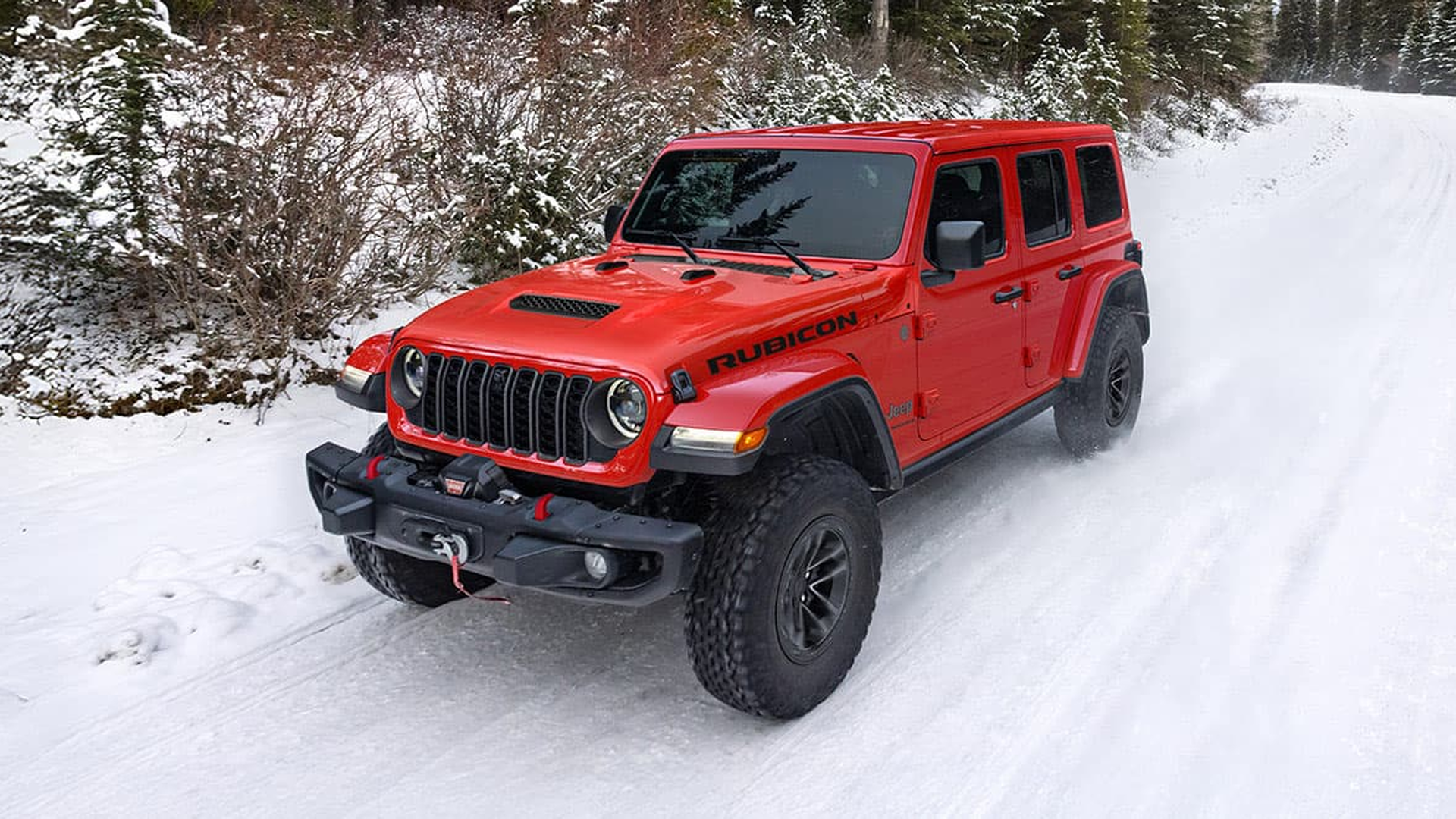
The Unyielding Legacy of an American Original
Few vehicles command as much respect as the Jeep Wrangler. It is not just a sport utility vehicle; it is a mechanical manifestation of freedom. Tracing its lineage back to the Willys MB of World War II, the Wrangler has successfully transitioned from a utilitarian tool of liberation to a modern-day lifestyle icon without losing its grit. It remains one of the last bastions of body-on-frame construction and solid axle durability in an increasingly unibody world.
The Jeep Wrangler is the only vehicle in the world that can trace its DNA directly back to the front lines of global history, maintaining its iconic silhouette for over eight decades.
The transition from the CJ series to the first YJ in 1986 marked the official birth of the Wrangler nameplate. While purists initially balked at the rectangular headlights, the YJ introduced improved handling and comfort, setting the stage for the TJ, JK, and current JL generations. Each iteration has faced the same engineering challenge: how to provide civil road manners while remaining capable of conquering the Rubicon Trail.
Engineering the Ultimate 4x4 Machine
Underneath the iconic seven-slot grille lies a masterclass in rugged engineering. The Wrangler utilizes a traditional ladder frame, providing a robust foundation for extreme articulation. Unlike soft-roaders, the Wrangler employs a sophisticated 4WD system, often featuring a two-speed transfer case with a dedicated low-range gear for crawling over boulders or through deep mud.
Suspension design remains a focal point for enthusiasts. The shift to coil springs in the late 1990s revolutionized the ride quality, yet Jeep stayed true to solid front and rear axles. This setup ensures that when one wheel encounters an obstacle, the downward force on the opposite wheel increases traction. It is simple, heavy, and nearly indestructible.
Core Technical Specifications
- Body Style
- 2-Door Convertible, 4-Door SUV (Unlimited)
- Drivetrain
- Part-time or Full-time 4WD
- Engine Options
- 2.0L Turbo I4, 3.6L Pentastar V6, 6.4L HEMI V8, 2.0L PHEV
- Horsepower
- 270 hp to 470 hp
- Torque
- 260 lb-ft to 470 lb-ft
- Transmission
- 6-Speed Manual or 8-Speed Automatic
- Ground Clearance
- 9.7 to 12.9 inches (Trim dependent)
Generational Evolution: From YJ to JL
Understanding the Wrangler requires a look at its distinct eras. The YJ (1987-1995) focused on widening the track and lowering the center of gravity. Then came the TJ (1997-2006), which brought back the beloved round headlights and introduced the Quadra-Coil suspension. It was during this era that the Rubicon trim was born, offering factory-installed lockers and 31-inch tires.
The JK (2007-2018) was a monumental shift, introducing the four-door "Unlimited" model. This single move transformed the Wrangler from a niche hobbyist vehicle into a viable family SUV, causing sales to skyrocket. The current JL (2018-Present) refined the formula further, incorporating aluminum body panels to save weight and improving MPG through advanced aerodynamics and engine tech.
In 2007, the introduction of the 4-door Unlimited model changed the Jeep trajectory forever, making the legendary 4x4 accessible to families for the first time.
The Heart of the Beast: Powertrain Innovations
Power delivery in a Wrangler is tuned for low-end grunt. While the 3.6L Pentastar V6 has been the reliable workhorse for years, Jeep recently pushed boundaries with the Rubicon 392. This monster features a 6.4L V8, proving that internal combustion still has a thunderous place in the dirt. On the flip side, the 4xe plug-in hybrid uses a 2.0L turbocharged engine paired with electric motors to provide silent, torque-rich rock crawling while reducing tailpipe CO2 emissions.
The ECU in modern Wranglers is programmed with specific off-road modes. These calibrations adjust throttle sensitivity and shift points to prevent wheel spin on slick surfaces. The inclusion of an electronic sway bar disconnect allows for maximum wheel travel at the push of a button, letting the tires stay in contact with the ground even in the most technical terrain.
Interior: Utility Meets Modernity
Modern Jeep interiors have come a long way from the hose-out rubber mats of the past. While you can still find drain plugs in the floor for easy cleaning, the dashboard now houses high-resolution touchscreens and premium audio systems. High-quality materials line the touchpoints, yet the upright windshield and roll-cage-inspired pillars remind you of its purpose-built origins.
Storage is optimized for the adventurer. From the rear cargo area to the specialized tool kits for removing doors and tops, every inch of the cabin serves the mission of versatility. Owners can swap between a soft top, a three-piece hardtop, or the Sky One-Touch Power Top, which retracts with a single button press even at speeds up to 60 mph.
Dimensions and Capacities
- Wheelbase (2-Door)
- 96.8 inches
- Wheelbase (4-Door)
- 118.4 inches
- Fuel Tank Capacity
- 17.5 to 21.5 gallons
- Max Towing Capacity
- 2,000 to 5,000 lbs (Model dependent)
- Approach Angle
- Up to 47.4 degrees
A Culture of Customization
Perhaps no other vehicle has an aftermarket ecosystem as vast as the Wrangler. Jeep owners view their vehicles as blank canvases. From lift kits and winches to beadlock-capable wheels and specialized lighting, the ability to personalize a Wrangler is central to the ownership experience. This culture has fostered a tight-knit community, famously recognized by the "Jeep Wave" exchanged between drivers on the road.
Reliability in extreme conditions remains the brand's North Star. Whether it is navigating the Mojave desert heat or the freezing tundras of the North, the Wrangler is tested in environments that would leave standard crossovers stranded. The Trail Rated badge is not marketing fluff; it is earned through grueling tests in traction, water fording, maneuverability, articulation, and ground clearance.
The Future: Electrification and Beyond
The automotive landscape is shifting, and Jeep is leading the charge into the wild with the 4xe. By combining instant electric torque with traditional mechanical lockers, they have created a vehicle that is more capable off-road than its purely gas-powered siblings. The future likely holds a fully electric Wrangler, ensuring that the sound of nature is the only thing you hear while traversing the great outdoors. Engineering for the next century means adapting to new energy while maintaining the rugged soul that made the Jeep name famous in 1941.
The Jeep Wrangler 4xe became the best-selling plug-in hybrid in America shortly after its release, proving that off-roaders are ready for the electric revolution.
From the battlefield to the backyard, the Jeep Wrangler remains a symbol of American ingenuity. It is a vehicle built for those who want to see what is over the next ridge. It is a tool for exploration and a trophy of endurance. As long as there are unpaved roads and mountains to climb, the Wrangler will be there to conquer them.