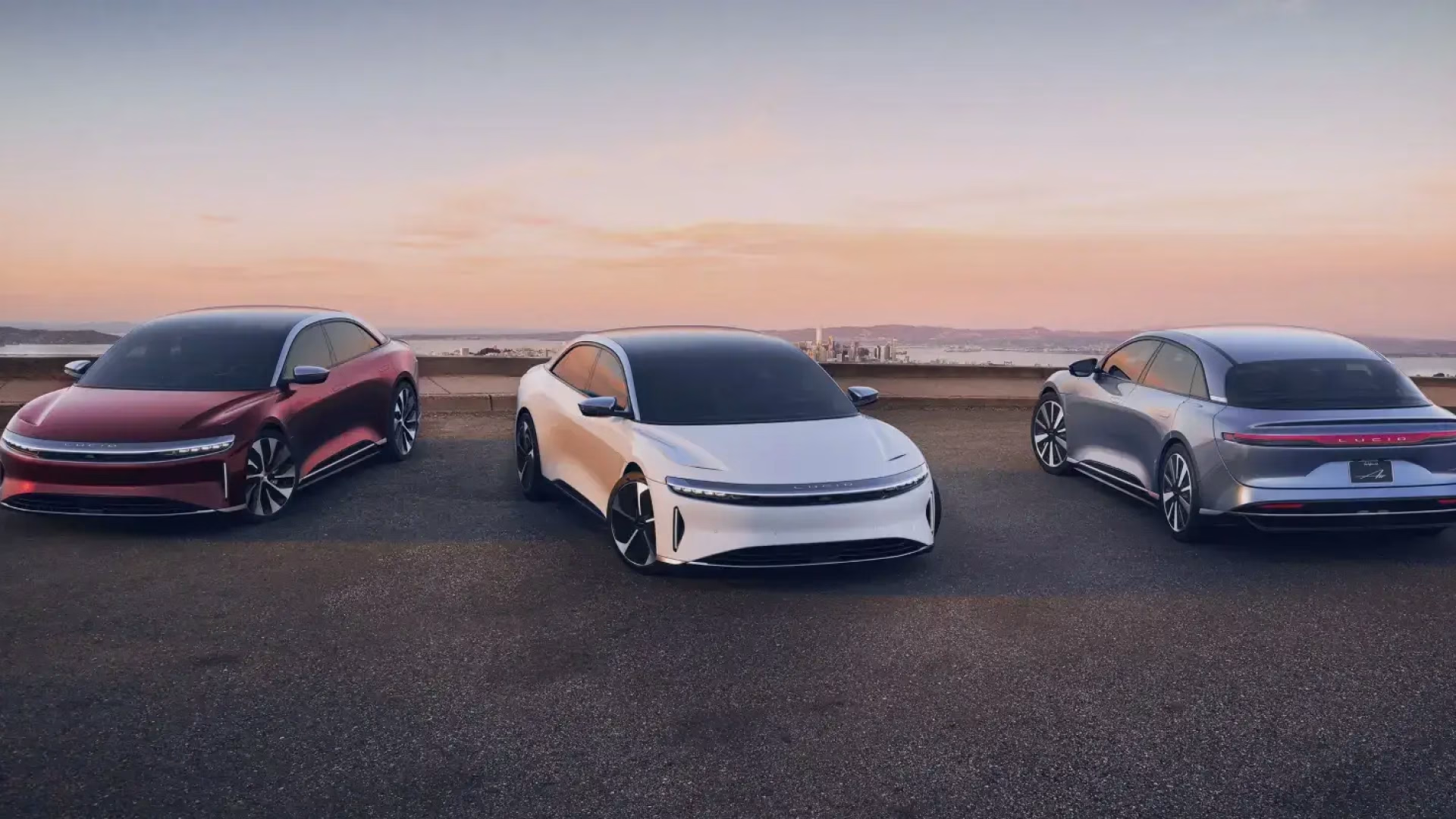
In the noisy world of electric startups, most brands promise the moon and deliver a rendering. Lucid Motors delivered a miracle. Founded in Newark, California, and led by Peter Rawlinsonâthe very man who engineered the Tesla Model SâLucid had a singular, obsessive goal: absolute efficiency. They didn't just want to build a "Tesla Killer." They wanted to build a car that made every other EV look like it was dragging an anchor. Today, Lucid stands alone as the brand for the "Post-Luxury" buyerâsomeone who values engineering purity over brand heritage.
The Philosophy: Smart Range, Not Big Batteries
Everyone else tried to solve "Range Anxiety" by stuffing massive, heavy batteries into their cars. Lucid solved it with math and miniaturization. This is the core DNA of the brand.
Lucidâs proprietary electric motors are small enough to fit inside a standard carry-on suitcase, yet they produce up to 670 horsepower each. By making the powertrain smaller and lighter, they created more interior space for passengers and reduced the weight the car has to haul. The result? The Lucid Air Grand Touring was the first production car to shatter the EPA 500-mile range barrier. It goes further on less energy than any vehicle in history.
The Halo Car: Air Sapphire
If you want to understand Lucidâs capabilities, you look at the Air Sapphire. This is the car that silenced the critics.
- 1,234 Horsepower: It uses a tri-motor setup (two in the rear, one in the front).
- 0-60 mph in 1.89 seconds: It is the quickest production sedan in the world. Period.
- The "Plaid" Killer: While a Tesla Model S Plaid is fast in a straight line, the Sapphire features carbon-ceramic brakes, bespoke Michelin Pilot Sport 4S tires, and track-tuned suspension. It doesn't just launch; it corners like a Lotus. It costs a quarter of a million dollars, and it is worth every penny for the bragging rights alone.
The Design Ethos: Post-Luxury
Step inside a Lucid, and you realize this isn't a German car. There is no heavy chrome, no piano black plastic, and no overwhelming smell of dead cow. Lucid calls their aesthetic "Post-Luxury."
They use materials inspired by their home state of California: sustainable alpaca wool blends, open-pore eucalyptus wood, and puristic textiles. The interior feels like a mid-century modern living room in Big Sur. The defining feature is the Glass Canopy roof. It sweeps from the base of the hood, over the driver's head, and to the rear without a structural pillar blocking your view. It makes the cabin feel infinitely airy, like you are piloting a low-flying aircraft.
The Tech: The Wunderbox and 900V
While other manufacturers are stuck on 400-volt architectures (charging slowly), Lucid built a 900V+ architecture. They call the onboard charging unit the "Wunderbox."
What does this mean for you? It means if you find a 350kW DC fast charger, the Lucid Air can add 200 miles of range in about 12 minutes. That is "stop for a coffee and go" speed. It changes the psychology of road tripping. The Wunderbox is also bi-directional, meaning the car can power your house during an outage or charge another stranded EV.
The Air: The Sedan Reimagined
The Lucid Air exploits the advantages of EV architecture better than anyone else. Because the motors are so small, the "Frunk" (front trunk) is massiveâlarger than the trunk of a Mazda MX-5. The rear seats offer legroom comparable to a long-wheelbase Mercedes S-Class, despite the car being the size of an E-Class on the outside. This is what Lucid calls "Space Concept"âbig on the inside, compact on the outside.
The lineup is structured for different needs:
Air Pure: The entry point. Often RWD or AWD, it offers the purest driving experience with the smallest battery but still out-ranges almost every competitor.
Air Touring: The sweet spot of performance and range.
Air Grand Touring: The distance champion.
The Gravity: The SUV for Physics Deniers
In 2024/2025, Lucid launched the Gravity. It is a three-row, 7-seater SUV that drives like a sports sedan. It carries the same DNA as the Airâefficiency first. It offers towing capacity capable of hauling a boat, but with an aerodynamic profile (drag coefficient) that slices through the wind. The "Sanctuary" rear seating option turns the back into a lounge, complete with tray tables, perfect for the Silicon Valley executive being driven to a meeting.
The Interface: Glass Cockpit
Lucid uses a massive 34-inch curved 5K display that floats above the dashboard. But unlike Tesla, Lucid respects muscle memory. They included physical buttons for climate control and volume. They understand that digging through three sub-menus just to turn on the AC is bad design. The software is fast, integrates wireless Apple CarPlay and Android Auto, and supports OTA (Over-the-Air) updates to constantly improve the vehicle.
Why Lucid Matters to You
You choose a Lucid because you are a contrarian in the best sense. You respect Tesla for starting the revolution, but you find their build quality lacking and their ubiquity boring. You find the German luxury brands to be stuck in the past, trying to adapt gas-car platforms to EVs.
Lucid is for the person who appreciates engineering density. You want the smartest car on the road. You want to drive 400 miles on the highway at 75 mph and still have 15% battery left when you arrive. It is the connoisseur's choice of the electric age.
The Hugegarage Verdict
Lucid is arguably the best engineering company in the automotive world right now. Their motors, battery management, and packaging are generational leaps ahead of the competition. If you can afford the price of entry, the Lucid Air or Gravity offers a driving experience that makes everything else feel heavy, slow, and outdated. It is the new gold standard for American luxury.