Mazda: The Soul of Motion

Mazda is the rebel of the Japanese auto industry. While Toyota chases sales and Honda chases engineering, Mazda chases *feeling*. From the rotary-powered RX-7 to the legendary Miata, they build cars for people who love to drive. Their philosophy of "Jinba Ittai" (horse and rider as one) ensures even their SUVs handle with grace.

Origin: Japan
Est. 1920
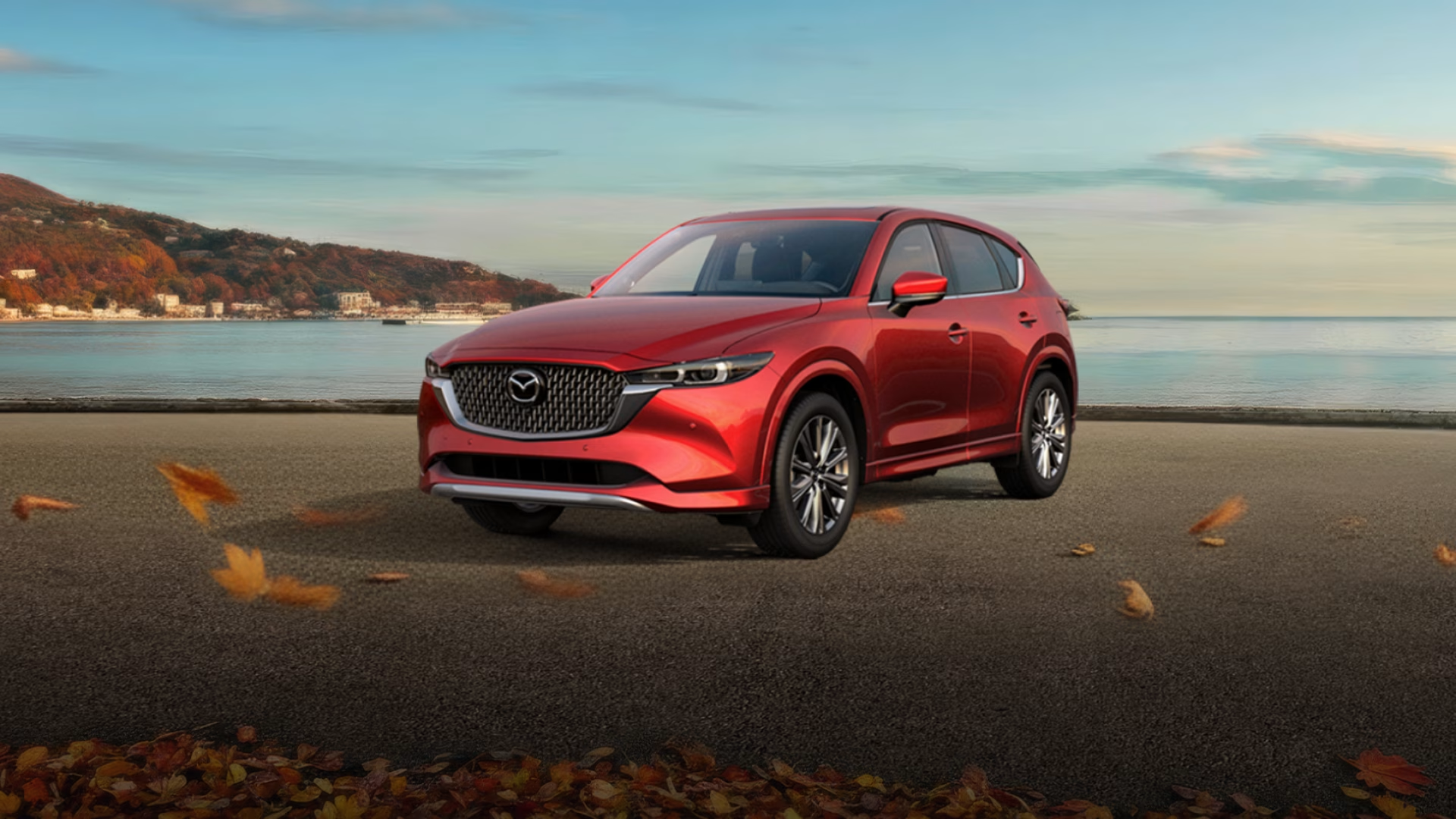
Mazda Hero Vehicle

Model Lineup

Explore the current production vehicles.

MX-5 Miata

The best-selling roadster in history and the purest expression of driving joy. The MX-5 is a masterclass in lightweight, rear-wheel-drive perfection, delivering an unfiltered connection between the driver, the car, and the road. It is the soul of the Mazda brand.

Production 1990-Present

CX-90

The new flagship, engineered for the driver. The 3-row CX-90 introduces Mazda's premium rear-biased platform with a smooth inline-six engine and available PHEV. It masterfully blends family utility with the rewarding driving dynamics you expect from a Mazda.

Production 2024-Present

CX-5

The driver's choice in the compact SUV segment. The CX-5 combines stunning Kodo design with an engaging, fun-to-drive chassis and a beautifully crafted, near-luxury interior. It’s the crossover for people who refuse to give up the joy of driving.

Production 2013-Present

CX-50

The rugged and adventure-ready crossover with a wild spirit. The CX-50 is designed to take you further down the trail, with standard all-wheel drive, a wider stance, and a character that inspires exploration without sacrificing on-road driving pleasure.

Production 2023-Present

CX-30

The stylish and sophisticated subcompact crossover. The CX-30 offers a sleek, coupe-like design, a true premium interior, and the nimble, engaging handling of a smaller car. With an available turbocharged engine, it’s a small SUV with a huge soul.

Production 2020-Present

Mazda3

The beautifully designed compact car that feels a class above. Available as a sleek sedan or a stunning hatchback, the Mazda3 offers an award-winning interior, available AWD, and an engaging, fun-to-drive nature. It proves that affordable can be artful.

Production 2004-Present

Mazda6

Arguably the most beautiful and best-handling mid-size sedan of its time. The Mazda6 was a masterpiece of Kodo design, offering a premium experience and a truly engaging drive that stood out in a sea of boring family cars. A true enthusiast's sedan.

Production 2003-2021

CX-9

The 3-row crossover that proved family hauling could have a soul. The CX-9 was celebrated for its sharp handling, turbocharged power, and a sleek design that defied the boring family SUV stereotype. It was the driver's choice for a 7-seater.

Production 2007-2023

RX-7

The legendary, high-revving icon that put the rotary engine on the map. The RX-7, especially the twin-turbo FD generation, is one of the most beautiful and best-handling sports cars ever made. A pure, lightweight masterpiece of Japanese performance.

Production 1979-1995

RX-8

The unique and innovative four-seat rotary sports car. With its high-revving RENESIS rotary engine and revolutionary 'freestyle' doors, the RX-8 was a bold experiment in packaging and performance, offering a truly one-of-a-kind driving experience.

Production 2004-2011

Mazdaspeed3

The original torque-steering monster. The Mazdaspeed3 was a wild, turbocharged hot hatch that packed a massive punch. It was a raw, unfiltered, and incredibly fast machine that became a legend for its rebellious and untamed performance.

Production 2007-2013

Mazdaspeed6

The ultimate sleeper sedan. The Mazdaspeed6 took a sensible family sedan and added a turbocharged engine, a 6-speed manual, and a sophisticated all-wheel-drive system. It was a stealthy, all-weather performance car for the enthusiast in the know.

Production 2006-2007

Protegé / Protegé5

The beloved compact that was a giant of driving fun. The Protegé, and especially the incredibly versatile Protegé5 wagon, was celebrated for its sharp handling and fun-to-drive nature, punching way above its weight in driver engagement.

Production 1990-2003

Tribute

Mazda's first entry into the booming compact SUV market. A joint venture with Ford, the Tribute offered a more athletic, 'Zoom-Zoom' tuned suspension compared to its Escape sibling, bringing a dose of Mazda's fun-to-drive spirit to the family hauler.

Production 2001-2011

B-Series Truck

The tough and dependable compact pickup. From the early Rotary-powered models to the later Ford Ranger-based versions, the B-Series was a simple, honest, and reliable workhorse that served its owners faithfully for decades.

Production 1972-2009

Author

HugeGarage Editor

Published

Updated

8 Min Read

The "Zoom-Zoom" Philosophy

In the early 2000s, a kid whispered "Zoom-Zoom" into the camera, and a brand identity was born. But for Mazda, this wasn't just marketing; it was a mission statement. Mazda is the smallest of the major Japanese manufacturers, which gives them the freedom to take risks that Toyota or Nissan wouldn't dare.

Mazda builds cars for people who actually like to drive. They are one of the few manufacturers that steadfastly refused to put CVT transmissions in their cars, sticking to crisp-shifting traditional automatics because they feel better. Whether it is a family crossover like the CX-5 or a sports car, a Mazda always has heavier steering and a firmer suspension than the competition. It connects you to the road rather than isolating you from it.

The Answer Is Always Miata

There is an acronym in the car world: M.I.A.T.A. (Miata Is Always The Answer).

Launched in 1989 as the MX-5, the Miata saved the roadster. The British had invented the small convertible (think MG, Triumph), but they couldn't make them reliable. Mazda took the concept, fixed the oil leaks and the electrics, and created the best-selling two-seater sports car in history. It is not fast, but it is perfect. It is the most raced car in the world, dominating grassroots motorsports across the USA every weekend.

The Rotary Rebels: RX-7 and RX-8

Mazda is the only car company to successfully mass-produce the Wankel Rotary Engine. Instead of pistons going up and down, it uses a triangular rotor spinning inside an oval housing.

The RX-7 (especially the twin-turbo FD generation of the 90s) is a masterpiece of design and engineering. It revs to the moon and sounds like a buzzsaw. However, the rotary engine consumes oil by design and has a reputation for blowing "apex seals" if not maintained religiously. It is a high-maintenance relationship, but the driving experience is unlike anything else.

SkyActiv and the Push Upmarket

In recent years, Mazda has tried to leave the "economy car" segment and move into "premium" territory to fight Acura and Volvo. Their interiors are now widely considered the best in their class, featuring high-quality leather and minimalist design.

Their engine technology, branded as SkyActiv, focuses on high-compression naturally aspirated engines rather than tiny turbos. They believe in linear power delivery. They recently launched the CX-90, featuring a new inline-6 engine—a layout usually reserved for BMWs.

Buying Advice: Rust and Premix

  • The Miata: If you are buying an older Miata (NA or NB generation), check the rocker panels (the metal below the doors). They rust from the inside out because the rain drains get clogged.
  • The Rotary: buying an RX-7 or RX-8 is not for beginners. You need to check compression ratios. Many owners "premix" (add 2-stroke oil to the gas tank) to help lubricate the engine. It is a lifestyle, not just a car.

Mazda proves that you don't need 500 horsepower to have fun. You just need a chassis that talks to you.

Frequently Asked Questions

What is Mazda Skyactiv Technology and how does it improve performance?

Skyactiv Technology is a comprehensive engineering philosophy that optimizes the engine, transmission, chassis, and body as a single unit. Unlike traditional engines, Skyactiv-G utilizes an exceptionally high compression ratio to extract more energy from every drop of fuel.

For US drivers, this results in better low-end torque for city driving and superior highway fuel economy without the need for complex turbocharging on base models. It ensures that even a standard Mazda3 or CX-5 feels more responsive and "connected" than its competitors.

What are the differences between the Mazda CX-70 and CX-90?

Both the CX-70 and CX-90 are built on Mazda’s new rear-wheel-drive biased Large Platform, but they serve different lifestyles:

  • CX-90: A three-row flagship SUV designed for large American families, seating up to 8 passengers.
  • CX-70: A two-row crossover designed for "active" couples or smaller families who prioritize cargo space and a sportier silhouette.

Both models feature the same powerful 3.3L Inline-Six Turbo engine or the high-efficiency Plug-in Hybrid (PHEV) powertrain.

How does the Mazda Plug-in Hybrid (PHEV) system work?

Mazda’s PHEV system, found in the CX-90 and CX-70, combines a 2.5-liter four-cylinder engine with a 68 kW electric motor and a 17.8 kWh battery pack. It provides a total output of 323 horsepower and 369 lb-ft of torque.

For the average American commute, it offers an all-electric range of approximately 26 miles. Once the battery is depleted, the vehicle seamlessly switches to hybrid mode, ensuring you can complete long-distance road trips without "range anxiety."

Is the rotary engine returning in 2026?

Yes, but with a modern twist. The Mazda MX-30 R-EV features the return of the rotary engine, not to drive the wheels directly, but as a compact range extender. The rotary engine acts as a generator to charge the battery while on the move.

This innovative setup allows Mazda to maintain a lightweight electric platform while offering a total driving range that satisfies US travel demands, proving that Rotary Power still has a place in a zero-emission future.

What is Mazda "Jinba Ittai" and how does it affect handling?

Jinba Ittai is a Japanese phrase meaning "horse and rider as one." In Mazda vehicles, this is achieved through G-Vectoring Control Plus (GVC+), which subtly adjusts engine torque and braking when entering a corner.

This technology shifts the vehicle’s weight forward to increase front-tire grip, making the car feel more intuitive and stable. Whether you are driving an MX-5 Miata on a canyon road or a CX-50 on a gravel trail, the car responds naturally to your every input.

What are the features of the Mazda CX-50 Meridian Edition?

The CX-50 Meridian Edition is specifically designed for the North American outdoor enthusiast. It features factory-installed upgrades for rugged terrain, including:

  • 18-inch wheels wrapped in Falken all-terrain tires.
  • Exclusive hood graphics to reduce sun glare on the trail.
  • A heavy-duty roof platform for hauling kayaks, bikes, or rooftop tents.
  • A 3,500 lb towing capacity with the Turbo engine.
What is Mazda i-Activ AWD and is it standard in the US?

Starting in 2024, i-Activ All-Wheel Drive became standard on all Mazda "CX" crossover models in the United States. This "predictive" system monitors 27 different variables—from outside temperature to windshield wiper usage—to anticipate wheel slip before it happens.

By proactively shifting torque between the front and rear axles, it provides maximum confidence during heavy rain in Florida or deep snow in the Midwest, without the fuel-economy penalty of older full-time AWD systems.

Does Mazda offer a premium audio system like Bose?

Mazda partners with Bose® to design custom-tuned audio systems for each model’s cabin acoustics. In models like the 2026 Mazda3 and CX-90, the Bose Centerpoint 2 system features up to 12 high-performance speakers.

A unique feature is the Bose AudioPilot 2 technology, which uses a microphone to monitor background road noise in American highway environments and automatically adjusts the EQ to ensure your music remains crystal clear at any speed.

What is the Mazda i-Activsense safety suite?

i-Activsense is Mazda’s sophisticated suite of safety technologies designed to prevent collisions. Key features for US drivers include:

  • Smart City Brake Support: Automatic emergency braking at low speeds.
  • Blind Spot Monitoring: Essential for safe lane changes on busy USA interstates.
  • Rear Cross Traffic Alert: Standard on most trims to assist with reversing out of parking spots.
  • Mazda Radar Cruise Control (MRCC) with Stop & Go.
What are the performance specs of the 2026 Mazda MX-5 Miata?

The 2026 MX-5 Miata remains the world’s best-selling two-seat sports car. It is powered by a 2.0L Skyactiv-G engine producing 181 horsepower and 151 lb-ft of torque.

With a curb weight of just around 2,400 lbs, it maintains a near-perfect 50/50 weight distribution. US enthusiasts can choose between the classic Soft Top or the RF (Retractable Fastback), both featuring a slick 6-speed manual transmission as the preferred enthusiast choice.