
The Peopleâs Sports Car
For millions of Americans, the letters "MG" conjure up a very specific image: a sunny Saturday morning, a tweed cap, a wooden steering wheel, and a two-seat convertible winding down a country road. Before the Mazda Miata perfected the formula, MG invented it. They democratized the sports car, taking the thrill of open-air motoring and making it affordable for the average schoolteacher or GI returning from Europe.
Morris Garages (MG) isn't just a brand; it is the root of the "British Sports Car" craze in the United States. While the brand has undergone massive changesâshifting from Abingdon, England, to global production under SAIC Motorâthe iconic Octagon badge still triggers a wave of nostalgia. Today, MG is staging a massive comeback, pivoting from classic oil-leaking roadsters to high-tech, high-performance electric vehicles.
The Golden Era: T-Series, MGA, and MGB
To understand MG, you have to look at what they did for the American market post-WWII. American soldiers stationed in the UK fell in love with these nimble little cars (the T-Series) and shipped them home. They were the antithesis of the massive Detroit iron of the time. They were tiny, slow, and unsafe, but they were incredibly fun.
The MGB (introduced in 1962) is the definitive model. It used a unibody construction, which was high-tech for the time. It wasn't fastâ0 to 60 took over 11 secondsâbut speed wasn't the point. The point was "maintaining momentum." Driving an MGB fast requires skill, foresight, and courage. It taught generations of Americans how to actually drive.
The "Prince of Darkness" and The Fall
You cannot talk about classic MGs without talking about Lucas Electronics, affectionately known as the "Prince of Darkness." The jokes are legendary: "Why do the British drink warm beer? Because Lucas makes the refrigerators."
By the late 70s and 80s, under the management of British Leyland, quality plummeted. The bumpers became rubber monstrosities to meet US safety regulations, and the engines were choked by emissions equipment. The brand eventually exited the US market, leaving a void that the Japanese were all too happy to fill.
The Resurrection: SAIC and the Electric Turn
In the mid-2000s, after a turbulent period (including the Rover collapse), the MG brand was acquired by SAIC Motor, a Chinese auto giant. Purists were skeptical. They claimed MG was dead.
They were wrong. SAIC did what needed to be done: they injected cash and modern engineering into the brand. While they started with generic hatchbacks, they have recently found their groove again. They realized that MG's soul lies in innovation and fun, not just nostalgia.
The Modern Lineup: Forbidden Fruit?
Currently, modern MGs are not sold in the United States, but they are taking Europe, Australia, and Mexico by storm. For the American observer, they represent serious "forbidden fruit."
The MG4 EV
This is the car that woke everyone up. It is a sharp-edged, rear-wheel-drive electric hatchback that reviewers are calling one of the best budget EVs in the world. The XPOWER version features dual motors, all-wheel drive, and does 0-60 in 3.8 seconds. That is supercar territory in a family hatch.
The Cyberster: The Return of the Roadster
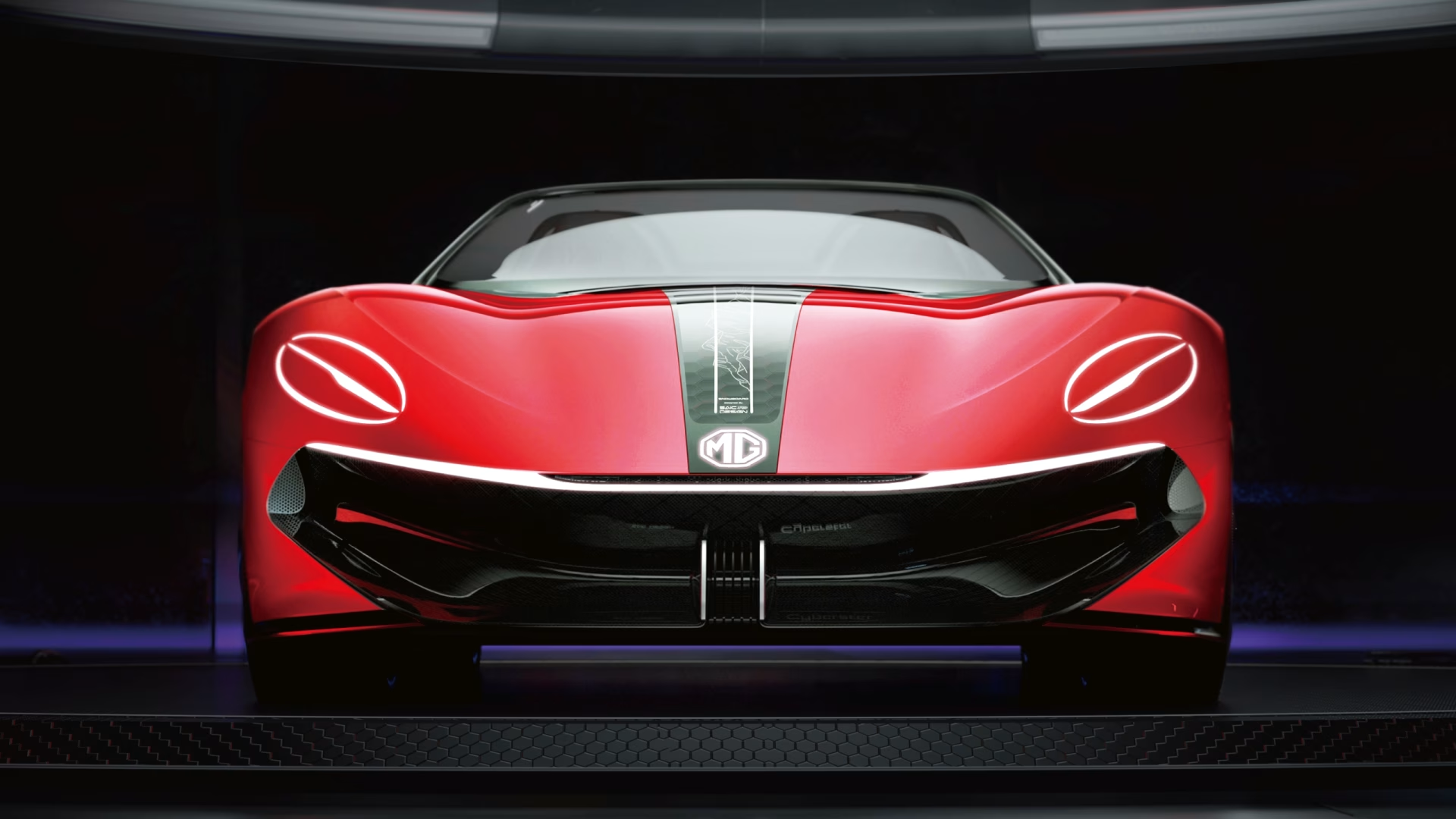
This is the big one. Just in time for the brand's 100th anniversary, MG launched the Cyberster. It is an all-electric two-seat convertible with scissor doors. It is the spiritual successor to the MGB, but with over 500 horsepower in top trim. It proves that MG hasn't forgotten its rootsâit has just upgraded the powertrain.
Buying Advice: The Classic Market
Since you can't buy a new MG in the US (yet), most American buyers are looking at classics. Here is the playbook:
- Rust is the Enemy: The engines are simple agricultural lumps that run forever. The bodies, however, dissolve if you look at them wrong. Check the sills ("rocker panels") and the floorboards. Bring a magnet.
- Chrome vs. Rubber: Models made before 1974 have chrome bumpers and are more desirable (and expensive). The later "rubber bumper" cars are cheaper and actually drive better if you lower the suspension back to European specs.
- The Community: The best part of owning an MG is the support. Parts availability is shockingâyou can practically build a brand new MGB from a catalog. There is a club in almost every major American city.
MG is a brand that has survived bankruptcy, mergers, and total reinvention. Whether you are wrenching on a 1972 Midget in your garage or admiring the new Cyberster on YouTube, the appeal remains the same: itâs about the joy of the drive, pure and simple.