The Fallen Giant of Performance
If you mention "Mitsubishi" to a teenager today, they think of the Mirage (one of the cheapest cars in America) or the Outlander SUV. But if you say it to someone who grew up in the 90s, their eyes light up. They think of turbochargers, neon lights, and rally stages.
Mitsubishi Motors was once the technological powerhouse of Japan. They built cars that were so advanced they made Ferraris look primitive. They dominated the World Rally Championship (WRC) with a ferocity that created one of the greatest rivalries in automotive history: Mitsubishi vs. Subaru.
The Evolution of Speed: Lancer Evo
The Lancer Evolution (or simply "Evo") is the crown jewel. Born to homologate Mitsubishi's rally cars, the Evo was a sedan on steroids. It featured the legendary 4G63 engineâan iron-block 2.0L turbo unit that could handle massive boost.
For years, the Evo was forbidden in the US. We watched from afar as Europe and Japan got the Evo I through VII. Finally, in 2003, Mitsubishi brought the Evo VIII to American shores to fight the Subaru WRX STI. It was sharper, rawer, and faster than the Subaru, cementing its status as a track weapon.
The DSM Era: The Eclipse
In the United States, Mitsubishiâs history is tied to Chrysler. They formed a partnership called Diamond-Star Motors (DSM). The fruit of this labor was the Mitsubishi Eclipse (also sold as the Eagle Talon and Plymouth Laser).
The 1st and 2nd generation Eclipses (especially the GSX/TSi AWD turbo models) were the kings of the street racing scene long before The Fast and the Furious made the green Eclipse famous. They brought All-Wheel Drive turbo performance to the masses for a fraction of the price of a Porsche.
The 3000GT: Technology Overload
In the 90s, Mitsubishi decided to build a spaceship. The 3000GT VR-4 (sold as the Dodge Stealth R/T Turbo) had everything: Twin-turbo V6, All-Wheel Drive, All-Wheel Steering, and Active Aero (spoilers that moved electronically). It was heavy, complex, and brilliant. It proved Mitsubishi could out-tech anyone.
The Modern Pivot
In the late 2000s, Mitsubishi faced financial struggles and pivoted hard. They killed the Evo. They killed the Eclipse (and then rudely brought the name back on a crossover, the Eclipse Cross). They focused entirely on SUVs and electrification.
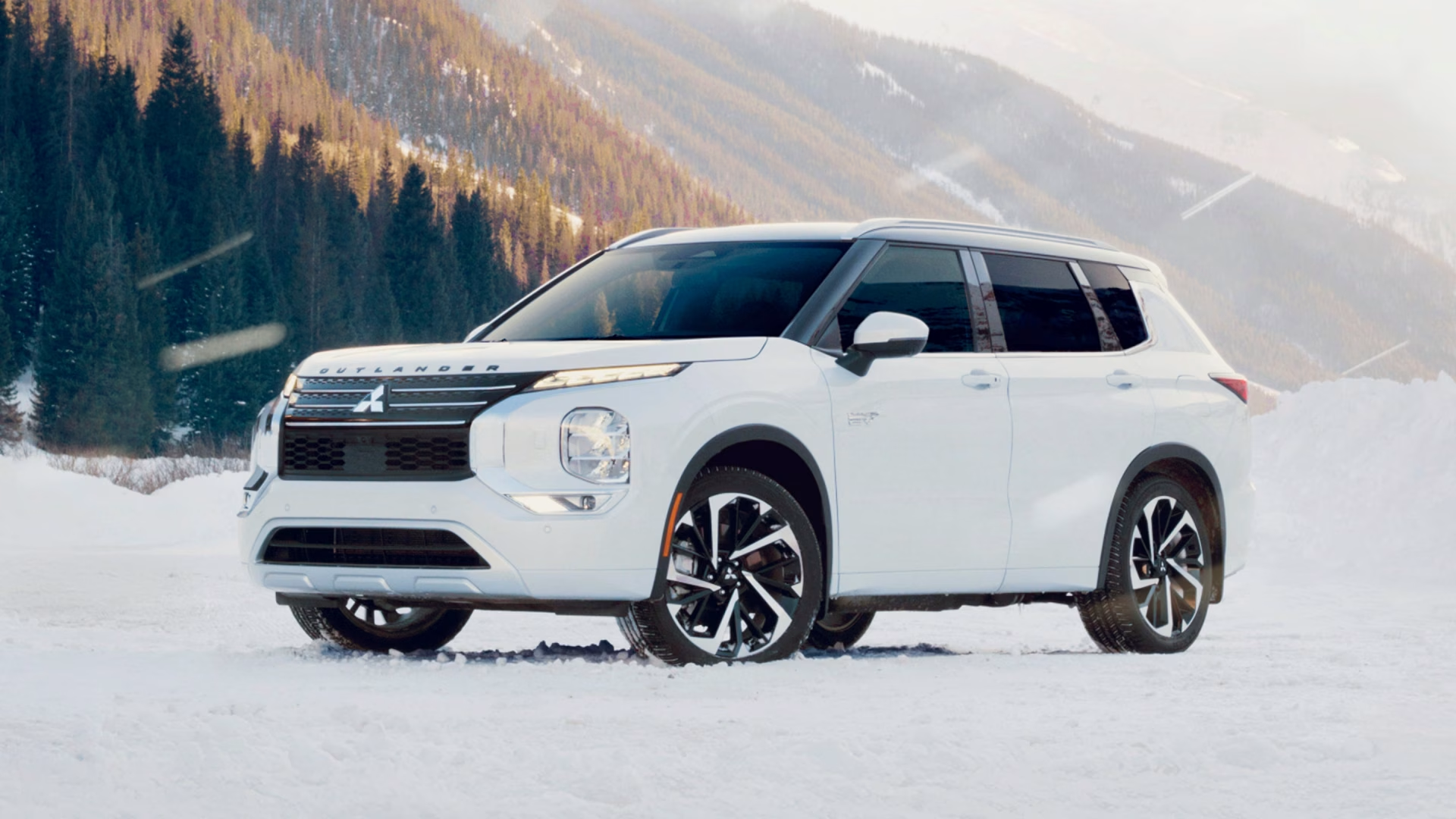
Today, the Outlander PHEV (Plug-in Hybrid) is their flagship. It is a massive sales success globally, offering practical, efficient motoring. It lacks the soul of an Evo, but it keeps the lights on.
Buying Advice: The "Crankwalk" Fear
If you are buying a classic Mitsubishi enthusiast car, you need to know the lingo.
- Crankwalk: A notorious issue in the 7-bolt 4G63 engines (late 2nd gen Eclipse/Talon). The crankshaft thrust bearing fails, destroying the engine. Itâs the boogeyman of the DSM community.
- AYC Pump: On Lancer Evos, the Active Yaw Control pump (which manages the differential) is prone to failure in cold climates due to corrosion. It is an expensive fix.
Mitsubishi today is a sensible choice for a family hauler, but its back catalog contains some of the most exciting machines ever to burn gasoline.