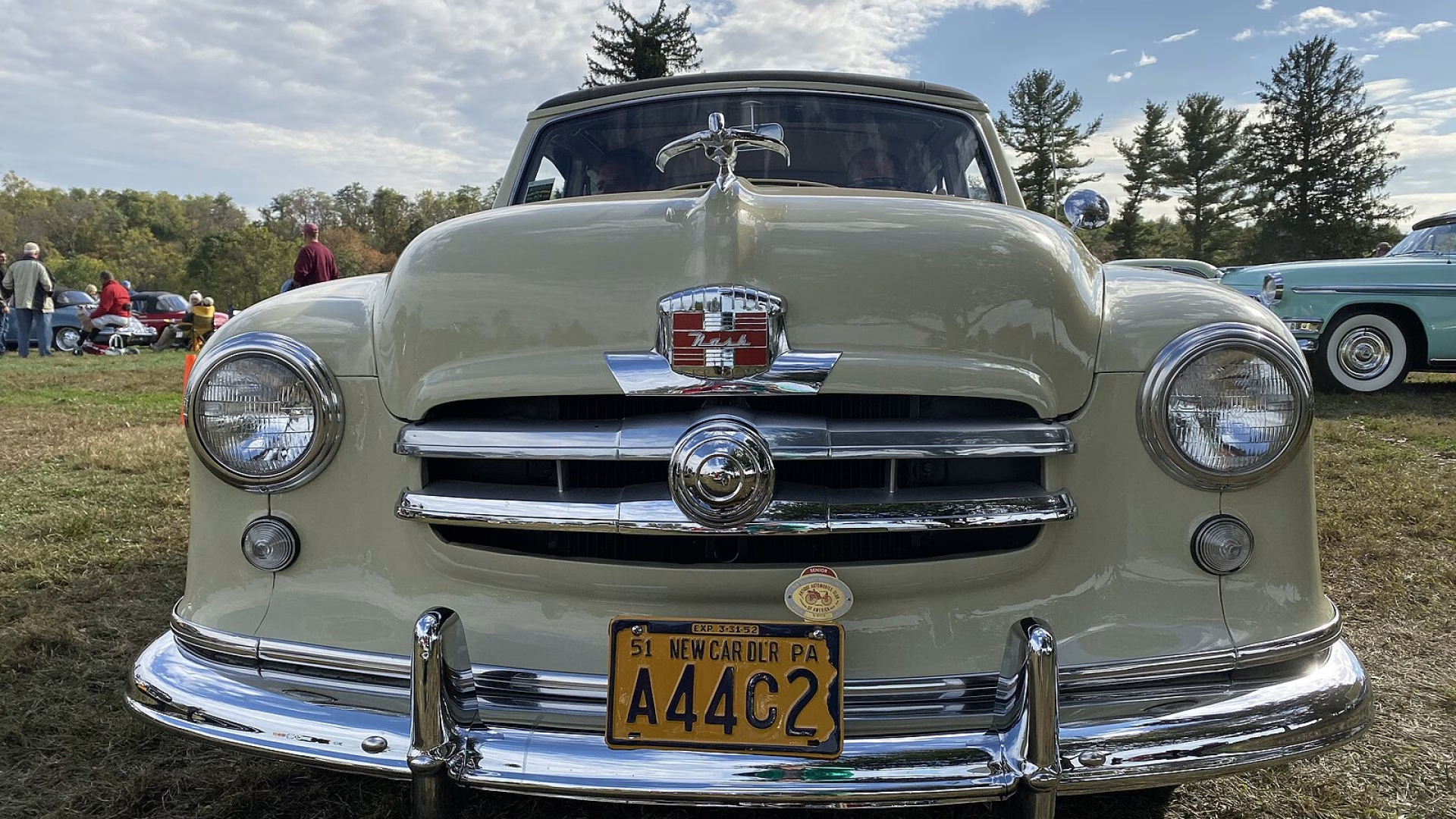
Nash: The Smartest Cars Ever Built in Detroit

Nash was the smartest guy in the Detroit room. While others built heavy body-on-frame beasts, Nash pioneered "Unitized" construction. From the aerodynamic Airflyte "Bathtub" to the compact Rambler that inspired the hit song "Beep Beep," Nash defined efficiency and innovation long before it was trendy.

Nash Hero Vehicle

Model Lineup

Explore the current production vehicles.

No models available yet.

Author

HugeGarage Editor

Published

Updated

6 Min Read

The Anti-Detroit Automaker

If Ford and Chevy were the popular quarterbacks of the automotive high school, Nash was the science club president who ended up becoming a tech billionaire. Based in Kenosha, Wisconsin, Nash (later merging to form AMC) didn't follow trends—they engineered solutions.

In 1941, Nash introduced the 600, the first mass-produced American unibody car. Instead of bolting a heavy body onto a heavy frame, they welded them together into a single, rigid "Unitized" shell. It was lighter, stronger, and rattled less. Today, almost every car on the road is built this way. Nash was just 40 years early.

The Rambler: The Little Car That Could

In 1950, Americans believed that "bigger was better." Nash disagreed. They launched the Rambler. But here was the genius move: They didn't sell it as a "cheap" car. They sold it as a high-end convertible landau with a radio and heater as standard equipment.

The Rambler was a smash hit. It was easy to park, sipped gas (30 MPG!), and was fun to drive. It became so popular that it inspired the 1958 hit song "Beep Beep," where a little Nash Rambler outruns a Cadillac. It officially birthed the American compact car segment.

The Bathtub: Aerodynamics Before It Was Cool

The 1949 Nash Airflyte is affectionately known as the "Bathtub Nash." Why? Because it looked like an upside-down bathtub. With all four wheels enclosed within the fenders (skirted fenders), it had incredibly low wind resistance.

But the real party trick was inside. The "Airliner Reclining Seats" could fold completely flat to form a bed. Nash marketed this for camping trips, though it certainly helped the car's popularity with teenagers at drive-in movies.

The Metropolitan: The First Grocery Getter

Before the Mini Cooper or the VW Beetle took over, there was the Nash Metropolitan. Built in England (using an Austin engine) but designed in America, it was tiny, toy-like, and adorable. It was marketed specifically as a "second car" for the suburban family—something for the wife to use for errands while the husband took the big car to work. It remains a cult classic today.

The Weather Eye: Inventing Modern AC

Next time you adjust the temperature in your car, thank Nash. In 1938, they introduced the Weather Eye system. Before this, car heaters were just stoves under the dashboard. Nash created the first fresh-air heating and ventilating system with a thermostat. It is the blueprint for every modern HVAC system in cars today.

The Hugegarage Verdict

Nash proves that brains beat brawn. They were decades ahead of the curve on safety (seatbelts), construction (unibody), and efficiency. Owning a Nash Rambler or Metropolitan isn't just about nostalgia; it's about celebrating the moment when the American auto industry actually started thinking about the future.

Frequently Asked Questions

Was the Nash Metropolitan an American or British car?

It was a unique hybrid. The Nash Metropolitan was designed in the United States by Nash, but it was manufactured in England by Austin (BMC).

It is arguably the first "captive import." It used an Austin engine and running gear, allowing Nash to sell a fuel-efficient subcompact car in America without investing millions in retooling their US factories.

What is the "Nash Bed" feature?

Nash is famous for its "Airliner Reclining Seats" that could fold completely flat to form a bed.

Introduced in the late 1930s and perfected in the post-war era, this allowed the front seat back to drop down flush with the rear seat cushion. It was marketed heavily to sportsmen and campers, effectively turning the sedan into a mobile sleeping quarter.

What is the "Bathtub" Nash?

"Bathtub Nash" is the affectionate nickname for the Airflyte models produced from 1949 to 1951.

Designed in a wind tunnel, these cars featured enclosed front and rear wheels and a smooth, rounded shape to minimize wind resistance. While controversial styling-wise, they were more aerodynamic than most modern cars, resulting in excellent fuel economy and a quiet ride.

Did Nash invent the unibody car?

Nash was the pioneer of mass-produced unibody construction in the US with the 1941 Nash 600.

Instead of bolting a body onto a heavy steel frame (like Ford or Chevy), Nash welded the body and frame into a single "Unitized" structure. This made the car lighter, stiffer, and safer, a method that is now the standard for almost all modern passenger cars.

What is the Nash Weather Eye?

The Weather Eye was the industry's first modern heating and ventilation system.

Leveraging technology from its sister company, Kelvinator (a refrigerator manufacturer), Nash introduced a system in 1938 that filtered fresh outside air and pressurized the cabin. It set the standard for how all modern car climate control systems operate today.

What is the Nash-Healey?

The Nash-Healey (1951-1954) was America's first post-war sports car, beating the Corvette to market by two years.

It was a global collaboration: the powertrain came from Nash (USA), the chassis from Donald Healey (UK), and the body styling from Pinin Farina (Italy). It was expensive and rare, but it finished 3rd overall at the 24 Hours of Le Mans in 1952.

Why did Nash merge with Hudson?

In 1954, Nash-Kelvinator merged with the Hudson Motor Car Company to form American Motors Corporation (AMC).

The goal was to create a "fourth big" automaker to compete with GM, Ford, and Chrysler. The Nash name was eventually phased out in 1957 in favor of the Rambler brand, which had become the company's best-selling line.

Was the Nash Rambler the first compact car?

Yes, the 1950 Nash Rambler is widely credited as the first successful modern American compact car.

Unlike previous small cars that were cheap and stripped-down ("economy cars"), the Rambler was well-equipped with radios and heaters as standard equipment. It proved that Americans would buy smaller cars if they were high-quality and stylish.

Why do Nash cars have enclosed wheels?

The enclosed wheel wells (skirted fenders) on models like the Airflyte and the Rambler were an engineering choice for aerodynamics.

By covering the wheels, Nash reduced air turbulence along the side of the vehicle. This improved high-speed stability and fuel efficiency, though it did make changing a flat tire significantly more difficult.

Did Nash offer seat belts?

Yes, Nash was a safety pioneer. In 1949, they became the first American manufacturer to offer seat belts as a factory option.

Unfortunately, the public was not yet safety-conscious, and very few buyers ordered them. Dealers famously discouraged them, fearing that installing seat belts would imply the car was unsafe.