
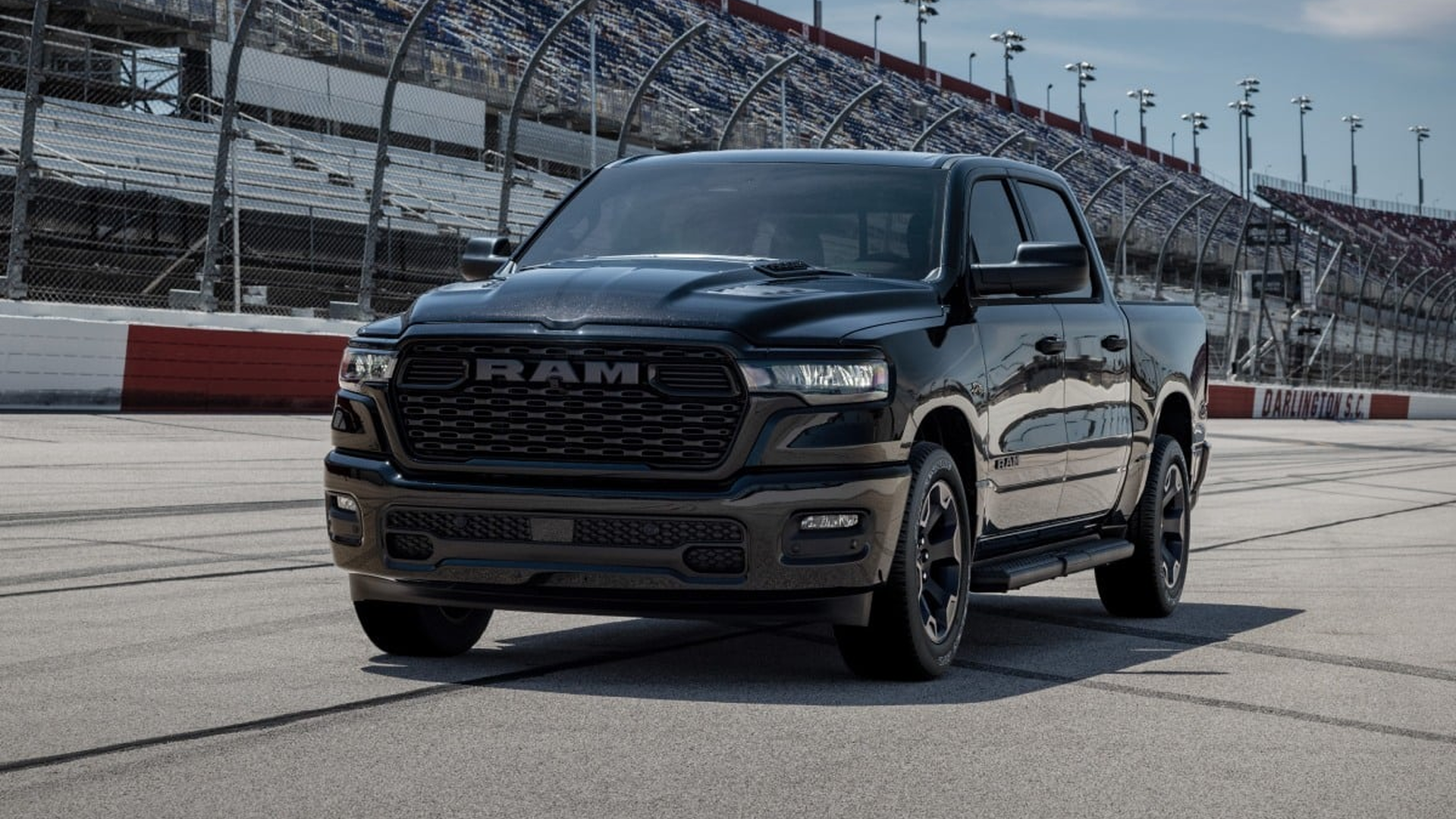
The Paradigm Shift in Full-Size Trucks
Few vehicles have disrupted the established American automotive hierarchy as violently as the Ram 1500. For decades, the domestic pickup truck market followed a strict, predictable formula: build a rigid ladder frame, bolt on a utilitarian steel cab, and install the stiffest leaf springs possible to maximize payload. Ride quality was entirely secondary. The Ram 1500 discarded this archaic blueprint. By prioritizing advanced suspension geometry, aerodynamic efficiency, and unapologetic cabin luxury, the engineers behind the Ram badge forced every rival OEM to completely rethink their flagship trucks. The modern Ram 1500 operates simultaneously as a high-capacity tow rig and an executive-class highway cruiser.
First Generation (1994-2001): The Big Rig Revolution
The story of the modern Ram 1500 begins with the 1994 model year, internally designated as the T-300 platform. Prior Dodge trucks languished in sales, burdened by dated, boxy styling. Chief designer Phillip E. Payne introduced a radical, polarizing aesthetic heavily inspired by Class 8 semi-trucks. The massive crosshair grille, separated fenders, and elevated hood line created an imposing, unmistakable silhouette.
Underneath the muscular exterior, Dodge offered a formidable powertrain lineup. The base 3.9-liter Magnum V6 provided adequate fleet power, but the true workhorses were the 5.2-liter and 5.9-liter Magnum V8 engines. These OHV powerplants featured optimized intake manifolds and sequential multi-port fuel injection, delivering massive low-end torque essential for pulling heavy trailers from a dead stop. Buyers opting for the heavier-duty 2500 and 3500 variants could select the legendary Cummins turbodiesel, but the 1500 series strictly maintained its gasoline-powered dominance in the half-ton segment.
Second Generation (2002-2008): Refining the Brawn
Moving into the new millennium, the DR platform launched for the 2002 model year. Engineers focused relentlessly on structural rigidity. A hydroformed tubular frame replaced the traditional stamped steel C-channel design. This manufacturing technique pushed water at extreme pressures into steel tubes, expanding them into complex shapes that offered vastly superior torsional stiffness. A stiffer frame allowed suspension tuning to focus purely on dampening rather than compensating for chassis flex.
The most crucial development of this era arrived in 2003 with the resurrection of the legendary Hemi V8. Displacing 5.7 liters, this modern interpretation utilized hemispherical combustion chambers to maximize airflow and fuel burn efficiency. It produced a staggering 345 horsepower and 375 lb-ft of torque, instantly making the Ram 1500 the most powerful mass-produced half-ton truck on the market. Paired with a fortified 5-speed automatic transmission, the Hemi-equipped Ram offered explosive acceleration and effortless highway passing capability.
Third Generation (2009-2018): The Coil-Spring Rebellion
The DS platform debuted for the 2009 model year, marking the most significant engineering leap in the history of the pickup segment. Ram engineers made a highly controversial decision.
The decision to abandon traditional leaf springs in favor of a five-link coil-spring rear suspension sent shockwaves through Detroit, fundamentally altering how Americans defined pickup truck ride quality.
Competitors claimed coil springs could never handle maximum payloads. Ram proved them wrong. The five-link setup utilized robust trailing arms to control axle wrap and a Panhard rod to locate the axle laterally. The result was a dramatic reduction in the harsh, jittery ride characteristic of unladen trucks over broken pavement. The truck tracked straight, absorbed impacts with European-sedan-like composure, and still maintained class-competitive towing metrics.
This generation also introduced the RamBox cargo management system-illuminated, lockable, and drainable storage bins integrated directly into the bed rails. Aerodynamics received intense scrutiny. The aggressive "big rig" styling evolved into a swept-back profile that cut through the wind to eliminate cabin noise and improve MPG. Active grille shutters automatically closed at highway speeds to reduce drag, demonstrating a commitment to efficiency alongside brute force.
Fourth Generation & Current Era (2019-Present): The Uncompromised Workhorse
Introduced in 2019, the DT platform represents the zenith of full-size truck engineering. The frame incorporates 98% high-strength steel, shedding nearly 100 pounds of chassis weight while increasing structural integrity. Maximum towing capacity swelled to 12,750 pounds when properly equipped.
Ram pioneered the eTorque mild-hybrid system. Replacing the traditional alternator with a belt-driven motor generator unit, eTorque added supplemental short-duration torque to the crankshaft during acceleration. This smoothed out transmission shifts and enabled a seamless, imperceptible start-stop system, significantly reducing urban CO2 emissions without compromising the visceral roar of the V8.
Interior Appointments and Technology
The interior of the modern Ram 1500 entirely blurs the line between a utility vehicle and a flagship luxury sedan. High-tier trims like the Laramie Longhorn and Limited feature genuine open-pore wood trims, heavily grained leather seating surfaces, and intricate stitching inspired by premium saddle craftsmanship. Acoustic glass and active noise cancellation systems create a vault-like cabin environment. The center stack is dominated by a massive, vertically oriented 12-inch Uconnect touchscreen, providing highly responsive navigation, climate controls, and seamless smartphone integration.
Technical Specifications & Capability
The Ram 1500 offers a highly configurable architecture, allowing buyers to select the precise combination of cab size, bed length, and drivetrain to meet specific operational requirements. The core specifications highlight the engineering depth of the platform.
- Standard Engine (Pentastar V6)
- A 3.6-liter naturally aspirated V6 producing 305 horsepower and 269 lb-ft of torque, integrated exclusively with the eTorque system for maximum efficiency.
- Legendary Power (Hemi V8)
- A 5.7-liter V8 displacing 5,654 cm3. It generates 395 horsepower and 410 lb-ft of torque. Cylinder deactivation technology shuts down four cylinders under light loads to conserve fuel.
- Transmission
- A TorqueFlite 8-speed automatic transmission. Utilizing precise software mapping, it keeps engines entirely within their optimal powerbands, executing rapid, buttery-smooth shifts.
- Drivetrain Options
- Available in standard rear-wheel drive or highly capable 4WD systems utilizing BorgWarner transfer cases with auto-engaging modes for variable traction conditions.
The Apex Predator: Ram 1500 TRX
In 2021, Ram unleashed the TRX. Built to dominate high-speed desert running, the TRX required extensive frame modifications to withstand brutal off-road impacts. Ram widened the track by eight inches and installed massive 35-inch Goodyear Wrangler Territory all-terrain tires.
Suspension duties were handed to exclusive Bilstein Black Hawk e2 adaptive shock absorbers. These sophisticated dampers continuously read the terrain, adjusting compression and rebound forces in milliseconds. To power this behemoth, engineers dropped in the supercharged 6.2-liter Hellcat V8. Generating 702 horsepower and 650 lb-ft of torque, the TRX shatters the 0-60 mph sprint in just 4.5 seconds. It stands as a monolithic achievement in high-performance off-road engineering.
Engineering the Ride: Active-Level Air Suspension
Beyond the standard coil-spring setup, Ram offers an exclusive Active-Level four-corner air suspension. This closed-loop system replaces mechanical springs with heavy-duty pneumatic bladders. The system auto-levels the truck when carrying heavy payloads, ensuring the headlight beams remain parallel to the road and steering geometry stays perfectly aligned. At highway speeds, the system automatically lowers the ride height by over half an inch to improve aerodynamics. When navigating treacherous off-road trails, the driver can manually raise the suspension to clear large obstacles, completely isolating the cabin from aggressive suspension articulation.
The Legacy of the Ram 1500
The Ram 1500 forced an entire industry to evolve. It proved that a truck could perform grueling, heavy-duty tasks on a construction site without punishing its occupants on the drive home. Through continuous innovation-from hydroformed frames and coil-spring rear axles to mild-hybrid V8s and exquisite luxury interiors-the Ram 1500 secured its position as the definitive American full-size pickup. It remains an engineering marvel, blending raw, unapologetic power with sophisticated execution.