
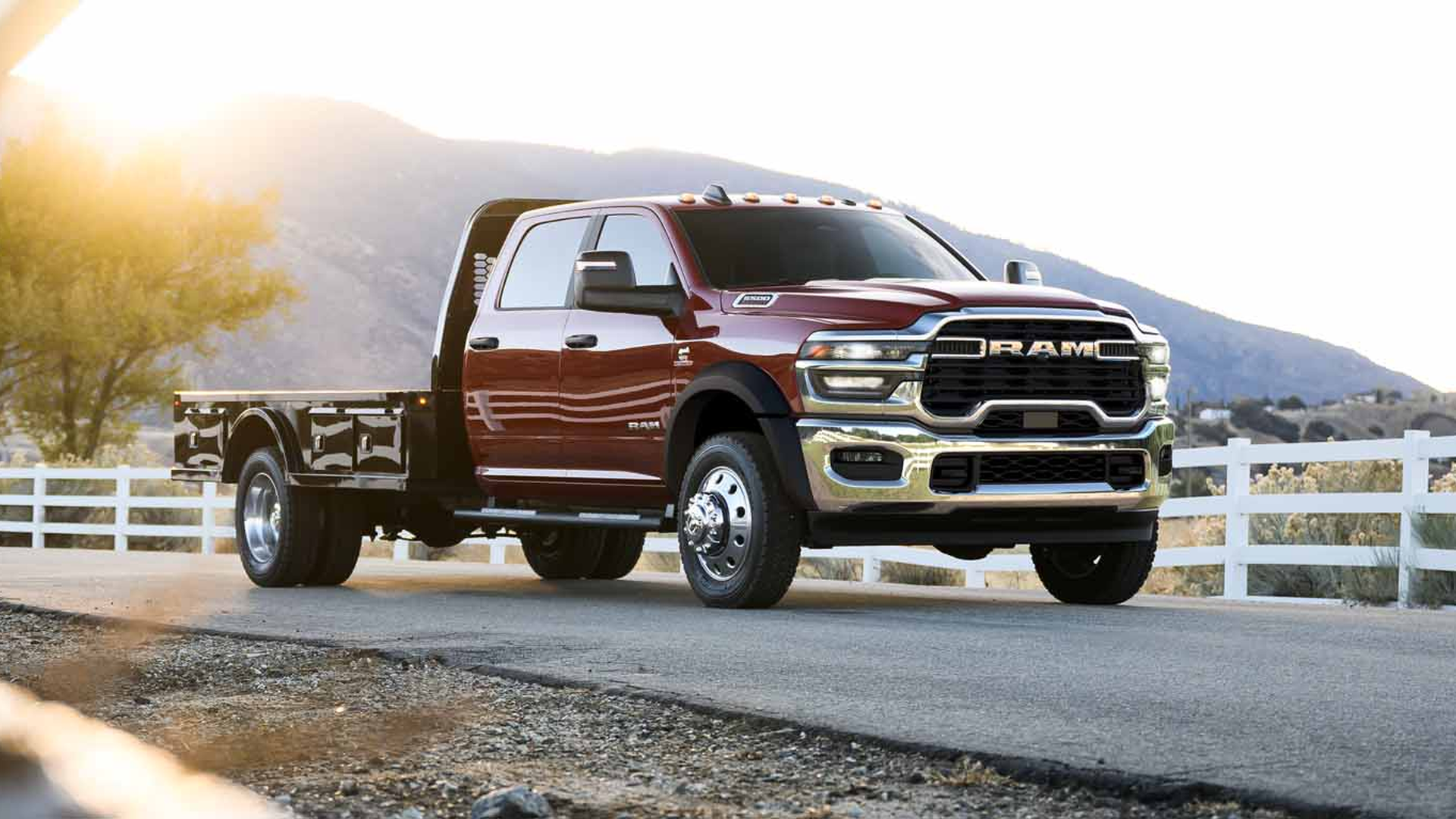
Commanding the Final Frontier of Chassis Cabs
The Class 5 commercial truck segment acts as the absolute boundary before crossing into the territory of massive, cumbersome Class 6 and 7 medium-duty box trucks. Vehicles in this extreme category carry a GVWR pushing up to 19,500 pounds. The Ram 5500 Chassis Cab dominates this exact space. It represents the ultimate intersection of pickup-truck drivability and sheer industrial force. By retaining a conventional cab design, it provides operators with familiar ergonomics and lower aerodynamic drag, while the chassis underneath functions as a ruthless, unyielding foundation for the heaviest vocational equipment on the market. Fire departments rely on it for wildland brush trucks; municipalities use it for massive articulating cranes; forestry crews load it with thousands of pounds of heavy timber gear. The 5500 is not a consumer vehicle modified for work; it is a purpose-built industrial implement designed to execute grueling tasks continuously without catastrophic mechanical failure.
The Architecture of Dominance: 50,000 PSI Steel
Mounting an 18,000-pound armored service body or a towering aerial bucket requires a structural skeleton entirely immune to torsional twisting. The Ram 5500 relies on an advanced steel matrix featuring a 50,000 psi yield strength. Engineers crafted the rear frame section with a perfectly flat-topped horizontal profile. Zero factory components-no suspension brackets, no exhaust routing pipes, no heavy wiring harnesses-protrude above the top lip of the frame rails. This pristine, uninterrupted steel surface allows commercial bodybuilders to mount massive vocational bodies absolutely flush against the chassis. This flush mounting ensures perfect load distribution and maintains a critically low center of gravity, effectively preventing lateral rollovers during emergency driving maneuvers.
The rear frame rails strictly adhere to the universal commercial 34-inch width standard, guaranteeing seamless compatibility with aftermarket service bodies manufactured anywhere in North America. Instead of the fully boxed frame rails utilized under consumer trucks, the 5500 features a heavy-duty C-channel design from the back of the cab to the rear bumper.
The engineering mandate to utilize C-channel rear frame rails provides crucial structural flexibility, allowing the heavy chassis to articulate slightly over deeply rutted construction sites without fracturing the steel, while simultaneously preventing corrosive moisture from trapping itself inside a sealed box section.
Thermodynamic Survival: The Cummins Commercial Calibration
A true vocational vehicle faces unique thermal challenges that destroy standard pickup engines. A heavy-duty wrecker recovering a flipped tractor-trailer might sit entirely stationary for fourteen hours on hot summer asphalt, running the engine continuously to spin high-pressure hydraulic pumps. To survive this brutal stationary duty cycle, the 6.7-liter Cummins turbodiesel inline-six engine receives a highly specialized commercial calibration. Displacing exactly 6,690 cm3, this deep-skirt cast-iron block generates 360 horsepower and 800 lb-ft of torque.
Engineers purposefully restrict the peak output compared to consumer models. This precise electronic detuning drastically reduces internal cylinder pressures and peak exhaust gas temperatures. It physically immunizes the block against thermal fatigue during endless stationary idling and massive, low-speed hauling up steep inclines. A high-pressure common-rail fuel injection system blasts diesel directly into the combustion chambers at extreme velocities, ensuring maximum volumetric efficiency. This precise metering actively suppresses particulate CO2 emissions to comply with the most stringent federal environmental standards, all while delivering the relentless pulling force required to move a fully loaded crane truck from a dead stop.
The Hemi V8 Alternative: Maximizing Physical Payload
While diesel powertrains dominate the heavy towing sector, numerous vocational fleets demand maximum physical payload capacity over raw trailering force. The heavy-duty 6.4-liter Hemi V8 answers this specific requirement perfectly. This naturally aspirated OHV engine delivers an explosive 410 horsepower and 429 lb-ft of torque. By selecting the gasoline engine, fleet operators completely avoid the massive physical weight penalty associated with the cast-iron diesel block and its complex, weighty exhaust aftertreatment systems.
This massive reduction in curb weight transfers directly to the chassis capacity, legally allowing the truck to carry thousands of additional pounds in its service body. The Hemi utilizes sophisticated Fuel Saver Technology, instantly deactivating four of the eight cylinders under light throttle loads to drastically reduce urban fuel consumption when the truck is returning to the utility yard empty.
Harnessing Rotational Violence: The Aisin AS69RC
A Class 5 chassis must actively power the industrial machinery bolted to its frame. The Ram 5500 offers highly sophisticated Power Take-Off (PTO) integration. Paired exclusively with the heavy-duty Aisin AS69RC six-speed automatic transmission, the system provides dual-sided PTO access. Upfitters can seamlessly bolt massive hydraulic pumps, high-capacity air compressors, or industrial electrical generators directly to the left or right side of the transmission housing. This setup drives external equipment directly from the engine's immense rotational force.
The Aisin gearbox represents the absolute pinnacle of commercial kinetic management. It features an oversized torque converter and heavily reinforced planetary gear sets engineered specifically to withstand the violent, instantaneous shock loads of sudden PTO engagement. A specialized transmission control module communicates constantly with the engine control unit, locking the torque converter early in the rev range. This action drastically reduces transmission fluid temperatures during severe, low-speed hauling operations, protecting the internal clutches from thermal vaporization.
The Electronic Fortress: VSIM Architecture
Modern vocational bodies require complex electronic integration. Splicing raw aftermarket wires directly into a modern CAN bus architecture invites catastrophic, unresolvable software failures. Ram eliminated this industrial hurdle entirely by engineering the Vehicle System Interface Module (VSIM). This highly secure, firewall-protected module acts as the dedicated electronic translator between the truck's main computer network and the aftermarket vocational equipment.
The VSIM provides over 70 specific, programmable digital inputs and outputs. Upfitters can program the module to automatically trigger high-idle engine speeds the exact second a massive hydraulic water pump is engaged. They can electronically restrict the transmission from shifting out of Park while stabilizing crane outriggers are deployed. An auxiliary switch bank seamlessly integrated into the center dashboard provides the operator with six heavy-duty toggle switches, keeping the cabin entirely free of dangerous, jury-rigged aftermarket wiring.
Massive Axle Geometry and Severe Braking Force
The physical connection to the pavement determines a vehicle's absolute hauling threshold. The Ram 5500 utilizes a massive solid front axle engineered specifically to support heavy steel snowplows, massive brush guards, and front-mounted winches without suffering rapid alignment degradation or premature ball joint failure. Out back, a commercial-grade dual-rear-wheel axle distributes extreme vertical loads across four independent tires. This widened footprint provides critical lateral stability for high-center-of-gravity upfits, fiercely resisting the physical urge to roll during emergency evasive maneuvers.
Stopping a kinetic mass approaching 40,000 pounds requires severe thermal capacity. Massive 15-inch vented brake rotors absorb and dissipate extreme heat rapidly. Drivers towing heavy equipment trailers rely heavily on the integrated smart diesel exhaust brake. By utilizing the variable geometry turbocharger to artificially restrict exhaust flow, the engine creates massive internal backpressure. This physically slows the entire rig on steep, mountainous downgrades without the driver ever needing to touch the physical brake pedal, saving the friction material from catastrophic failure.
Industrial Fluid Management and Range
Cooling a rig operating consistently near its maximum weight requires immense thermal extraction. The 5500 features a massive frontal grille opening designed to funnel turbulent air directly into a heavy-duty cooling module. This stack includes an oversized primary radiator, a high-capacity charge-air cooler for the turbocharger, and a dedicated transmission fluid cooler. Dual alternators generate up to 440 amps of constant electrical current, effortlessly powering onboard medical inverters and extreme auxiliary lighting arrays without draining the primary battery banks.
Operational range dictates commercial fleet efficiency. The chassis accommodates a massive 52-gallon steel fuel tank mounted securely between the rear frame rails, safely positioned behind the heavy-duty rear axle. Fleet buyers can option an additional 22-gallon mid-ship tank, bringing the total onboard diesel capacity to an incredible 74 gallons. This eliminates the need for dangerous, aftermarket bed-mounted transfer tanks.
Ergonomics for the Extreme Operator
The operator's cabin scales precisely to the financial demands of the fleet. The base Tradesman trim operates as an unkillable utilitarian workspace featuring heavy-duty vinyl flooring and high-abrasion seating fabrics designed to withstand thick leather work belts. Conversely, operators managing long-haul heavy equipment transport routes can specify the Laramie or Limited trims. These upper-tier configurations introduce acoustic laminated glass, deeply bolstered leather seating with integrated heating, and massive 12-inch Uconnect touchscreen interfaces. The advanced infotainment system features dedicated commercial routing software that actively avoids low overpasses and weight-restricted bridges based on the exact dimensions of the upfitted vehicle.
Technical Specifications & Class 5 Capability
The engineering depth of the Ram 5500 Chassis Cab is best understood through its unyielding specifications. These metrics represent absolute dominance in the Class 5 sector.
- Standard Powertrain (6.4L Hemi V8)
- A heavy-duty naturally aspirated V8 producing 410 horsepower and 429 lb-ft of torque. Paired with the TorqueFlite 8-speed automatic, it maximizes available physical payload capacity.
- Optional Powertrain (6.7L Cummins Turbodiesel)
- A commercially calibrated inline-six generating 360 horsepower and 800 lb-ft of torque. Mated exclusively to the Aisin AS69RC 6-speed automatic to survive endless heavy PTO operation.
- Maximum Cab-to-Axle (CA) Lengths
- Available in 60-inch, 84-inch, 108-inch, and massive 120-inch configurations to perfectly accommodate everything from standard utility boxes to heavy-duty flatbed wreckers.
- Maximum Gross Vehicle Weight Rating (GVWR)
- Peaks at an immense 19,500 pounds, firmly anchoring the chassis at the absolute limit of the Class 5 commercial weight segment.
- Maximum Trailering Capacity
- Capable of pulling up to 35,150 pounds when properly configured with the Cummins turbodiesel, a commercial gooseneck hitch setup, and the aggressive 4.89 rear axle ratio.
The Unyielding Titan of Heavy Industry
The Ram 5500 Chassis Cab bridges the critical gap between standard heavy-duty pickups and traditional Class 6 commercial rigs. It delivers relentless, indestructible capability while actively protecting the operator with advanced telematics, sophisticated electrical firewalls, and refined interior ergonomics. From the punishing, dust-choked logging roads of the Pacific Northwest to the freezing municipal utility yards of the East Coast, this flat-frame titan remains the definitive, unyielding foundation of heavy American industry. It operates silently in the background of modern infrastructure, delivering raw power and sophisticated control exactly where the job site demands it the most.