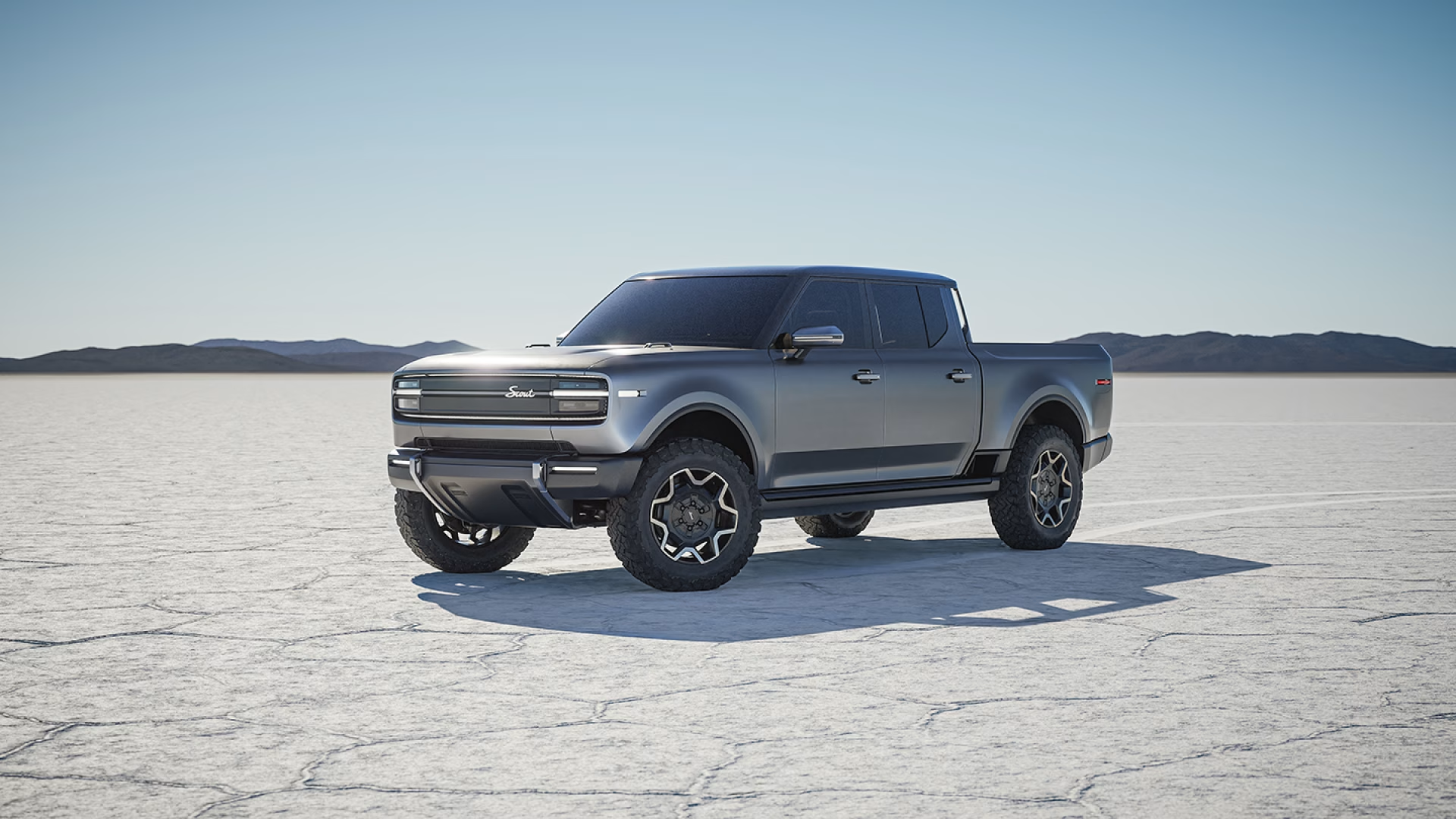
It is rare that a ghost comes back to life, but in the automotive world, miracles happen. From 1960 to 1980, the International Harvester Scout defined the American off-road scene. It was the anti-Jeep: boxy, agricultural, and unbreakable. Then, it vanished. Fast forward to the 2020s, and Volkswagen Group did something unexpected: they bought the rights, created an independent American company, and brought the nameplate back. But Scout Motors isn't just a nostalgia play; it is a direct challenge to the complexity of modern vehicles.
The Philosophy: Machines, Not Gadgets
In an era where car interiors look like Apple Stores and require a touchscreen menu just to open the glovebox, Scout Motors slammed its fist on the table. Their design ethos is "Tactile."
Scout engineers famously fought against the "screenification" of the car. When you sit in a Scout Traveler or Terra, you find real buttons. Volume knobs. Toggle switches for climate control. Mechanical door handles. They understand that when you are bouncing down a trail in Moab, you can't look at a screen to adjust the A/C. You need muscle memory. This rejection of excessive digitization has made Scout an instant hero among enthusiasts who feel alienated by modern tech.
The Harvester: Solving the EV Towing Problem
Scout made a critical observation: Americans love the idea of EVs (torque, silence), but they hate the reality of towing with them (range drops by 50%). Enter the Harvester system.
While Scout offers pure electric vehicles (BEV), the game-changer is the EREV (Extended Range Electric Vehicle) option. It uses a small gasoline engine solely as a generator. It never drives the wheels directly; it just recharges the battery while you drive.
The result? 500+ miles of range.
This means you can tow your Airstream across Montana without hunting for a fast charger every 90 minutes. It bridges the gap between the electric future and the gasoline reality.
The Models: Traveler and Terra
Scout kept it simple. Two models, one platform.
1. The Traveler (SUV)
The spiritual successor to the Scout II. It features a distinct "up-kick" in the rear window line, a direct nod to its ancestor. It has a split tailgate (perfect for sitting on at a tailgate party) and a massive glass roof. But unlike a crossover, this is a body-on-frame beast. It is designed to fit 35-inch tires from the factory. It targets the Ford Bronco and Rivian R1S but offers a more utilitarian, "hose-it-out" vibe.
2. The Terra (Truck)
The pickup variant. It competes directly with the Rivian R1T and the mid-size gas trucks. It features a 5.5-foot bed with power outlets to run your tools or campsite. The front "bench seat" option allows for three-across seating, a romantic callback to the trucks of the 70s.
Engineering: Solid Axles and 800 Volts
Off-road nerds, rejoice. Scout didn't go fully independent suspension like Rivian. They kept a solid rear axle. Why? Because solid axles are durable, articulate better over rocks, and are easier to modify. It signals that Scout is serious about rock crawling, not just mall crawling.
On the tech side, the purely electric versions use an 800-volt architecture (likely shared with Porsche/Audi tech), allowing for blazing fast charging speeds (up to 350 kW). Itâs the perfect marriage of old-school mechanical grit and new-school electrical speed.
The Factory: "Made in America" is Not a Slogan
Volkswagen wrote a massive check to build a dedicated factory in Blythewood, South Carolina. This is crucial. Scout is an independent American entity. The design team is in Michigan. The engineering is in America. They are determined to avoid the "German car dressed as a cowboy" stigma. By building them here, they also qualify for federal tax incentives, making the price point (targeting under $60k entry) highly competitive.
Direct-to-Consumer: No Dealership Markups
Taking a page from Tesla and Rivian, Scout announced a direct-to-consumer sales model. No haggling with a dealer who adds a $10,000 "Market Adjustment" because the car is popular. You order online, you pick the specs, and you get the price. In the US market, where dealership experiences are often universally hated, this is a massive selling point.
The Community Connection
Before they even revealed the car, Scout spent years talking to owners of vintage Internationals. They went to forums, meetups, and barns. They asked, "What made the original special?" The answer was community and customization. As a result, the new Scouts are designed with "accessory points" everywhere. They want you to drill into bumpers, mount winches, and customize the rig. They are encouraging the aftermarket, not fighting it.
Why Scout Matters to You
You are interested in Scout because you are tired of cars that feel like appliances. You want an EV for the torque and the savings, but you don't want to give up the feeling of driving a machine. You want a vehicle that can get you home when the pavement ends and the cell service dies.
Scout represents the "Third Way." Itâs not a gas guzzler, but itâs not a fragile computer. Itâs a tool. And for many Americans, a tool is exactly what they need.
The Hugegarage Verdict
Scout Motors is the most promising revival we have seen in decades. By identifying the two biggest pain points of modern EVs (lack of buttons and poor towing range) and solving them with the Harvester system and a tactile interior, they have positioned themselves to steal customers from Jeep, Ford, and Rivian. The legend hasn't just returned; it has evolved.