
Forging the Exoskeleton: A Metallurgical Revolution
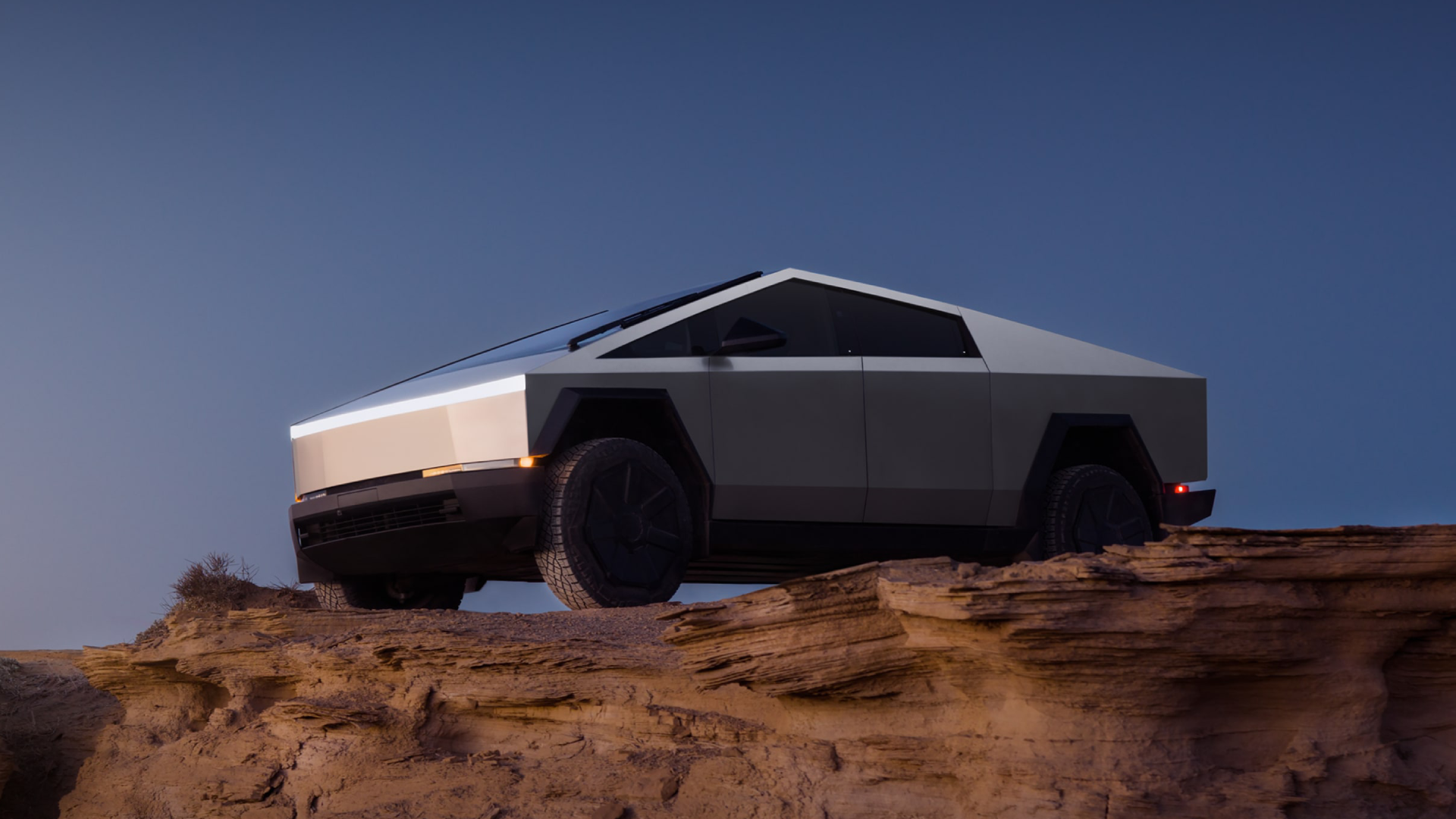
Legacy automakers rely on a traditional body-on-frame architecture, bolting a fragile sheet-metal cab and cargo bed onto heavy steel frame rails. The Tesla Cybertruck rejects this premise entirely. It utilizes an exoskeleton approach, pushing the primary structural mass to the extreme outside of the vehicle. The exterior skin is manufactured from Ultra-Hard 30X Cold-Rolled stainless steel. This proprietary alloy resists denting, completely repels long-term corrosion, and provides substantial ballistic protection against 9mm submachine-gun fire.
Manufacturing a hull of this immense strength forced a complete reinvention of the assembly line. The stainless-steel panels are so incredibly rigid that attempting to stamp them using traditional hydraulic presses simply shatters the expensive steel dies. To achieve the distinctive, angular geometry of the truck, engineers utilize a technique called air bending. High-power lasers score a microscopic trench along the interior face of the metal sheet, allowing heavy machinery to fold the steel sharply along the cut line like metallic origami.
By completely eliminating traditional paint shops and chemical clear coats, Tesla removed one of the most toxic and energy-intensive stages of vehicle production, drastically reducing the factory CO2 footprint while providing a scratch-proof exterior.
Gigacasting: Consolidating the Chassis
Beneath the stainless-steel armor, the Cybertruck rests upon massive aluminum structures produced by 9,000-ton Giga Presses. These machines inject molten aluminum under immense pressure to form single-piece front and rear underbodies. This megacasting process eradicates hundreds of individual stamped steel components and their associated robotic welds. Reducing the total part count drastically minimizes overall vehicle weight and permanently eliminates the high-frequency squeaks and chassis rattles that plague aging traditional trucks.
The massive high-voltage battery pack connects the front and rear aluminum castings. Rather than serving as dead weight bolted into the floorpan, the pack functions as a stressed structural member. The heavy lithium-ion modules physically carry mechanical loads, amplifying the torsional rigidity of the BEV platform. When you pitch the heavy truck aggressively into a steep canyon corner, the chassis refuses to flex, keeping the suspension geometry perfectly aligned and the massive all-terrain tires firmly planted against the asphalt.
The 800-Volt and 48-Volt Electrical Pivot
The Cybertruck forces the global automotive supply chain into the modern era by abandoning archaic electrical standards. Since the 1950s, the entire industry-from the smallest commuter cars to massive commercial rigs-relied on a 12-volt low-voltage architecture. Tesla upgraded the entire low-voltage network to 48 volts. Quadrupling the voltage means the physical current drops by a factor of four to deliver the exact same power. This mathematical reality allowed engineers to utilize radically thinner copper wiring throughout the entire vehicle, shedding hundreds of pounds of useless weight and drastically reducing electrical resistance.
Propulsion energy flows through an 800-volt high-voltage architecture. High-voltage systems permit ultra-fast direct-current charging, allowing the massive battery pack to absorb extreme amperage at Tesla Superchargers without overheating the internal copper busbars. Pushing 800 volts to the drive units also minimizes thermal buildup during repeated, violent acceleration runs, ensuring the motors deliver peak horsepower continuously without succumbing to thermal throttling.
Steer-by-Wire: Eliminating the Mechanical Linkage
Sitting in the driver's seat reveals a rectangular steering wheel and absolutely zero physical connection to the front wheels. The Cybertruck employs a true steer-by-wire system. Turning the steering yoke sends highly encrypted digital signals to a primary ECU. This computer instantly processes the steering angle and commands redundant electric motors mounted directly on the front steering rack to turn the tires.
This digital architecture enables a dynamically variable steering ratio. At low speeds in a cramped parking lot, turning the yoke a mere 170 degrees in either direction rotates the front wheels to their maximum lock. You navigate tight spaces with minimal hand movement. At 80 mph on the interstate, the software heavily reduces the ratio, requiring larger yoke inputs to execute lane changes, completely eliminating twitchy, dangerous high-speed handling. Furthermore, the system integrates active rear-wheel steering. The rear tires articulate up to 10 degrees in the opposite direction of the front wheels at low speeds, shrinking the turning radius of this massive pickup to rival that of a standard mid-size sedan.
Cyberbeast: Tri-Motor Domination
Propulsion dynamics dictate the hierarchy of the truck segment. The Cybertruck lineup features a highly capable Dual Motor AWD variant, but the pinnacle of the engineering team's execution is the Cyberbeast. This tri-motor leviathan places a highly efficient alternating current induction motor on the front axle and two independent Permanent Magnet Synchronous motors on the rear axle. The combined output is a staggering 845 horsepower.
You pin the accelerator pedal to the floorboard, and the digital traction control system calculates grip at a microsecond level. The heavy truck squats slightly on its rear suspension and violently launches from a dead stop to 60 mph in 2.6 seconds. This hypercar-level thrust humiliates dedicated European sports cars, and the vehicle executes this acceleration while possessing the structural mass required to haul heavy construction equipment.
Cyberbeast Technical Specifications
- Powertrain Architecture
- Tri-Motor All-Wheel Drive
- Peak Horsepower
- 845 hp
- Wheel Torque
- 10,296 lb-ft
- Acceleration (0-60 mph)
- 2.6 seconds
- Quarter Mile Time
- 11.0 seconds
Battery Chemistry and the 4680 Architecture
Energy density remains the ultimate metric for electric heavy-hauling. The Cybertruck utilizes the massive 4680-format cylindrical cells (measuring 46mm in diameter and 80mm in height). These cells employ a tabless design, radically lowering internal electrical resistance and allowing the battery to shed heat rapidly during intense discharging. The massive energy storage allows the Dual Motor variant to achieve an EPA-estimated 340 miles of range.
For owners demanding extreme cross-country touring or hauling heavy dual-axle travel trailers, Tesla engineered an optional range extender. Unlike a combustion generator, this is a supplementary high-voltage battery pack that physically mounts against the bulkhead inside the cargo bed. Plugging into the main electrical harness, it pushes the theoretical unladen driving range well beyond 470 miles, providing a massive buffer against the aerodynamic penalties of towing.
Adaptive Air Suspension and Off-Road Geometry
Conquering the Rubicon Trail requires immense clearance and geometric adaptability. The Cybertruck floats on a fully adaptive air suspension system. The onboard computers constantly analyze road surface impacts, vehicle speed, and payload sensors to adjust the shock absorber damping rates in real-time. Cruising on the highway, the truck lowers itself automatically to slice through the air, contributing to an incredibly slippery 0.33 Cd.
Transition to a jagged rock crawl, and the driver can command the suspension to extract mode, lifting the completely flat, armor-plated underbelly to a staggering 17.4 inches of ground clearance. The lack of a bulky front engine block and low-hanging rear differentials provides exceptional approach and departure angles, allowing the vehicle to scale steep rock faces without smashing its bumpers into the granite.
The Vault and Powershare Utility
The cargo bed, officially dubbed the Vault, spans 6 feet in length and 4 feet in width. It features sheer, composite side walls devoid of obtrusive wheel-well humps, allowing owners to slide standard 4x8 sheets of plywood flat onto the floor. Pressing a physical button on the tailgate rail deploys the motorized, armored tonneau cover. The interlocking aluminum slats slide seamlessly out of the roofline, sealing the bed completely to protect 120 ft3 of cargo from weather and theft while radically smoothing the aerodynamic slipstream behind the cab.
Utility extends directly to the electrical grid. The Powershare bi-directional charging system transforms the Cybertruck into a rolling mobile power plant. Owners can plug heavy-duty air compressors, welding equipment, or entire recreation vehicles into the 240-volt outlets mounted inside the Vault. The truck outputs up to 11.5 kW of continuous alternating current. During a severe residential blackout, a properly wired home can pull electricity directly from the Cybertruck's battery pack, keeping refrigerators running and lights illuminated for several days without burning a single drop of diesel fuel. The Cybertruck ignores incremental improvement, delivering a radical manifesto on the absolute limits of modern automotive engineering.