
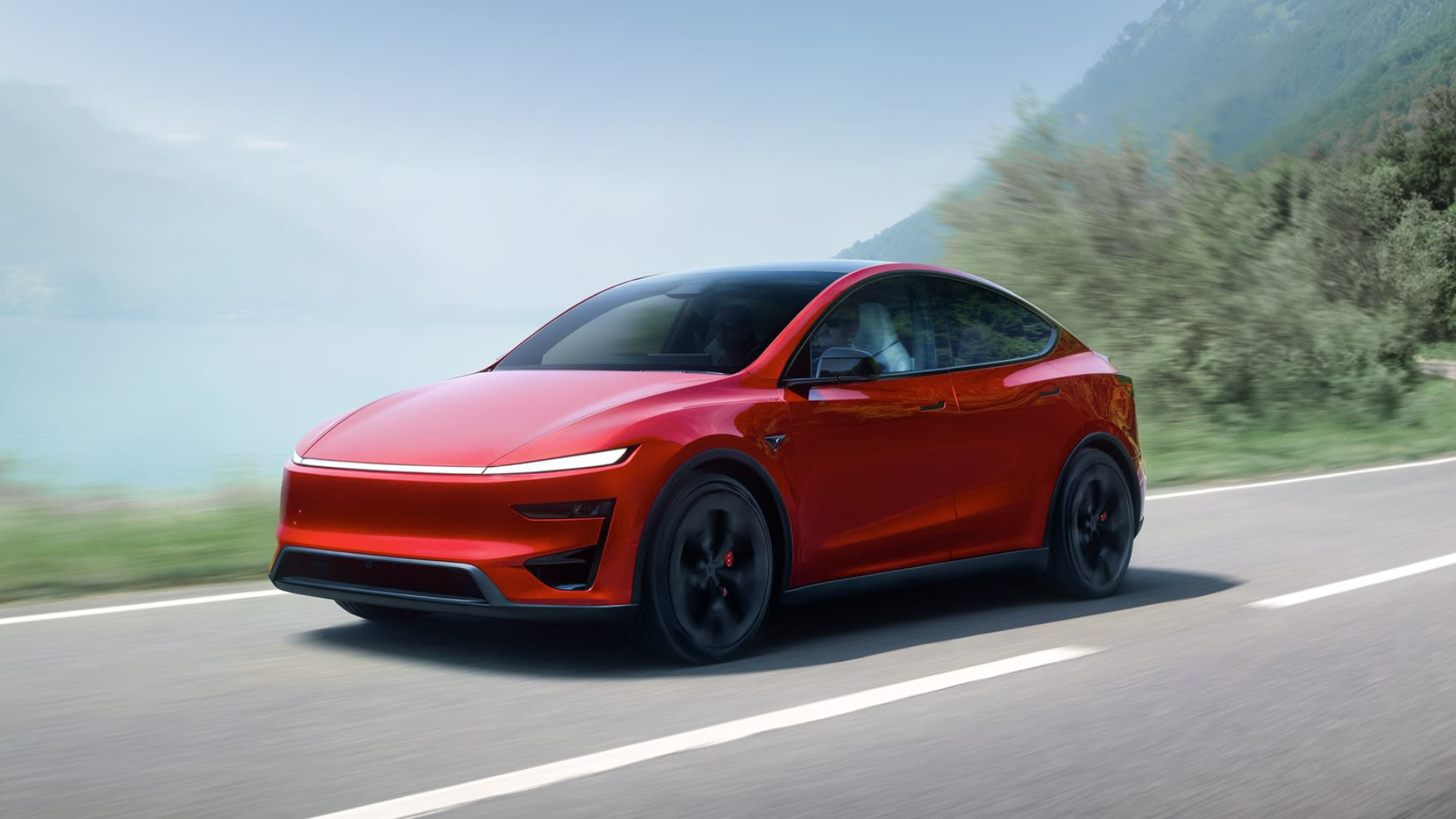
Redefining Global Utility
The Tesla Model Y changed the fundamental trajectory of the automotive industry. It proved that a mass-market electric vehicle could deliver hypercar acceleration, executive-level technological integration, and heavy-duty utility without utilizing a single drop of gasoline. Engineers completely rejected the compromised, shared internal-combustion platforms utilized by legacy OEM brands. The Model Y is a native BEV built entirely from a blank-sheet design. This allowed for absolute optimal packaging.
Placing the massive, heavy high-voltage battery pack entirely flat beneath the floor pan drops the center of gravity to exotic sports car levels. This extreme low-slung mass drastically neutralizes body roll during aggressive cornering. You push the steering wheel into a sharp hairpin, and the heavy crossover remains utterly flat, defying its own physical height. Up front, the vehicle employs a short/long arm double-wishbone suspension featuring a virtual steer axis, which provides exceptional camber control during high-speed cornering. The rear utilizes a complex multi-link setup to isolate passengers from harsh road impacts.
In 2023, the Tesla Model Y achieved unprecedented historical dominance, officially surpassing legacy combustion stalwarts to become the highest-selling vehicle of any kind globally.
Megacasting and Structural Armor
The manufacturing process behind the Model Y is as revolutionary as the powertrain itself. Tesla fundamentally changed automotive assembly by implementing massive high-pressure aluminum die-casting machines, colloquially known as Giga Presses. These towering machines force molten aluminum into massive molds under immense pressure, producing single-piece front and rear underbody castings. This specific process eradicated over a hundred individual stamped steel parts and their associated robotic welds from the assembly line.
The resulting structural rigidity is phenomenal. When you drive over harsh, washboard dirt roads, the single-piece rear casting absorbs the kinetic energy without flexing. It completely eliminates the squeaks and rattles inherent to complex multi-part chassis designs. The latest iterations emerging from global production facilities push this envelope further by utilizing a structural battery pack. Instead of bolting a separate battery enclosure into the frame, the energy storage cells are glued directly into the chassis, physically carrying mechanical loads. The front seats bolt directly to the top of the battery pack. This creates a fortified, ultra-rigid vault that protects occupants from severe side-impact collisions while significantly reducing overall vehicle curb weight.
Dual Motor Propulsion and Precision Torque Vectoring
Propulsion configurations dictate the driving experience. Base models utilize a single, rear-mounted Permanent Magnet Synchronous Reluctance Motor. This specific magnetic design reduces the reliance on heavy rare-earth metals while maintaining exceptional thermal efficiency during high-speed cruising. You depress the accelerator, and the motor delivers instant, violent torque, breaking traction seamlessly before the traction control ECU intercepts the slip.
Dual Motor Long Range and Performance variants add an alternating current induction motor to the front axle. Because no physical driveshaft links the front and rear wheels, the vehicle relies entirely on digital torque vectoring. The onboard computers adjust the power output at both axles independently in a matter of milliseconds. If the right rear tire encounters a patch of black ice, the system instantly cuts amperage to that specific wheel and forces maximum power to the front axle to maintain forward momentum. The system reacts to physical wheel slip infinitely faster than any mechanical transfer case ever could.
Model Y Long Range Technical Specifications
- Powertrain Architecture
- Dual Motor All-Wheel Drive
- Peak Horsepower
- 384 hp
- Peak Torque
- 376 lb-ft
- Acceleration (0-60 mph)
- 4.8 seconds
- Battery Capacity
- 82 kWh Lithium-Ion
- EPA Estimated Range
- 310 miles
Thermoregulation: The Octovalve Mastery
Managing the extreme heat generated during a 250-kilowatt Supercharging session requires brilliant thermodynamics. Tesla discarded traditional, independent cooling loops for the battery, motors, and passenger cabin. They integrated these disparate systems using the patented Octovalve. This complex, eight-way manifold acts as the central nervous system for vehicle thermals.
The Octovalve scavenges waste heat generated by the spinning electric motors and redirects it to warm the high-voltage battery pack on freezing winter mornings. A warm battery accepts charge much faster and discharges energy more efficiently. Conversely, the system utilizes a highly efficient heat pump to condition the passenger cabin, draining significantly less high-voltage energy than primitive resistive heating coils. This thermal orchestration dramatically improves cold-weather driving range, solving one of the most critical engineering challenges facing electric vehicles in northern climates.
Battery Chemistry and Cell Evolution
Energy storage limits define electric touring capability. The Model Y employs distinct battery chemistries to optimize production costs and vehicle lifespan. Standard Range vehicles often employ Lithium Iron Phosphate (LiFePO4) cells. This highly stable chemistry tolerates charging to 100 percent daily without suffering severe cell degradation.
Long Range and Performance models utilize a Nickel-Cobalt-Aluminum or Nickel-Manganese-Cobalt blend. These high-nickel formulas achieve significantly higher energy density, storing an immense amount of kilowatt-hours in the exact same physical footprint. Tesla continually evolves the physical cell architecture, shifting from the industry-standard 2170 cylindrical cells to the massive 4680 format in specific production runs. The larger 4680 cell (46mm wide by 80mm tall) eliminates the internal tab, reducing electrical resistance and allowing the battery to shed heat rapidly under heavy acceleration. The vehicle outputs absolutely zero tailpipe emissions, aggressively offsetting its manufacturing CO2 footprint within its first year of operation.
Aerodynamic Slicing and Acoustic Isolation
Atmospheric resistance brutally punishes electric driving range at interstate speeds. The exterior of the Model Y was shaped entirely by the wind tunnel. The complete lack of a massive internal combustion radiator allowed designers to seal the front fascia perfectly. Air simply glides over the hood rather than slamming into a vertical grille.
The aerodynamic optimization is relentless. Flush-mounted door handles remain fully retracted until the driver approaches, ensuring ambient air slips uninterrupted down the vehicle's flanks. The swept-back, teardrop roofline gently manages the rear slipstream to minimize low-pressure drag. The standard aero wheel covers physically slice the turbulent air churning around the spinning tires. Together, these elements achieve a remarkable 0.23 Cd. To combat the wind noise naturally amplified in a silent electric cabin, engineers installed acoustic laminated glass on the front windows and thoroughly insulated the wheel wells.
The Minimalist Cabin and Massive Cargo Utility
Opening the door reveals an interior that actively rejects a century of automotive design tradition. The dashboard is entirely devoid of physical buttons, tactile dials, or analog gauges. A single 15.0-inch high-definition touchscreen floats in the center of the dash, acting as the sole command interface for the entire vehicle. From adjusting the steering wheel height to managing the wipers, every function routes through this central glass panel.
Utility remains the core directive of the crossover segment. The rear hatch opens to reveal a cavernous storage area. With the second row folded completely flat, the Model Y swallows 76 ft3 of cargo. Because there is no fuel tank or exhaust routing, the rear floor lifts to expose a deep sub-trunk. The lack of an engine block yields a massive front trunk (frunk), perfect for isolating wet gear or storing charging cables. Buyers can configure the interior with an optional third row, transforming the compact footprint into a highly versatile seven-passenger hauler. The climate control system features an aggressive Bioweapon Defense Mode, utilizing a massive HEPA filter to physically scrub pollen, bacteria, and toxic smog from the cabin air before it reaches the occupants.
Silicon Brains: Autopilot and FSD Hardware
The Model Y serves as a rolling data-collection platform for autonomous driving development. Standard Autopilot provides robust traffic-aware cruise control and precise lane centering. The system utilizes a suite of high-resolution exterior cameras to monitor the surrounding environment constantly. Tesla abandoned radar and ultrasonic sensors entirely in favor of Tesla Vision, a system relying exclusively on optical data and neural net processing.
Vehicles equipped with the optional Full Self-Driving (FSD) capability utilize a custom-designed silicon chip capable of executing trillions of operations per second. This hardware processes visual data in real-time, allowing the vehicle to navigate complex urban intersections, recognize stop signs, and execute highway interchanges safely. Hardware 4 iterations feature upgraded cameras with exponentially higher megapixel counts, significantly increasing the processing distance and clarity. The system constantly evolves. Software updates arrive OTA via standard Wi-Fi connections, continually refining the braking algorithms and expanding the autonomous feature set while the vehicle sits parked in your garage.
The Global Supercharger Advantage
An electric vehicle is only as viable as its charging infrastructure. The Model Y integrates flawlessly with the global Tesla Supercharger network. The navigation system actively monitors the high-voltage battery's precise state of charge. When the driver inputs a long-distance destination, the computer automatically routes the vehicle through necessary high-speed charging stalls. It calculates elevation changes, ambient temperature, and driving speed to determine exactly how long the vehicle needs to remain plugged in at each stop.
As the vehicle approaches a Supercharger, it actively preconditions the battery, pre-heating or cooling the cells to the exact optimal temperature to accept a massive 250-kilowatt direct-current surge. This meticulous thermal preparation allows the crossover to add up to 162 miles of driving range in a mere 15 minutes. This integrated ecosystem completely eliminates range anxiety, transforming cross-country electric touring from a stressful mathematical exercise into a relaxing, effortless experience.